Get Full Government Meeting Transcripts, Videos, & Alerts Forever!
Get email alerts on the Reading Intervention Contract topic
No spam. Unsubscribe anytime.
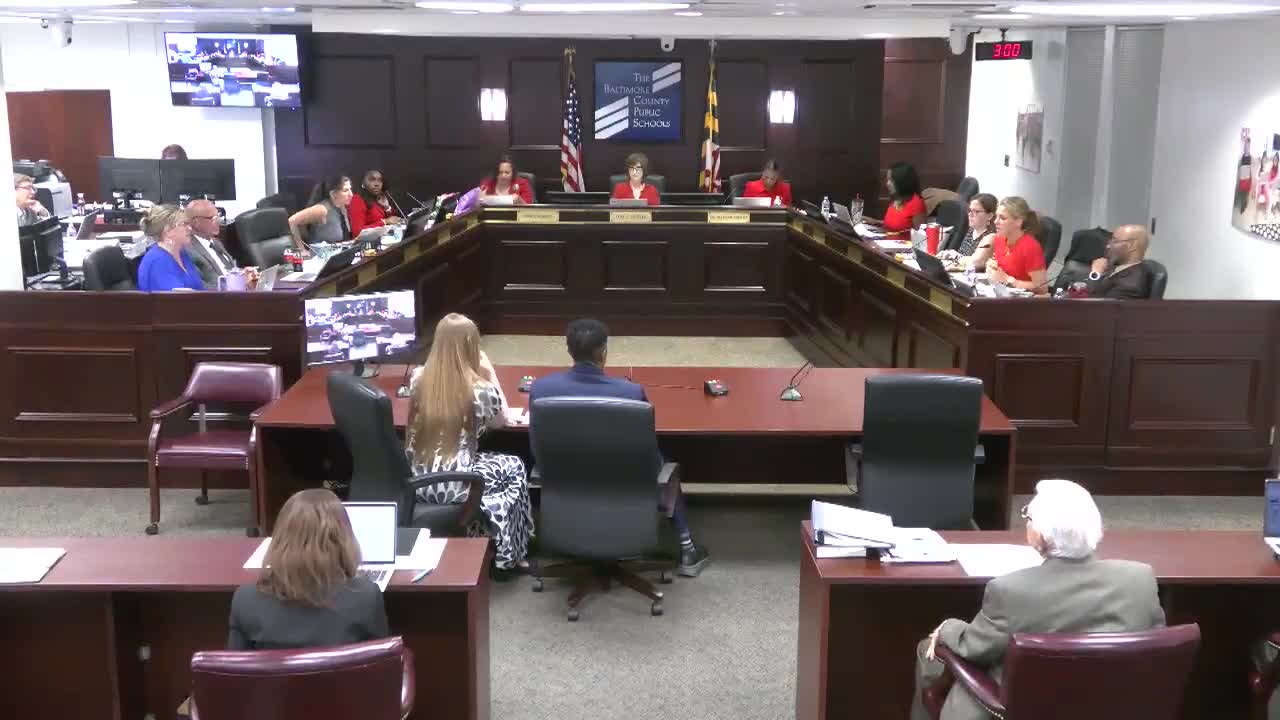
Board declines proposed multi‑year reading‑intervention contract after debate over program effectiveness and cost
Summary
A proposed multi‑year contract covering Read 180 and iLit reading intervention licenses and services failed to win board approval; trustees asked staff to rework the procurement and return with clearer, separate proposals and itemized costs.
The Baltimore County Board of Education on June 10 voted not to approve a proposed multi‑year contract that would have funded licensed reading intervention programs (Read 180 and iLit) under a single solicitation.
At a building and contracts committee meeting the previous day the committee forwarded the item to the full board without a recommendation. During the June 10 meeting instructional staff and procurement officials described how the district planned to scale use of the two programs, the expected per‑student license costs and how the programs would be targeted to schools showing growth with specific interventions.
Dr. Kraft, an instructional official, told the board the district was proposing to scale back Read 180 in favor of iLit in many schools because iLit showed larger historical gains at targeted sites. Dr. Kraft said roughly 3,300 students were receiving Read 180 in the current year and the district anticipated far fewer next year as part of a refocusing effort. She also said that iLit provides ELL supports and translation options that can help multilingual learners.
Despite those explanations, several trustees expressed concerns about the contract as presented: the aggregate contract spending authority in the exhibit (revised during the meeting), lack of clarity about which schools and student counts the request covered, and whether a single combined contract for two distinct products was appropriate. Board members asked for separate, more specific contracts or a clearer breakdown by vendor, by school and by per‑student cost.
The board voted on the single contract as presented; it failed (favor 5, not passing). The board asked staff to return with revised procurement proposals that separate the products or otherwise specify precisely how district funds would be used and to include a clearer breakdown of per‑student costs and the list of schools to be served.
Why it matters: Reading intervention programs provide targeted support for students below grade‑level in decoding and comprehension. The contract had financial and programmatic implications for which schools would receive specific interventions and how licensing dollars would be allocated.
What happens next: District staff said they will rework the procurement approach and bring back revised proposals that either separate vendors into distinct contract actions or provide clearer line‑item breakdowns and school‑by‑school student counts. Board members urged district staff to ensure programs remain aligned with demonstrated student outcomes and to protect teacher training continuity in schools where interventions are retained.
Ending: The board’s rejection halts the proposed contract; the district will revise the procurement and return to the board with more detailed, separated options for intervention purchases and implementation plans.