Get Full Government Meeting Transcripts, Videos, & Alerts Forever!
Get email alerts on the Director Of Schools Interviews topic
No spam. Unsubscribe anytime.
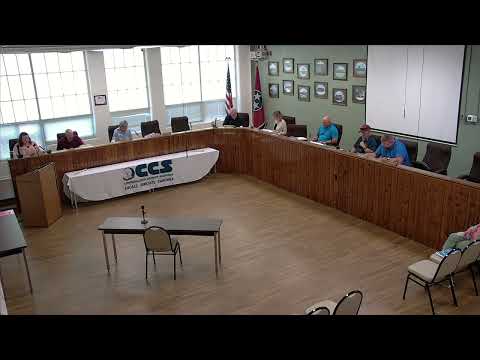
Cumberland County school board interviews two finalists for director of schools; vote set for Thursday
Summary
The Cumberland County Board of Education held interviews with two finalists for director of schools and set a vote for the full board at its next regular meeting on Thursday.
The Cumberland County Board of Education held interviews with two finalists for director of schools, Dr. Randy (Randy) Shannon and Dr. Nicole (Nicole) Farley, who each presented plans for curriculum, staff development and district communications and answered board members’ questions. Board members said they will deliberate and vote on a selection during the board’s regular meeting on Thursday, then name a negotiating team to finalize a contract.
Both candidates emphasized instructional consistency, stronger communications and leadership development. Dr. Randy Shannon, who described himself as a 30-year educator and career-technical education director, focused on rebuilding community confidence in schools, expanding industry credentials and strengthening relationships between teachers and students. “We’ve got to work to sell ourselves as a school system back to the community,” Shannon said, arguing that reengaging parents and local partners is essential to boosting student motivation and outcomes.
Dr. Nicole Farley, the district’s interim director, highlighted recent operational accomplishments during her interim term — including completing state-required closeout tasks for the 2024–25 year, visiting every school and working on personnel and the budget — and outlined a detailed transition and 120-day plan if appointed. Farley told the board she would publish a weekly update called “Farley’s Follow Through,” re-establish a parent advisory council and roll out ParentSquare as the districtwide communications platform for 2025–26. “I would publish monthly in the Crossville Chronicle, a newsletter, and ... for the 2526 school year, we will be going to a communication platform called ParentSquare,” she said.
On curriculum and assessment, both candidates addressed Tennessee adoption requirements and strategies to raise third-grade English/language-arts proficiency. Shannon described expanding dual-enrollment and industry credential opportunities through partnerships and more targeted middle-to-high-school alignment. Farley noted the district is adopting new science textbooks that “cover 100% of the standards” under state rules and said principals and supervisors must set clear expectations for lesson rigor and implementation.
Both candidates described plans to strengthen leadership pipelines. Shannon discussed prior work building career-technical education programs and said he would continue to modernize equipment and partner with industry. Farley described existing work with assistant principal meetings and an “aspiring administrator academy,” and presented a structured leadership-development agenda she said had produced candidates who later applied for leadership positions.
Board members pressed the finalists on several operational issues, including how they would maintain instructional time, adapt long-term plans to changing state policy and funding (TISA/BEP), handle staffing and school safety communications, and sustain teacher morale. Dr. Shannon repeatedly emphasized relationship-building and mediation skills, and referred to his experience as a Rule 31-listed mediator; Dr. Farley highlighted responsiveness and regular stakeholder communications, citing an example where she tracked and reported progress on the Stone Memorial football-field project and maintained contact with bidders, parents and board members.
Both candidates addressed classroom-level practice and diverse learners: Shannon stressed that “the most effective element in any environment is the teacher” and advocated relationship-based classroom management; Farley said the state-adopted textbooks make standards available but that the district must implement supports and an acceleration plan for students with exceptionalities.
Farley offered a detailed transition calendar (30/60/90/120 days) that included principal goal-setting, convocation planning, organizational-chart publication, school visits, and staff “temperature checks.” She also described moving district improvement planning to include chronic absenteeism as a specific goal after stakeholder input and said the district had seen a small decrease since that change.
Procedure and next steps: board members agreed to deliberate and vote on a candidate at their Thursday meeting. If they choose a candidate, the board will appoint one or more members to negotiate contract terms and then return a proposed contract to the full board, possibly via a special-called meeting if timing requires. The board asked members to be prepared with proposed contract parameters.
What remained unchanged from the interviews is a schedule rather than a decision: the board will meet Thursday to vote, and, if necessary, convene a special session to approve the negotiated employment agreement. The candidates’ proposals — including Farley’s communications plan and Shannon’s focus on industry credentials and relationship-based instruction — form the core themes board members said they will weigh in final deliberations.
The interviews were part of the board’s public candidate-selection process; no appointment or formal action was taken during the session.