Get Full Government Meeting Transcripts, Videos, & Alerts Forever!
Get email alerts on the Higher Education Finance topic
No spam. Unsubscribe anytime.
House passes $4 billion higher education finance bill after suspending rules to take up Senate File 1
Summary
The Minnesota House passed Senate File 1 (House File 6), a $4 billion higher education finance and policy bill, after Representative Niska moved to suspend the rules so the measure could receive its final readings and a roll-call vote.
The Minnesota House passed Senate File 1 (House File 6), a $4 billion higher education finance and policy bill, after Representative Niska moved to suspend the rules so the measure could receive its final readings and a roll-call vote. The clerk recorded a final vote of 95 ayes and 36 nays; Olsen (participating remotely) was recorded as voting yes.
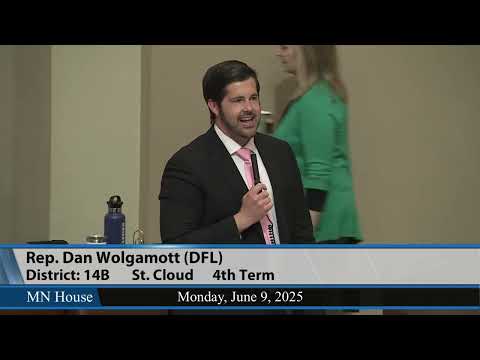
The bill, described on the floor as the session's higher education budget bill, closes a projected $239,000,000 shortfall in the state grant program through a combination of cuts and new funding, preserves the North Star Promise last-dollar program for families earning $80,000 or less, and increases the Fostering Independence grant program by $8,000,000, sponsors said. Representative Wolgamott, the bill author, said, "This is the higher education budget bill," and urged members to support the motion to bring the bill forward.
Why it matters: lawmakers and supporters said fixing the state grant shortfall will materially affect students who faced reduced awards earlier in the year. Representative Coulter warned that federal changes to Pell Grants could compound affordability problems for more than 70,000 Minnesota students if Congress reduces funding, and said states must prepare for that possibility.
Key provisions and sponsors' statements Representative Marion Rarick, a House co-chair of the conference, said the package "is a $4,000,000,000 bill to take care of students" and highlighted that negotiators converted a projected $239,000,000 deficit in the state grant program into a roughly $20,000,000 surplus after reallocations and cuts. Wolgamott said the measure reflects a bipartisan, bicameral compromise intended to put "the needs of Minnesota students" first.
Supporters noted specific program changes: an $8,000,000 increase for the Fostering Independence grant program for youth who were in foster care; restoration/backfill of state grant awards that had been reduced earlier in the year; and continued funding for the North Star Promise last-dollar aid for eligible families. Representatives who worked the conference emphasized that the bill also included program-level reviews and line-item adjustments intended to prevent a repeat of the funding gap.
Regents selection and oversight concerns Multiple members said the House failed to fulfill its constitutional responsibility to elect University of Minnesota regents. Representative Robbins said the body had put forward recommendations at a March 18 joint committee meeting and "we have continued to ignore that responsibility up into this special session," warning that without a legislative election the governor's appointees would serve. Representative Rehrig and others raised concerns about the university's proposed tuition increase (discussed by the university as a potential 6.5 percent increase) and senior administrative pay. Rehrig cited figures presented on the floor for university leaders' compensation, including a cited base salary of $975,000 for the university president and a $750,000 base for a new executive vice president of finance, and criticized what she called a top-heavy administration.
Roll call and procedures The House first suspended the rules under a motion referencing Article IV, Section 19 of the Minnesota Constitution to declare urgency and allow the bill to receive its readings and final passage. Representative Niska moved the suspension and asked members to support the motion; a voice vote on the motion was taken and the motion "prevailed." The clerk then read the bill and called the roll for final passage; the clerk announced "There being 95 ayes and 36 nays, the bill is passed and its title is agreed to."
What was not decided or remains unclear Members repeatedly said the House did not elect regents and that step remains unresolved; they also noted university actions (tuition proposals and administrative compensation) that will proceed while the legislature did not place new regents on the University of Minnesota Board. Exact effective dates, implementation details for some line-item changes, and whether any provisions require additional approvals were not specified on the floor record.
Next steps The House passed the bill and agreed to its title on the floor. The transcript does not specify the bill's effective date or any required follow-up reports or implementation deadlines.