Get Full Government Meeting Transcripts, Videos, & Alerts Forever!
Get email alerts on the Staffing topic
No spam. Unsubscribe anytime.
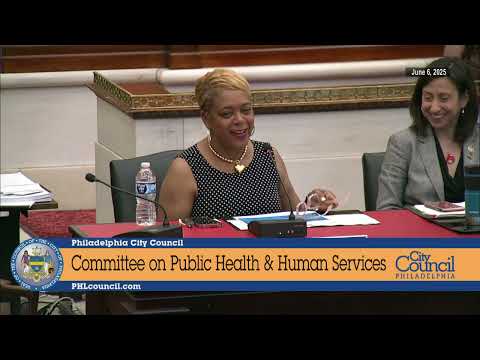
Frontline staff and union representatives tell council DHS investigations are understaffed; onboarding delays and caseload counting cited
Summary
Frontline DHS investigators, bridge supervisors and union leaders described recruitment, retention and workload pressures to the Committee on Public Health and Human Services and urged changes to staffing, training cadence and how caseloads are measured.
Frontline Department of Human Services investigators and union representatives told Philadelphia City Council on Aug. 7 that the investigative units are understaffed, that onboarding and training timelines lengthen vacancies, and that common caseload metrics understate worker burden.
Melinda Brown, a DHS social-work supervisor of 18 years, described the department’s training sequence: new staff complete three months of on-the-job training and then spend an additional three months in a newly developed "bridge" unit that provides intensive mentorship before workers receive civil‑service status. "The bridge program at DHS has been the answer to increase the longevity of staff at DHS," Brown testified, adding that staff often leave between hiring and start dates when classes or administrative steps are delayed.
Union leaders and supervisors echoed staffing pressures. Vicente de Vivier, a 28-year DHS employee and District Council 47 executive-board member, said investigators can receive nine new investigations per month plus “doubles” and “triples” when multiple reports arrive on the same family; that can push workload to 15–20 reports at times. Jennifer Reed, president of Local 21‑86 (District Council 47), said workers “often work double shifts and sacrifice personal time” and argued that internal discipline or performance reviews should account for caseload complexity and structural constraints on outcomes.
Commissioner Kimberly Ali acknowledged investigative vacancies and said intake investigators are assigned up to nine new investigations each month, with the department seeking to reduce the target toward seven; she described retention strategies including bridge units, salary adjustments and embedded supervisors who mentor new investigators. DHS officials said the city’s funded CUA ratio is 10 families per case manager and the observed average is 11; DHS also reported that investigators are trained by DHS University with 120 hours of initial training and at least 20 hours of annual training.
Speakers urged changes to how caseloads are counted. Advocacy groups and providers recommend measuring by number of children and by case complexity rather than by families alone; advocates said a single household can include many children and that a single investigative visit often requires assessing every child present. Donna Cooper of Children First and other witnesses recommended adopting child‑count measures and weightings for medically complex or high‑needs children.
Panelists also highlighted operational barriers outside direct salaries: delayed background checks and the cadence of training cohorts mean some candidates are offered start dates as much as three months out and then accept other jobs. Multiple witnesses suggested expanding training capacity, creating clearer promotion pathways, and exploring recruitment flexibility (for example, temporary non‑residency hiring waivers) to increase the candidate pool.
Ending — Councilmembers thanked witnesses and signaled interest in follow‑up questions on staffing numbers, training cadence and whether budgeted positions in FY26 can be reallocated or reconceived to shore up investigative capacity.