Get Full Government Meeting Transcripts, Videos, & Alerts Forever!
Get email alerts on the Child Welfare topic
No spam. Unsubscribe anytime.
City council opens hearing on child welfare; DHS commissioner defends reforms after Inquirer reporting
Summary
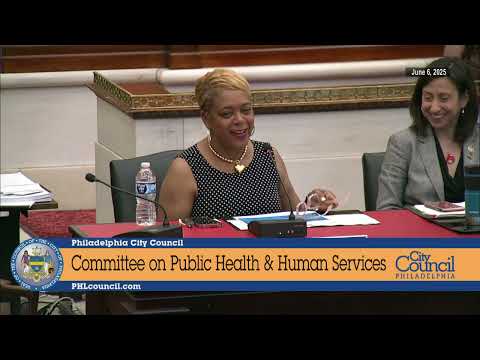
Philadelphia City Council’s Committee on Public Health and Human Services opened a public hearing Aug. 7 on Resolution 250,362, a review of Department of Human Services policies and oversight after investigative reporting prompted scrutiny of child-welfare outcomes.
Philadelphia City Council’s Committee on Public Health and Human Services opened a public hearing Aug. 7 on Resolution 250,362, a review of Department of Human Services policies and oversight after investigative reporting prompted scrutiny of child-welfare outcomes. Chair Councilmember Dr. Nina Ahmad convened the session and said, “not one child's life is expendable,” and warned the committee would continue the hearing Sept. 15 to gather more testimony.
Commissioner Kimberly Ali, commissioner of the Philadelphia Department of Human Services, told the committee the agency has made sustained changes since a system transformation that began after Danielle Kelly’s death and the reforms that followed. “Respectfully, we disagree,” Ali said when asked about the resolution’s assertion that Philadelphia’s child-welfare model is not meeting its goals. She pointed to a reduction in the in-care population from 6,194 children in 2017 to 2,533 as of her testimony — a 59% decline — and said removals fell from 3,226 in 2017 to 1,291 in 2024.
Ali described procedural safeguards instituted after Act 33 reviews of child fatalities and near-fatalities, including expanded multidisciplinary reviews, added medical expertise (including toxicology), embedded DHS nurses who conduct joint home visits, and strengthened behavioral-health consultations. She also described prevention and diversion efforts: DHS runs a 24/7 child-abuse hotline that receives almost 35,000 calls a year and diverts roughly 50–60% of reports from formal child-protective services to prevention supports. "The criminalization of poverty is real," Ahmad said during opening remarks, noting that missed medical appointments or shelter stays are often wrongly treated as neglect.
Council members pressed DHS on fatality counts and lessons learned. Ali said Act 33 reviews produced systemic recommendations; she told the committee that of 16 children fatally injured while receiving services from community umbrella agencies (CUAs), 11 were receiving in-home services, three were in kinship placements and two were in foster care. Ali said Act 33 reviews prompt both systemic and practice-level training and that recommendations are tracked for implementation.
Members also questioned DHS about budget and administrative items. Chief Financial Officer Nadine Parisi explained $3.15 million in personnel funding that is moving to the mayor’s Office of Education is beverage-tax revenue and is not state‑matched DHS operating funds; DHS staff said those positions are continuing community‑school work, not investigative staff. Ali said the FY26 budget shows about $66 million in “vendor to be determined” requests for expansions of prevention and other services; DHS said those represent new asks that will be procured through RFPs.
Ali said DHS conserves Social Security (RSDI) benefits for youth in placement and that roughly 65 youth in care receive those benefits annually (about $500,000 in FY24). She said DHS will reissue an RFP to select a provider to administer those conserved funds after an October 2024 RFP drew no qualified vendor.
The committee heard that DHS now uses a CUA scorecard (first published in 2017) with nine domains and roughly 50 indicators; Ali said the city funds CUAs at about a 10 families per case-manager ratio and that the current average is about 11 families per case manager. On investigations, Ali said intake investigators are assigned up to nine new investigations per month (with a bargaining-agreement cap that can allow a tenth in some months) and that DHS is trying to lower caseload targets toward seven investigations per investigator.
The hearing produced a mix of defense and urgency: DHS leaders argued the system’s metrics have improved and described reforms, while council members and frontline staff warned of continuing staffing shortages, supervisory gaps, and the need to translate Act 33 recommendations into durable practice change. The committee recessed with plans to reconvene Sept. 15 for additional testimony and follow-up questions.
Ending — The hearing will continue Sept. 15 at 1 p.m.; council members said they will send written follow-up questions and requested additional documentation on vendor allocations, staffing plans, and implementation timelines for Act 33 recommendations.