Get Full Government Meeting Transcripts, Videos, & Alerts Forever!
Get email alerts on the School Policy topic
No spam. Unsubscribe anytime.
Therapy dog handler urges broader access; board to review AR restricting classroom visits
Summary
A long-time therapy dog handler urged the Talbot County Board of Education to relax administrative regulations that she says limit student access to therapy dogs. Board members asked staff for more information after discussion about an AR requirement that therapy dogs be used only in a separate room and students brought one-on-one to the dog.
Barb Jefferson, a longtime volunteer who brings therapy dogs to Talbot County Public Schools, urged the board at the June 11 meeting to revise district administrative regulations to expand students' access to therapy dogs, citing student behavioral and emotional benefits and requesting consideration of modest compensation for volunteer handlers.
"The connection. And what happens is the children will speak. They trust they trust the dog. They'll talk to the dog. And we've had so many miracles with children," Jefferson told the board, describing more than 2,000 visits she has made to district schools since 2011.
Jefferson said a recent 18-month moratorium and subsequent policy changes have made it difficult for therapy teams to return to schools. She urged changes that would allow more classroom access, hugs and treats with parental permission, and suggested the district consider grant funding or subsidies to support volunteers who provide regular visits.
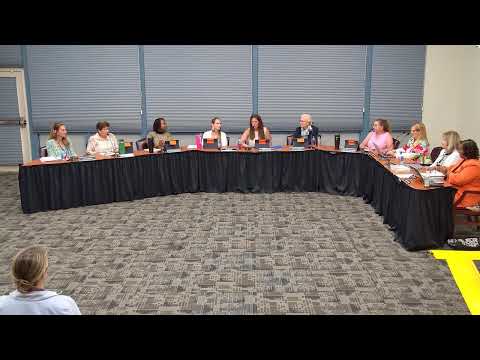
Board members discussed the issue during consideration of policy 5.17 and an accompanying administrative regulation (AR). One board member asked why the AR specified that therapy dogs (distinct from service animals) be kept in a separate room and students brought in one-on-one rather than allowing a dog to visit a classroom. The board asked staff and legal counsel to provide background on the AR and why that provision was included, and requested a return with more information so the board can consider whether to amend the AR.
The discussion did not produce an immediate change to the policy; the board left the policy text unchanged for the moment and asked staff for follow-up information that would explain the reasoning behind the existing AR and options for expanding access within the bounds of district policy and applicable laws.
No formal vote to change policy was taken at the meeting; the item was discussed and the matter was referred back to staff for further explanation and possible redrafting of the AR.