Get Full Government Meeting Transcripts, Videos, & Alerts Forever!
Get email alerts on the New Construction Cortland Place topic
No spam. Unsubscribe anytime.
Houston historic commission delays decision on oversized Cortland Place house after neighbors object
Summary
The Houston Archaeological and Historical Commission deferred a certificate of appropriateness for a proposed new house at 10 Cortland Place after multiple neighbors and commissioners said the design’s footprint and massing are out of character for the historic street.
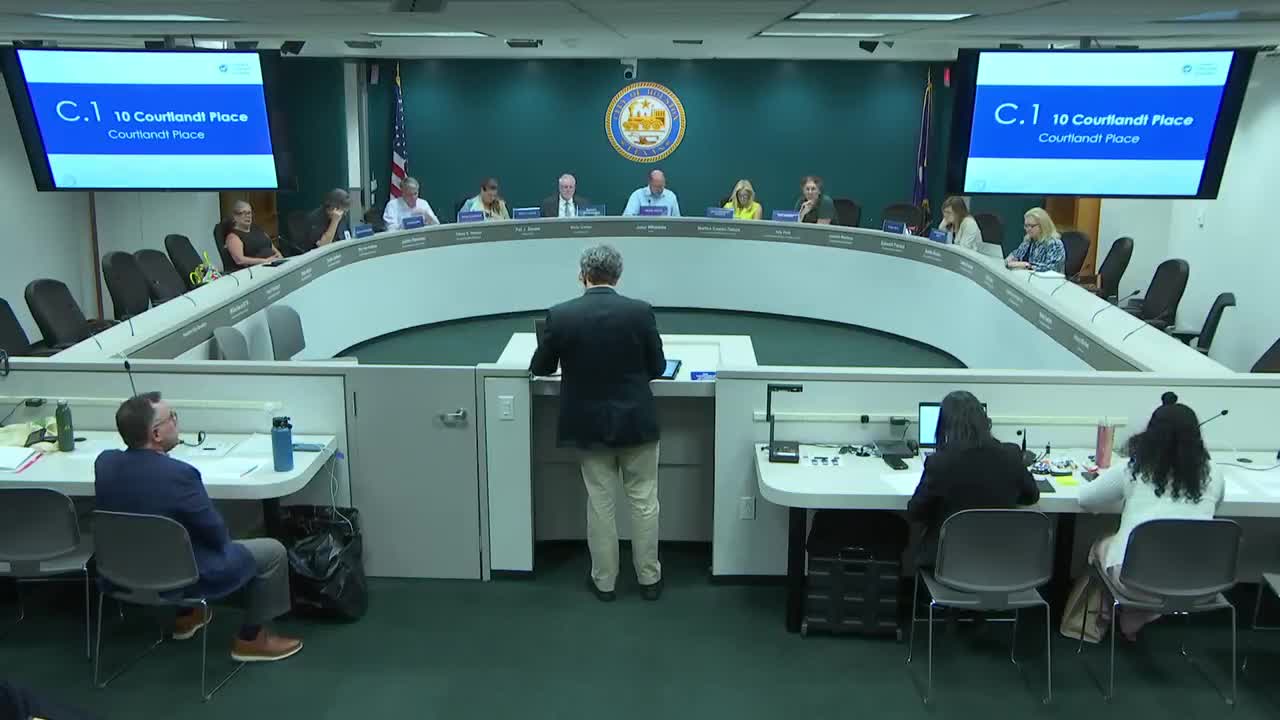
The Houston Archaeological and Historical Commission on Thursday deferred action on an application to build a new two‑story residence at 10 Cortland Place after prolonged public comment and questions from commissioners about the proposal’s size and lot coverage.
The commission’s decision came after architects and neighbors clashed over the proposal’s footprint, height and how its massing would relate to the neighborhood’s century‑old houses. Staff had recommended approval, but commissioners said the project needs further revision to respond to neighbors’ concerns.
The applicant, architect Todd Blitzer of the Meritor Group, described the design as a Federal‑style two‑story house intended to fit the character of Cortland Place. He said the project’s height (about 37 feet) is comparable to adjacent houses and that the design was changed to remove a previously proposed second‑floor garage apartment at neighbors’ request.
Residents and nearby homeowners said the main issue was the project’s footprint and resulting loss of green space. Several speakers — including Matt Heinemann (15 Cortland Place), David Oldman (19 Cortland Place), Dr. Robert Park (8 Cortland Place), Glenn Runnels (18 Cortland Place) and Ginger Napier — told the commission the proposed ground‑floor footprint (roughly 5,400 square feet, as presented) is dramatically larger than the street’s average. Neighbors, citing HCAD figures read into the record by staff, said the average first‑floor footprint on Cortland Place is about 2,236 square feet and that the proposed home’s footprint is roughly double the neighborhood average.
A staff spreadsheet assembled for the meeting noted the proposed primary structure would occupy about 21% of its lot, compared with an average of roughly 8.7% for other homes on the block. Neighbors and letters submitted to the record argued that the scale would overwhelm the lot and break the street’s historic pattern of centered houses with generous side yard spacing. Dr. Park displayed an overlay showing his 2,200‑square‑foot house placed over the proposed footprint to illustrate the relative difference.
Roman McAllen, the City of Houston’s historic preservation officer, told commissioners the department had reviewed the revised plans and that some questions raised at a prior meeting had been addressed, including removal of the second‑floor garage apartment. But McAllen said staff had concerns about the project’s relative scale against the block face and that the application lacked measurable standards to resolve the neighbors’ proportionality concerns.
Commissioners debated whether to deny, approve or ask for additional revisions. After discussion, a motion to defer the item to allow the applicant to work with staff and neighborhood stakeholders passed.
What the commission will ask for in a revised submission is not prescriptive in the record; commissioners signaled they expect the applicant to reduce the apparent massing and make design changes that better align first‑floor coverage and side yard spacing with the block face. The applicant indicated willingness to continue discussing revisions with staff and the Cortland Place association.
The commission did not set a new hearing date at the meeting. The deferral allows the applicant to modify and resubmit the design rather than proceed to a vote on the current plans.
Speakers quoted or named in this article appeared at the June 5, 2025 HAHC meeting and are listed in the article’s speaker section below.