Get Full Government Meeting Transcripts, Videos, & Alerts Forever!
Get email alerts on the Disability Services topic
No spam. Unsubscribe anytime.
Monroe City Council votes to continue Special Needs committee after presentation by local autistic advocate
Summary
Council heard a year‑end report from the Special Needs and Disabilities Committee, received a presentation from Jonathan Belk about autism‑related challenges and solutions, and voted to continue the committee under the proposed name Committee on Disabilities while leaving final membership details to the citizen appointments process.
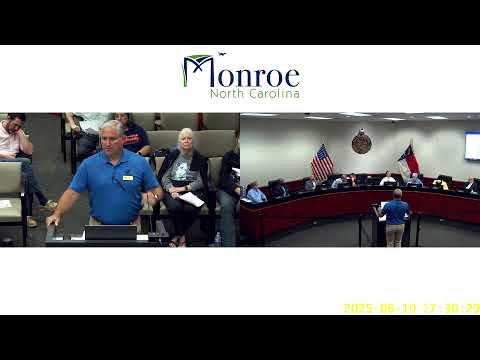
Council voted on June 10 to continue the Special Needs and Disabilities Committee as a standing advisory body under the proposed name Committee on Disabilities after members heard a year‑end report and a first‑person presentation about autism from a local resident.
The committee’s mission, read into the record by Council Member Thompson, is “to promote inclusion, accessibility, and equal opportunity for all Monroe citizens with intellectual and or developmental disabilities.” Council discussed the group’s year of work — compiling public resources, conducting a community survey, approving an autistic‑sign policy, and advocating for downtown sidewalk improvements — before hearing the presentation.
Jonathan Belk, 24, described his experience as an autistic resident and outlined recommendations to reduce bullying, increase employment supports and build inclusive community opportunities. “And it’s time that all changed,” Belk told council, urging members to consider buddy programs, sensory‑friendly classrooms and expanded community events targeted to autistic people.
Council members and committee participants praised Belk’s presentation. Melinda Plew, a committee member who introduced Belk, said the committee received a handwritten letter from him earlier in the year and had invited him to summarize his recommendations in person.
After discussion about the committee’s future structure and membership, Council Member Thompson moved to continue the special‑needs body under the new name Committee on Disabilities. The motion was withdrawn briefly during procedural conversation and later reintroduced and put to a vote; council approved the motion as presented. Council did not adopt final membership rules in the meeting; staff said current committee members will remain in place temporarily and that the Citizens’ Appointment Committee will later make formal recommendations on openings and residency requirements.
Council and staff also discussed possible next steps the committee might take if continued: an IDD (intellectual and developmental disabilities) community expo in partnership with Parks and Recreation; expansion of sensory‑friendly screenings and “safe sensory zones” at public events; accessible playground surfacing and signage; captioning of city council YouTube streams; and renaming the body if council so chose. Council members said they wanted to ensure community input, and several members urged including people who live with disabilities in committee appointments.
No new ordinances or binding policy changes were adopted at the meeting; the council’s action was limited to continuing the committee under the new advisory name and directing staff to process membership through the normal appointment channels.
Looking ahead, committee members asked council to clarify whether non‑residents could serve in ex officio roles and discussed standardizing membership size; staff committed to returning details to council and to the Citizens’ Appointment Committee for formalization.