Get Full Government Meeting Transcripts, Videos, & Alerts Forever!
Get email alerts on the Municipal Budgeting topic
No spam. Unsubscribe anytime.
Burrillville council adopts FY2026 operating budget, shifts $75,000 to schools and establishes restricted fund
Summary
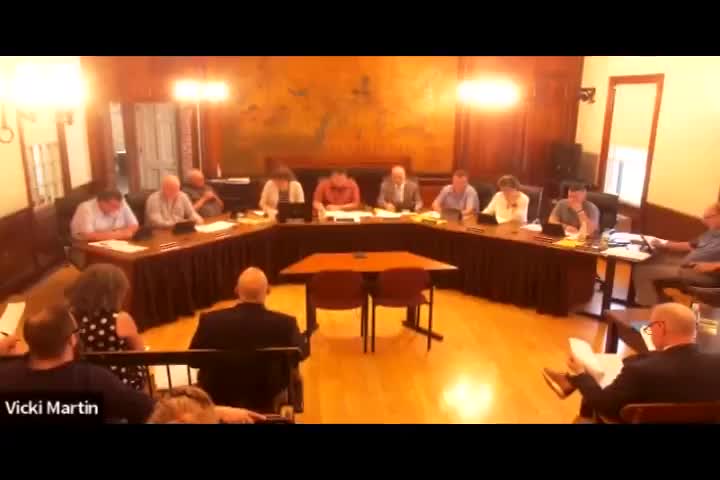
The Burrillville Town Council on Wednesday adopted the fiscal 2026 operating budget and approved a separate restricted fund that earmarks $75,000 each for school transportation, out-of-district tuition and utilities.
The Burrillville Town Council on Wednesday adopted the town's fiscal 2026 operating budget and approved a separate restricted fund that sets aside money for school transportation, out-of-district tuition and utilities.
Councilors voted unanimously to adopt the updated operating resolution (25-16) after a round of amendments that cut two town hiring line items and moved $75,000 into the school appropriation. The council then voted 7-0 to establish the town's restricted fund (resolution 25-17) with a stipulation that schools must exhaust the corresponding operating line items before accessing restricted funds and that unused restricted money must be returned to the town's undesignated fund balance.
Why it matters: Councilors said the move balances short-term school needs against a shrinking restricted fund and long-term maintenance-of-effort obligations. Several members said the council must reduce reliance on one-time restricted dollars as the town's restricted balance is the lowest they've seen in a decade.
The council's budget adjustments were driven by a proposal from Councilor Michael Anderson, who outlined options for trimming town spending to help the school department. Anderson proposed delaying the hire for the town clerk position until Jan. 1 and delaying a recreation administrative hire, freeing roughly $75,000 to transfer to schools. Anderson told the council he had "tried to get to a point that was fair and balanced recognizing that we're all trying to accomplish the same thing" in framing his recommendation.
School officials, led by the school superintendent, told the council the district submitted a budget representing a "bare minimum" to meet daily obligations and comply with requirements. The superintendent asked the council to consider set-aside accounts to bridge gaps and said the district is trying to avoid program cuts.
The council also discussed broader budget drivers: an updated state-aid projection that the superintendent said arrived the same day and shows roughly $48,000 more than earlier estimates; an ongoing legal dispute over artificial turf fields that councilors said has cost the town about $300,000 to date; and the town's goal to reduce reliance on restricted funds by fiscal year 2028.
Homeschooling and enrollment: During the budget debate, the superintendent reported a sharp increase in families electing to homeschool. The count rose from annual totals of roughly 50—3 (2018—2024) to 125 this year, a trend the superintendent said some neighboring districts are seeing as well. Councilors raised concern that a continued outflow of students (to charters or homeschooling) reduces state aid and complicates long-term planning.
What councilors approved (high-level): - Adopted operating budget resolution 25-16 as amended (motion by the vice president; second by Mr. Battelon) ' vote: unanimous. - Adopted restricted fund resolution 25-17 with amendment that schools must use operating line items first and that unused restricted funds be returned to the town's undesignated fund balance (motion and amendment recorded in minutes) ' vote: 7-0.
Other budget notes: Councilors left in place a policy that restricted funds are to be used only after the related operating line is depleted. Several members pressed for a multi-year plan to shift recurring school costs fully into operating budgets and to reduce the use of one-time reserves.
Looking ahead: Councilors asked administration and school leaders to circulate a new resolution reflecting the agreed cuts and transfers and to return for final bookkeeping and the restricted-fund vote. They directed staff to continue pursuing shared-service options and other structural solutions to contain rising school and municipal costs.