Get Full Government Meeting Transcripts, Videos, & Alerts Forever!
Get email alerts on the Health Services topic
No spam. Unsubscribe anytime.
Board hears pleas as Health Services Agency outlines proposed cuts; staff to return June 10
Summary
Santa Cruz County officials presented the Health Services Agency proposed fiscal plan on June 3, warning that state and federal funding shifts and falling clinic reimbursements required reductions; the board heard extensive public comment and deferred final action to June 10.
Santa Cruz County officials presented the Health Services Agency(HSA) proposed budget on June 3, saying mandatory programs and declining grant and federal reimbursements drove an overall reduction that will require program changes. The board heard more than an hour of public testimony from providers and clients urging the county to maintain services, and supervisors deferred final action on the HSA budget to the June 10 hearing.
The proposed spending plan, presented by HSA Director Monica Morales and Assistant Director Jen Herrera, shifts revenue and staffing priorities and would reduce about 74.4 full‑time equivalent positions (many vacant) while trimming some community contracts. Morales said the package was a sober attempt to balance required services and the department—s declining revenue: "We have to do our job and bring you a balanced budget," Morales said.
Herrera described the financial drivers behind the cuts: "The factors driving our budget deficit include loss of grant funding, lower clinical revenue, low reimbursement rates for behavioral health due to the payment reform, [and] rising expenditures outpacing our revenues," she told the board. Herrera and Morales flagged two broad risks the county is tracking: state proposals in the governor—s May revise that would curtail some Medi‑Cal coverage for older undocumented adults and programmatic changes to CalAIM and a federal budget reconciliation bill that may cut safety‑net spending.
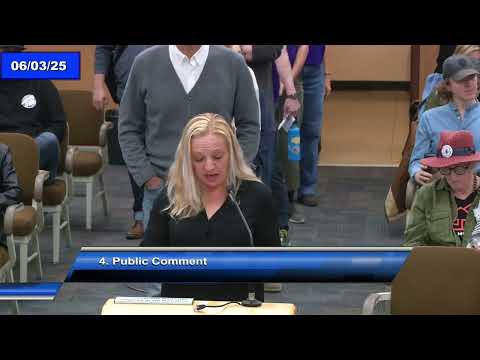
Public commenters filled the agenda—s public comment period. Behavioral health providers, peer‑run centers and clients warned of life‑and‑death consequences if lines of care are reduced. Andrea Turnbull, the county—s behavioral‑health suicide‑prevention manager, urged the supervisors to continue backing prevention programs: "I—m hoping that you will continue to support suicide prevention and the work that—s being done here to save lives," she said. Tyler Starkman, executive director of MHCan, told the board he still relies on peer‑run services for his recovery and survival and that the center—s closure would remove a rare local resource.
Concerns focused on three specific areas of proposed change that HSA staff said they will bring back to the board for further review on June 10: - County laboratory and X‑ray: HSA presented the option of eliminating county lab and radiology operations as a potential cost reduction, a step that providers warned would disrupt care and program billing for mental‑health and substance‑use treatment. - Community contracts: Contracts such as MHCan and Gemma House were identified in materials as at risk; speakers said those organizations connect clients to care and reduce emergency and criminal‑justice costs. - Behavioral‑health workforce and payment reform: Staff said CalAIM payment reform yields lower effective reimbursement for many provider categories and leaves counties and community providers financially squeezed.
Morales and Herrera emphasized the presentation was informational and the board would consider HSA—s final decisions at a follow‑up hearing. "We are prioritizing mandates," Morales said, adding that the budget choices were made to preserve services that prevent deaths or immediate harm. Herrera also recommended that the board consider other local options to maintain access if state or federal cuts are enacted, including ramping up the county—s Medicruz specialty referral program as a locally funded safety net.
What happens next The board will receive a fuller HSA budget discussion and votes on June 10. Supervisors and health staff said they will continue outreach to community providers and will return with more detail about options for lab/radiology, community contract continuity and contingency plans if state or federal funding changes are finalized.
Why it matters HSA is the county—s largest direct service department and delivers public health, clinics and specialty behavioral health care for thousands of residents. Any reductions to lab, radiology, behavioral‑health beds, or peer supports would change where and how residents access care and how the safety net is financed.