Get Full Government Meeting Transcripts, Videos, & Alerts Forever!
Get email alerts on the Blight And Housing Repair topic
No spam. Unsubscribe anytime.
Residents press council on vacant properties, blight enforcement and support for home‑repair programs
Summary
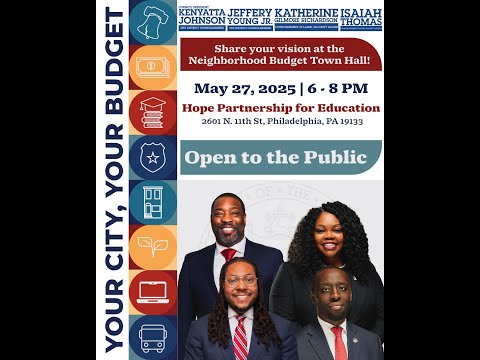
Multiple speakers at the budget town hall urged enforcement against long‑idle investor‑owned properties, asked about Act 135 enforcement and sought funding for home‑repair programs including a $10 million 'Built to Last' request.
Several residents used the town hall to press council members on long‑standing neighborhood concerns tied to vacant and dilapidated properties, developer behavior and funding for home‑repair programs.
Multiple speakers said investors acquire properties and leave them empty for years, creating blight, trash and safety problems. One resident said high‑end investors own 67 buildings on a street and ‘‘they're empty, nobody's in them, they run down, they're used for drug houses.’’
Council President Kenyatta Johnson and Fifth District Councilmember Jeffrey J. Young told residents the council is pursuing tools to address blight, including a special committee focused on Act 135 enforcement. Young described Act 135 as state law that allows the city to pursue court procedures to hold owners accountable and, if necessary, forfeit properties that are not remediated and transfer them to other owners.
Neighborhood speakers also asked about city programs to help homeowners repair aging houses. One resident referenced the Philadelphia Enrichment Alliance (PEA) request for $10 million for the Built to Last program; council members confirmed that PEA has received city funding previously and that council has added $250,000 mid‑year this cycle. Council leaders said they support repair programs as part of a broader housing initiative and noted coordination between rehabilitation funding, weatherization and other home‑repair efforts.
Councilmembers encouraged residents to file 311 tickets and to share 311 reference numbers with district offices so staff can follow up and escalate problems. They also urged neighborhood organizations (RCOs) to participate in development review and to bring legal or procedural questions to district council offices for help.