Get Full Government Meeting Transcripts, Videos, & Alerts Forever!
Get email alerts on the Transportation topic
No spam. Unsubscribe anytime.
Highland Council narrows 11200 North to local street; approves citywide flexibility for road standards
Summary
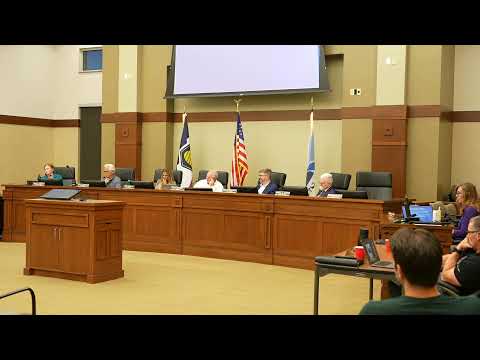
After lengthy public comment and planning-commission split, the Highland City Council voted June 3 to reclassify most of 11200 North as a local road and to add a citywide general-plan provision allowing the council to approve alternate street cross-sections when physical or ownership constraints make standard construction impractical.
Highland City Council on June 3 approved two changes to the transportation element of the city's general plan: reclassifying most of 11200 North from a two-lane residential collector to a local street and adding a policy giving the council limited flexibility to approve alternate street cross-sections where “significant obstacles” prevent construction to the city standard.
The reclassification will generally reduce the planned right-of-way for 11200 North from the collector standard (66 feet, with 44 feet of asphalt) to the local-street standard (56 feet, with 34 feet of asphalt). Council voted 5-0 to reclassify the existing built segments of 11200 North as local streets but left an unbuilt gap in the corridor unclassified so staff can return with additional analysis and design options for that specific segment.
City planning staff told the council the change reflects how most of 11200 North has been built and used: traffic counts on the segment are roughly in line with local streets (about 1,000 trips per day), and the street already has many residential accesses. Rob (city planning staff) advised the council that, under state law, approved general plans constrain road construction and that the proposed language would give the council an explicit mechanism to approve alternatives when topography, land ownership or existing infrastructure make the city’s standard cross-section infeasible.
The second amendment drew more public comment and a split at the Planning Commission. That amendment adds a short policy allowing the council to approve alternative designs when “significant obstacles such as topography, land ownership, or existing infrastructure impede construction of a street to city standards.” Proponents and several planning commissioners said the flexibility is useful across the city for constrained locations. Opponents, and many nearby residents, urged the council not to use the change to permit a new through-connection at the unbuilt gap on 11200 North, saying it would increase cut-through traffic and endanger children who use the cul-de-sac-like neighborhood.
Residents who spoke included Wesley Warren (planning commissioner), Kelsey Chamberlain (resident with bus stops at her home), Jake Hoffines (resident), David Wilkins (resident near the questioned connector) and others who urged the council to preserve neighborhood safety. Several residents suggested a trail or emergency-only access, not a full public road. Fire department and police representatives said additional ingress/egress can aid emergency response; the fire chief said emergency access would be helpful but stressed standards (the fire department indicated a desirable minimum of 20 feet for emergency vehicle passage).
Council members discussed three options: (1) reclassify the full corridor now, (2) reclassify all built segments while holding the unbuilt gap for later study, or (3) deny changes. The council first approved the reclassification for the built segments, excluding the unbuilt portion, 5-0. Later the council approved the flexibility amendment, 4-1. Councilmember Scott cast the lone no vote on the flexibility item.
What’s next: staff will survey the unbuilt gap to confirm actual right-of-way widths and will return with sketches and feasibility options for that specific segment, including (a) emergency-only access with removable bollards or other barriers, (b) a pedestrian/bike trail, and (c) full local-street designs. Staff and council members flagged that a future change to the plan could affect impact-fee calculations and capital project priorities; city staff said impact-fee adjustments would be made when the transportation master plan and capital facilities plan are updated.
The council’s actions change how the city will evaluate and design constrained streets in the future but do not commit the city to building the 11200 North connector as a normal local street. Any future physical work would require project-level design and council approval.
Ending: Staff will return with the survey results and alternative concept sketches for the unbuilt gap; councilmembers also asked for specific traffic-calming options for other east–west collectors with documented speeding concerns, and staff said they will present recommended traffic-calming measures in July.