Get Full Government Meeting Transcripts, Videos, & Alerts Forever!
Get email alerts on the Wastewater Financing topic
No spam. Unsubscribe anytime.
Council hears bond counsel and financial adviser on wastewater funding; takes no action on voter measure
Summary
Bond counsel and a financial adviser outlined options for funding a large wastewater treatment plant project — election or judicial confirmation — and explained tradeoffs including cost, timing and voter approval. The council did not adopt an ordinance or direct an election at the June 4 meeting.
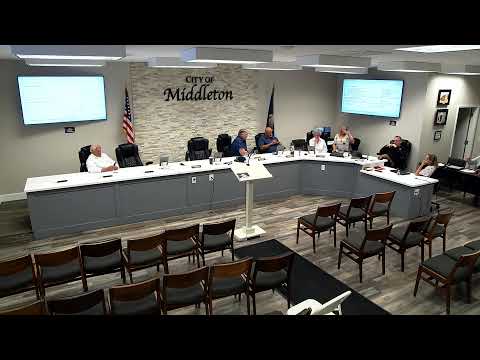
City bond counsel and the city’s financial advisor presented Middleton City Council with the legal and financial options for obtaining voter approval or court confirmation to borrow money for major wastewater treatment plant improvements at the council meeting on June 4.
Stephanie Bonnie, retained bond counsel, summarized two constitutional paths available in Idaho: submitting a revenue bond question to voters (election) or pursuing a judicial confirmation proceeding. Bonnie said an election requires a not-to-exceed amount and a simple majority (50% plus 1). Judicial confirmation is a court process that asks a judge to confirm the city’s finding that borrowing is a "necessary" expense; that approach can allow borrowing beyond an initial estimate but is typically more expensive to pursue.
Bonnie explained tradeoffs: an election is cheaper for the city (county-run election reduces local cost) and offers voter approval, but there is a risk an electorate would reject the measure and force the city to pursue judicial confirmation anyway. Judicial confirmation can allow a larger or flexible borrowing amount without voter approval if the court finds the expense necessary, but it carries a litigation risk and typically costs more in legal fees. "If somebody hires an attorney and protests the judicial confirmation and they win, then you do have to pay their attorney's fees," Bonnie said.
Sheridan (Sharon) Sylvester of Clearwater Financial outlined the practical financing steps if the city seeks debt authority: choosing a method of sale (negotiated or competitive), team selection, possible credit ratings, sale and closing logistics, and potential to use the Idaho Bond Bank to access better terms through its conduit issuance. Sylvester said the current market is uncertain and rates have risen from recent lows.
Public works Director Jason Van Gilder told the council the city continues to explore federal and state grant programs and has applied for state revolving funds this year without success; USDA and other federal funds remain possible but often carry additional compliance requirements. Van Gilder said the city must have debt authority in hand before formally applying for some federal loans.
Council discussion treated the issue as urgent but politically difficult. Multiple council members expressed skepticism that voters in the county would pass a large bond. A motion to prepare election paperwork or to proceed with judicial confirmation was not adopted. At one point the council determined "no action" on the item.
Why it matters: Middleton is planning large wastewater treatment plant improvements that likely will require borrowing. The council must choose between asking voters to approve a bond or using a judicial confirmation process; both routes carry legal, financial and political tradeoffs.
Ending: Council did not authorize a vote or judicial confirmation on June 4 and left options open for staff to continue planning and to return with additional documents and timing recommendations.