Get Full Government Meeting Transcripts, Videos, & Alerts Forever!
Get email alerts on the Septic Program topic
No spam. Unsubscribe anytime.
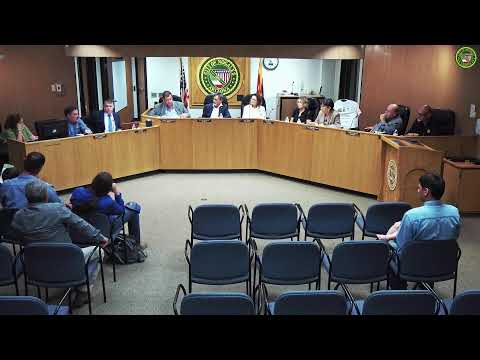
Nogales council delays vote on septic dumping program after council splits; staff to return with costs and permit details
Summary
A motion to end the city's septic acceptance and dumping program was proposed at the June 20 meeting but councilors voted to defer a final decision while staff and regulators produce cost and permit details.
A motion to discontinue the city's septic acceptance and dumping program was introduced during the June 20 Nogales City Council meeting and immediately generated heated debate from council members, city staff and local septic haulers.
Councilman Doyle moved to discontinue the program, saying the costs and liability to the city outweigh the benefits. "The risk outweighs the benefit," Doyle said during the discussion. His motion drew support from some council members but others urged pause and more analysis.
City Manager Joel Kramer said state and federal regulators — the Arizona Department of Environmental Quality (ADEQ) and the International Boundary and Water Commission (IBWC) — supplied draft renewal language that would increase sampling, tracking and reporting requirements at the city's discharge point. "They're willing to work with us," Kramer said, describing a potential process in which the city would sample discharges and send suspect samples to a lab for confirmatory testing.
Kramer told the council that the draft language would require the city to sample and analyze hauled waste and to report results and manifests to regulators; the city also would need to keep samples on hand if a downstream problem is detected. City Attorney Benjamin Estes (title per transcript: "Mr. Estes") confirmed the proposed ADEQ language is in the city's packet and pointed the council to specific draft permit conditions.
Septic hauler Rolfo Carranza, who addressed the council, said sampling done earlier this year of haulers' loads produced no contaminated samples. "No load was contaminated," Carranza said, urging the council to consider the economic impact on small haulers and residents if the city stopped accepting loads or dramatically raised fees.
The council repeatedly raised three questions: the cost to the city of required sampling and storage; where haulers would travel if Nogales stopped accepting waste; and whether county or regional facilities could absorb the volume. City staff said some haulers would need to travel to facilities in Pima County or other locations, which would raise hauler costs and likely be passed to customers.
When a council member called the question, the second on Doyle's motion changed and ultimately the council voted to table the motion pending staff analysis. Kramer said he would meet with ADEQ and IBWC staff and bring a written cost estimate and proposed operating procedures back to the council. "If we're gonna do it the right way, then I will do it the right way," Kramer said.
Ending: The council did not adopt policy changes on June 20. Staff will return with detailed cost estimates, proposed sample‑handling procedures and recommended fee schedules before the council takes a final vote.