Get Full Government Meeting Transcripts, Videos, & Alerts Forever!
Get email alerts on the Ineffective Assistance Juror Bias topic
No spam. Unsubscribe anytime.
Utah Court of Appeals hears arguments in State v. Omar Cortez over juror bias and defense strategy
Summary
The Utah Court of Appeals heard oral argument in case number 20220352, State v. Omar Cortez, in a live‑streamed proceeding where the appellant asked for a new trial on ineffective‑assistance grounds and for a remand under Rule 23(b) to examine alleged juror bias.
The Utah Court of Appeals heard oral argument in case number 20220352, State v. Omar Cortez, in a live‑streamed proceeding where the appellant asked for a new trial on ineffective‑assistance grounds and for a remand under Rule 23(b) to examine alleged juror bias.
Appellant counsel Heather Ellison told the three‑judge panel that “Omar should be granted a new trial because he received ineffective assistance of counsel in 3 ways,” pressing two principal claims at argument: that trial counsel failed to investigate potential bias by juror 6 and juror 7, and that counsel declined to preserve a challenge under the Utah Constitution’s uniform operation of laws that could have supported an imperfect‑self‑defense instruction.
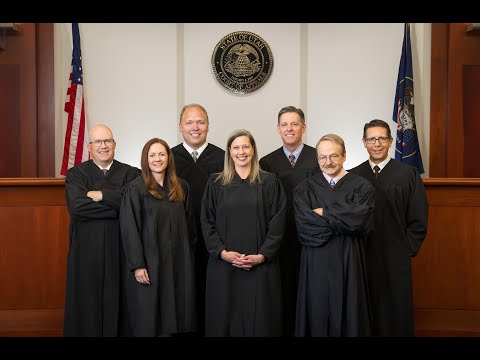
The panel — Judge Ryan Harris (presiding), Judge Michelle Christiansen Forster and Judge Ryan Tenney — questioned both sides about what specific follow‑up voir dire questions counsel should have asked and whether the record supported a finding of actual bias. The state, through Assistant Attorney Jonathan Bauer, argued counsel’s choice to pursue an “all‑or‑nothing” defense was objectively reasonable under Strickland and that the affidavit supporting the juror‑bias claim did not justify a remand for a 23(b) hearing.
Why it matters: the appeal raises two recurring appellate issues — when post‑trial juror statements justify reopening jury selection to test for actual bias, and how Strickland’s ineffective‑assistance standard treats strategic trial choices (here, whether to preserve a constitutional challenge or to present imperfect self‑defense). If the court orders a 23(b) hearing or finds trial counsel deficient, the decision could affect whether Cortez’s convictions are vacated and retried.
Key points from argument
- Juror‑bias claim: Ellison argued trial counsel should have probed the depth of jurors’ ties to law enforcement rather than relying on a single for‑cause motion and the written questionnaire. She said the post‑trial affidavits indicate juror 6 would “lean closer to law enforcement” and that juror 7 had close family in policing and expressed views suggesting police rarely arrest the wrong person.
- State response: Bauer emphasized the questionnaire and oral voir dire already asked whether jurors would give law‑enforcement witnesses more weight, and both questioned jurors answered no in writing and again orally. He said an attorney may reasonably choose not to antagonize jurors by repeated questioning, and that the choice to present an all‑or‑nothing defense can be objectively reasonable.
- Uniform‑operation / imperfect self‑defense claim: Ellison asked the court to consider whether the uniform operation clause required that defendants in similar factual circumstances be able to present imperfect self‑defense, arguing that charging choices (the state prosecuted seven counts of felony discharge of a firearm rather than attempted murder) affected available defenses. The panel probed whether different statutory elements and sentencing ranges separate the charges sufficiently to defeat a uniform‑operation argument.
Procedural posture and likely next steps
- No formal ruling was announced at argument. The panel took the matter under advisement and said it will issue a written decision.
- The appellant asked for either a new trial or, at minimum, a remand for a 23(b) hearing to examine juror testimony about possible bias. The state asked the court to affirm, opposing a 23(b) remand and arguing there was no deficient performance or prejudice.
Quotes (selected and attributed to participants in the record)
- “Omar should be granted a new trial because he received ineffective assistance of counsel in 3 ways,” — Heather Ellison, counsel for appellant.
- “There’s a strong presumption of reasonable behavior” by counsel and this case involves strategic choices that are difficult to second‑guess on appeal, — Jonathan Bauer, counsel for the state (paraphrase of argument).
Ending
The court heard extensive questioning from the panel about what specific voir dire counsel should have asked and whether later juror statements supplied new, nonduplicative information relative to the trial‑record questionnaires and oral voir dire. The justices took the appeal under advisement and said they will issue a written decision.