Get Full Government Meeting Transcripts, Videos, & Alerts Forever!
Get email alerts on the Budget topic
No spam. Unsubscribe anytime.
Sedona council adopts $103.46 million tentative budget after heated debate over salary study implementation
Summary
After more than two hours of discussion about a recent salary-market study, the Sedona City Council unanimously approved a $103,457,496 tentative budget and gave staff direction on salary adjustments, debt payoff and several decision-package changes.
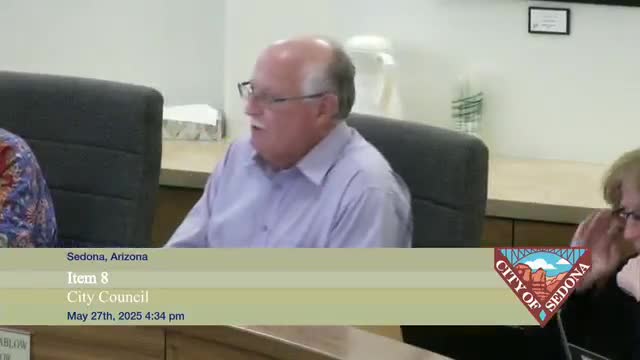
Sedona — The Sedona City Council unanimously approved a tentative city budget that sets the fiscal‑year spending limit at $103,457,496 after a lengthy public meeting that centered on whether to fully implement a recent salary market study.
The council voted to set the tentative expenditure limit after hearing a budget presentation from Barbara Whitehorn, the city’s director of financial services, and a detailed briefing on a citywide salary study from Russ (staff/consultant). Whitehorn said the tentative budget “sets the limit for the next fiscal year” and warned the council it could reduce the figure later but could not increase it after tentative adoption.
Council debate focused on how much of the salary‑survey recommendations to fund this year. The study provided three rough options for implementation: the placeholder amount staff had originally budgeted at about $1.3 million; a partial phase‑in capped at a 7% adjustment (roughly $685,000); or full implementation to move affected positions to market (about $900,000). Russ and Whitehorn told the council the 7% cap would cover many positions but that roughly 50 employees were still substantially below market and the difference between the two implementation choices was about $215,000.
Councilors applied both fiscal caution and retention concerns in their remarks. Councilor Fultz said the ongoing personnel budget already rose and asked whether the increases were sustainable, calling the issue “a serious question” and urging caution. Several other councilors said Sedona’s labor market and local housing costs meant the city needed to be competitive to retain police and other staff. Councilor Dunne and Vice Mayor Plueg said they favored full implementation to address longstanding compression issues; Councilor Kinsella and others supported phasing in base‑pay adjustments but wanted explicit caps or conditions.
City Manager Annette reported a tally of council preferences before the budget vote: four council members favored full implementation of the market adjustments this year and two favored a phased or capped approach. The city manager and finance director said that adopting the tentative budget would allow staff to reduce the $1.3 million placeholder in the next step of the process and that the final adopted budget on June 24 could be lower if council directed it.
Council members also gave staff direction on related budget decisions. Council consensus authorized staff to use a portion of available surplus to pay off outstanding high‑interest enterprise leases (staff reported paying off all enterprise leases would cost about $839,000; paying only the highest‑interest leases would be about $744,000). Council also directed staff to capture roughly $122,000 in parks projects that can be completed in the current fiscal year (reducing next year’s decision package demand) and to reduce the tentative budget accordingly. Whitehorn said the tentative figure set by the council accounts for those adjustments and cautioned the final number would likely be a few thousand dollars lower after technical payroll and benefits calculations.
The council’s motion to set the tentative budget as the expenditure limit passed unanimously. Staff noted the tentative adoption sets a hard ceiling; the council may only reduce the budget before final adoption on June 24.
What the council decided
- Tentative budget expenditure limit: $103,457,496 (motion adopted unanimously). - Direction to staff: reduce the budget to reflect the $122,000 of parks work completed in the current fiscal year; use available surplus to pay enterprise leases (estimated total pay‑off ~ $839,000); proceed with implementation approach consistent with council direction on the salary study (a majority favored full implementation, while some members preferred a capped/phase approach).
Why it matters
The tentative budget sets the ceiling for FY 2025–26 spending and frames later discussion about personnel costs, capital projects and rate studies. The salary‑study debate illustrates the tradeoffs Sedona faces between short‑term fiscal prudence and the city’s ability to recruit and retain employees—particularly police officers and other positions where the city is behind market.
Details and next steps
Staff will bring a final budget for adoption on June 24. Between now and then, council members asked staff for updated cost breakdowns showing the incremental fiscal effect of the various salary‑implementation options and for follow‑up on the enterprise‑lease payoff plan and any recommended changes to staffing decision packages.
Speakers quoted in this story are identified by their roles as recorded at the meeting: Barbara Whitehorn, city director of financial services; Russ (staff/consultant) on the salary study; City Manager Annette; Vice Mayor Plueg; Councilor Brian Fultz. All quotes are verbatim excerpts of remarks at the public meeting.