Get Full Government Meeting Transcripts, Videos, & Alerts Forever!
Get email alerts on the Sewer Rates Winter Average topic
No spam. Unsubscribe anytime.
Toledo utility officials defend eliminating winter sewer average; say reinstating it would raise rates by about $4 million
Summary
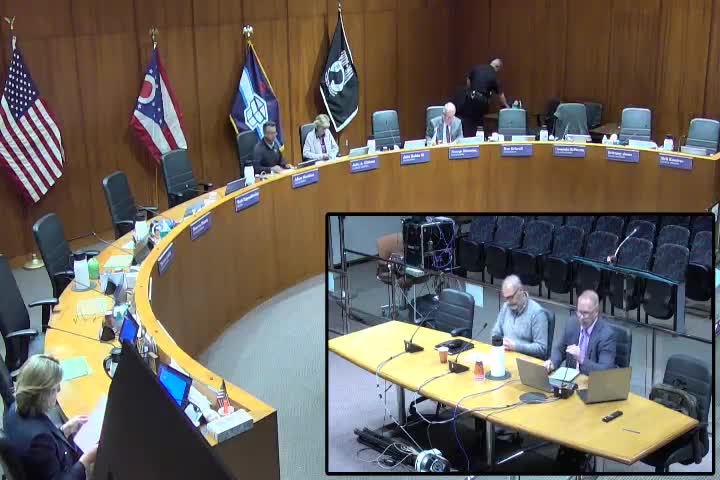
Director Stevens, Department of Public Utilities, told the Water Quality Committee on May 28 that the city removed the winter sewer average from the sewer rate model to make room for a new low-income discount and to align billing with actual monthly reads from recently installed advanced metering infrastructure (AMI).
Director Stevens, Department of Public Utilities, told the Water Quality Committee on May 28 that the city removed the winter sewer average from the sewer rate model to make room for a new low-income discount and to align billing with actual monthly reads from recently installed advanced metering infrastructure (AMI).
The change matters because, Stevens said, reinstating a winter sewer average would reduce the utility's consumption revenue by about $4,000,000 and require a higher per-unit charge. "If a winter sewer average discount was applied, we would lose $4,000,000 of that $66,000,000 revenue," Stevens said. He presented consultant estimates showing the consumption charge set for 2025 at $5.841 per hundred cubic feet (CCF) would rise to about $6.277 per CCF if the winter averaging program were restored — an increase Stevens described as roughly 7.5 percent.
Why it matters: the department said sewer revenue must cover the costs of operating and maintaining the wastewater collection and treatment system, and that discounts must be offset so the utility can meet debt and capital obligations. Stevens told the committee the utility needs about $101,000,000 in annual revenue and currently collects roughly $35,000,000 from fixed charges and about $66,500,000 from consumption charges.
Stevens explained two technical reasons behind the policy change. First, the city recently installed AMI meters that provide near-monthly actual reads instead of frequent estimated bills, which the department said made an averaging program less necessary. "When AMI was put into service, it let us be able to accurately bill people," Stevens said. Second, the city is introducing a low-income discount program (at 200% of federal poverty guidelines) plus existing senior discounts; Stevens said the discounts required a revenue offset.
Committee members and residents raised concerns about how the change affects households that use large volumes of water in summer, especially pool owners. Councilman Saron asked whether the rates and discounts apply only to City of Toledo customers or also to Lucas County residents connected to Toledo's system; Stevens replied the sewer-side discounts and rates apply to City of Toledo sewer customers and that county customers pay Toledo's base charge plus an additional county charge. "So on the sewer side, it's just city of Toledo sewer customers," Stevens said.
Several residents described how the end of winter averaging will affect them. Gary Bosnier said he waters his lawn and cleans his driveway after street flooding and that paying for sewer on that outdoor water felt like a "false bill from DPU." Mary Menick, a former city employee, said she was not aware the winter average program had been removed and calculated an example in which summertime use could raise a monthly sewer consumption charge from about $30 to roughly $100. Deborah Sue Pearson said she was told by DPU staff that filling an 8,000-gallon pool could increase a summer bill "anywhere between $150 to $200," and Laura Hankins said at 65 years old she feared losing the ability to afford filling her pool.
Stevens and staff offered alternatives to a one-size reinstated winter average. Options presented to the committee included: conservation information and alerts available through the city's myTOL AMI portal; installation of separate irrigation meters for outdoor use (which requires private plumbing work and backflow prevention); and a budget-billing program that spreads expected annual consumption evenly across 12 months. Stevens said the budget plan is available now by calling DPU customer service and that the portal implementation of budget billing is in progress: "You can ask for a budget bill, and it'll clean up the spikes that you have in the summer," he said.
On collections, Stevens said the department has accumulated delinquent water-and-sewer accounts during the COVID period but is preparing to resume collection actions. "We do have outstanding debt in that amount," Stevens said of the large accounts-receivable figure cited in the meeting, and added the department expects to resume some turn-offs beginning in June, starting with higher users and working down as collection procedures are refined.
The committee did not vote on a new policy during the meeting. Staff said they will present a formal collection plan to council before resuming disconnections and will coordinate communications to customers about budget billing and discount eligibility. Stevens also said the department is reviewing one-time adjustments or appeals for events such as pool fills or leaks but had not adopted a formal allowance for one-time pool credits by the meeting date.
Ending: DPU posted the presentation and indicated staff in the back of the meeting could help customers sign up for discounts or budget billing. The department provided a customer-service phone number (419-245-1800) and the email dpucustomerservice@toledo.oh.gov for those seeking immediate help.