Get Full Government Meeting Transcripts, Videos, & Alerts Forever!
Get email alerts on the Active Transportation topic
No spam. Unsubscribe anytime.
Dallas council adopts updated bike plan amid advocates’ calls for faster funding and clearer timelines
Summary
Council adopted the updated Dallas Bike Plan (2011 update) on consent May 28. Bike advocates praised the plan but urged faster, dedicated funding, better staffing and clearer construction timelines.
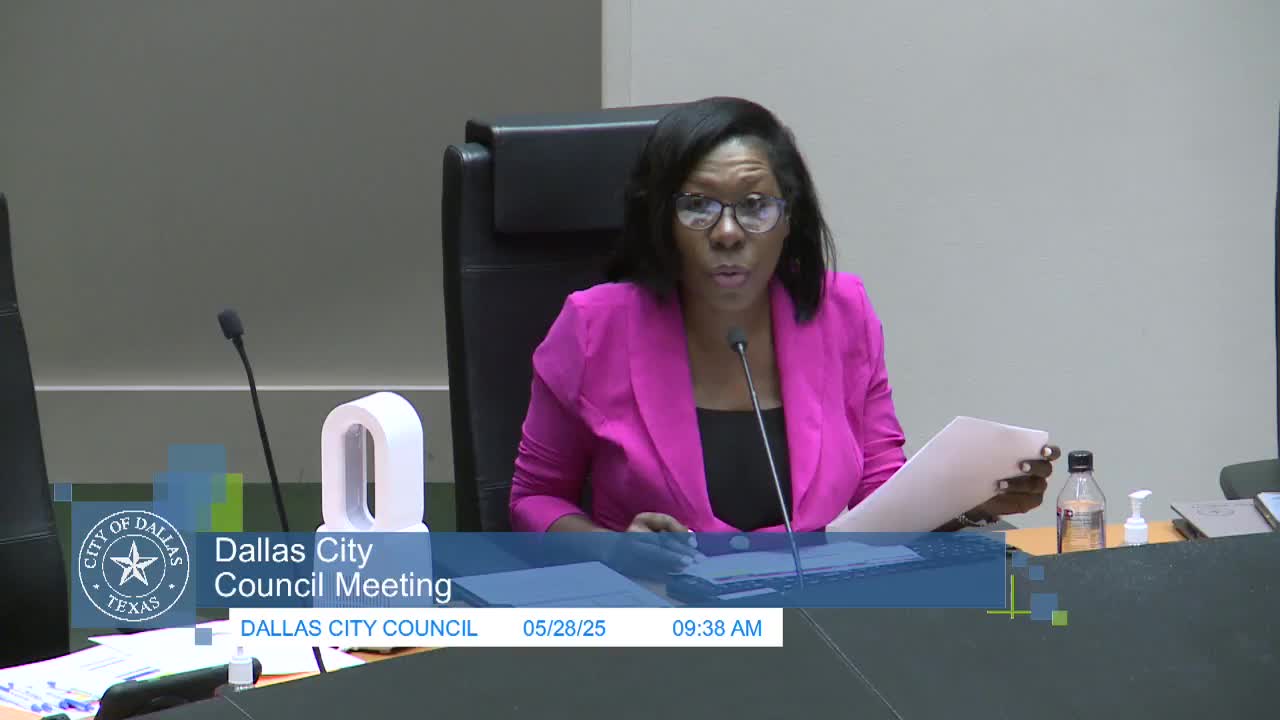
The Dallas City Council adopted an updated Dallas Bike Plan during the May 28 consent agenda, marking the city’s first comprehensive update since 2011. Council members and bicycle advocacy groups hailed the plan as a foundation for safer bicycle infrastructure while several speakers and council members pushed the city to move faster on implementation funding and construction timetables.
Rebecca Kornblum, president of the Dallas Bicycle Coalition, told council the plan is a “huge step” but warned it lacks dedicated funding and an implementation timeline. The coalition led a letter signed by 60 community and business partners calling for higher annual bike funding, more efficient resurfacing processes and expanded project staffing. “Passing the bike plan today is a huge step,” Kornblum said. “But right now there's no dedicated funding and no clear timeline.”
Speakers from Bike Friendly South Dallas and Environment Texas testified on how bike infrastructure intersects with mobility, safety and greenhouse‑gas reductions. Ian Siemens of Environment Texas noted transportation accounts for 39% of city emissions and said improved bike networks can cut pollution and ozone—an ongoing compliance concern for the region.
Several council members praised the plan but shared advocates’ concerns about pace and funding. Councilmember Chad West and others called for dedicated annual funding and staffing to help ensure the plan does not “sit on a shelf.” Deputy Mayor Pro Tem Basal Dua and others also highlighted the plan’s benefits for safety, Vision Zero goals, and equitable access to active transportation.
What passed: The council approved the updated Dallas Bike Plan as part of its consent agenda. The plan includes updated facility design standards, a prioritized implementation plan, and a standing bicycle advisory committee to provide oversight. Adoption does not itself appropriate capital funds; council members and advocates emphasized that follow‑on budgets and project approvals will determine the plan’s pace of delivery.
Why it matters: Dallas is updating multimodal standards to reduce crashes, improve public health, and lower transportation emissions. Advocates say a formal plan makes projects eligible for federal and state grants and provides a policy basis for capital investment—if the city funds construction and adds staff to manage the program.
Next steps: Advocates urged council members to seek dedicated annual funding (advocacy letter asked for $3 million per year), streamlined resurfacing and stronger project management to shorten the timeline from decades to years.