Get Full Government Meeting Transcripts, Videos, & Alerts Forever!
Get email alerts on the Council Policy 88 topic
No spam. Unsubscribe anytime.
Janesville council adopts revised remote‑attendance policy after heated debate
Summary
After extended debate over limits on remote attendance, the Janesville Common Council adopted a revised Council Policy 88 on May 27. An amendment to impose stricter limits failed 5‑2; the staff‑recommended version then passed 6‑1.
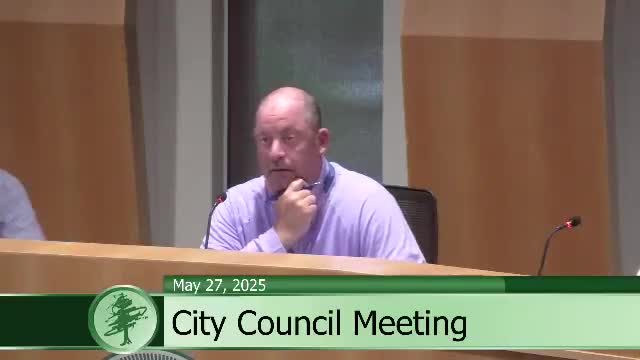
The Janesville Common Council on May 27 adopted a revised Council Policy 88 addressing remote attendance for council members, boards, commissions and committees after a prolonged debate over limits on virtual participation.
City Manager Kevin Lehner reviewed staff edits before the council discussion, saying the packet included the original policy and staff'proposed modifications; among the staff changes were removing signature requirements and an annual renewal requirement. Council member Paul Williams moved to adopt the revised policy incorporating his suggested modifications, including language intended to limit remote attendance. Williams'proposed language would authorize remote attendance only when the chair determined that health, safety, welfare, family or work circumstances warranted it and would bar remote attendance "solely for convenience" and for "seasonal relocation." Williams later amended his motion to remove the explicit phrase "due to vacation or travel" while leaving seasonal relocation excluded.
That amended motion failed on a roll call vote, 2 in favor and 5 opposed. Council member Miller and Council member Williams voted yes; Council President Burdick, Vice President Squire, Council members Nino, Cass and Erdman voted no. During debate, council members expressed differing views: Council member Erdman called the proposed language "a solution looking for a problem," Council member Squire and others warned that overly strict rules could deter qualified candidates from running or could place an enforcement burden on the council president or committee chairs, and Council member Miller cited absenteeism on boards and commissions as a concern that warranted clearer expectations.
After the failed vote, Council member Cass moved to adopt the staff's initial modifications (attachment A). That motion passed 6‑1; Council member Williams cast the lone no vote. The adopted policy therefore reflects the staff revisions presented in the council packet rather than Williams' narrower limits; the transcript does not show the city adopting a numerical cap on remote appearances per year.
The council discussed enforcement mechanisms in general terms. The city attorney and manager explained that the council can sanction or remove members of appointed boards and commissions with a two‑thirds council vote for policy violations; for elected officials the available remedies are formal reprimand or censure. Council members requested, in some comments, that staff provide further guidance or possible attendance‑tracking approaches in the future; no specific numeric attendance threshold was adopted at the meeting.
The votes and debate occurred during the "old business" portion of the May 27 agenda; council members then moved on to other items.