Get Full Government Meeting Transcripts, Videos, & Alerts Forever!
Get email alerts on the School Food Nutrition topic
No spam. Unsubscribe anytime.
Committee hears testimony on HB 4,369 to ban certain additives from taxpayer-funded school meals
Summary
Lansing — The Michigan House Education and Workforce Committee on May 14 took testimony on House Bill 4,369, which would prohibit certain synthetic additives from taxpayer-funded school meals.
Lansing — The Michigan House Education and Workforce Committee on May 14 took testimony on House Bill 4,369, sponsored by Representative Jack Paquette, which would prohibit a list of synthetic additives and ultra-processed ingredients from taxpayer-funded school meals and other state-funded food programs.
The sponsor and multiple witnesses said the bill targets ingredients they described as harmful to children's health, including artificial food dyes, brominated vegetable oil, titanium dioxide and certain preservatives. Representative Paquette said the measure is modeled in part on California legislation and is intended to ensure that foods purchased with public funds are "food, not additives."
"Food is a medicine," Paquette said in opening remarks. "If we have taxpayer dollars that are going to funding foods in our schools, we should at least ensure that they're nutritious and they're not harming our children's education and their development."
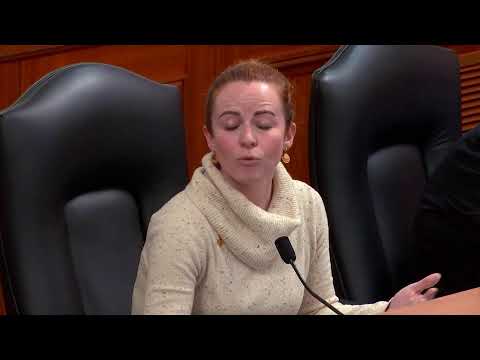
Multiple witnesses testified in favor. Liana Werner Gray, identified as a certified nutritionist, said schools now serve children foods "filled with toxic additives, chemicals like Red 40, Blue 1 and 2, titanium dioxide, and brominated vegetable oil, right in their cafeterias," and characterized the issue as a public-health problem. "This isn't just poor nutrition, it's poison," she told the committee.
Grace Price, an investigative journalist testifying remotely, urged lawmakers to act and said additives in ultra-processed foods can "hijack the brain's reward pathways" and create addiction-like behaviors. A psychiatric drug reform advocate identified as Danielle Ganske told the committee she believes poor food quality contributed to her childhood health issues and later psychiatric diagnoses; she said removing additives was a key part of her recovery.
Several witnesses cited studies and international regulatory actions. Testimony referenced a 2007 randomized, double-blind trial published in The Lancet linking artificial food colors and preservatives to increased hyperactivity in children, the Center for Science in the Public Interest's 2010 review of food dyes, and regulatory actions by the European Food Safety Authority. Witnesses also mentioned that brominated vegetable oil has been restricted in some jurisdictions.
Committee members focused questions on cost and implementation. Representative Colazar asked whether the bill should target third-party vendors who supply nearly half of school meals rather than imposing requirements on school districts. Representative Burns and others pressed about the potential cost increase for districts and whether the House Appropriations subcommittee on school aid has been consulted. Paquette said the bill's language could be adjusted and emphasized the need for a broader conversation on making healthy food accessible.
The sponsor told members the program is modeled after other states' laws and noted that some food companies already use vegetable-based colorings in other countries. He acknowledged there is not yet a House fiscal estimate in the record for the incremental cost to districts and said he would prioritize seeking funding or adjustments if the committee determines they are needed.
No committee vote was recorded on HB 4,369 during the hearing. Committee members asked for additional information on costs, vendor regulation options, and how the bill would affect districts with limited food-preparation facilities.