
Senate approves Legacy appropriations conference report amid disputes over land purchases, priority projects and festival funding
Get AI-powered insights, summaries, and transcripts
Subscribe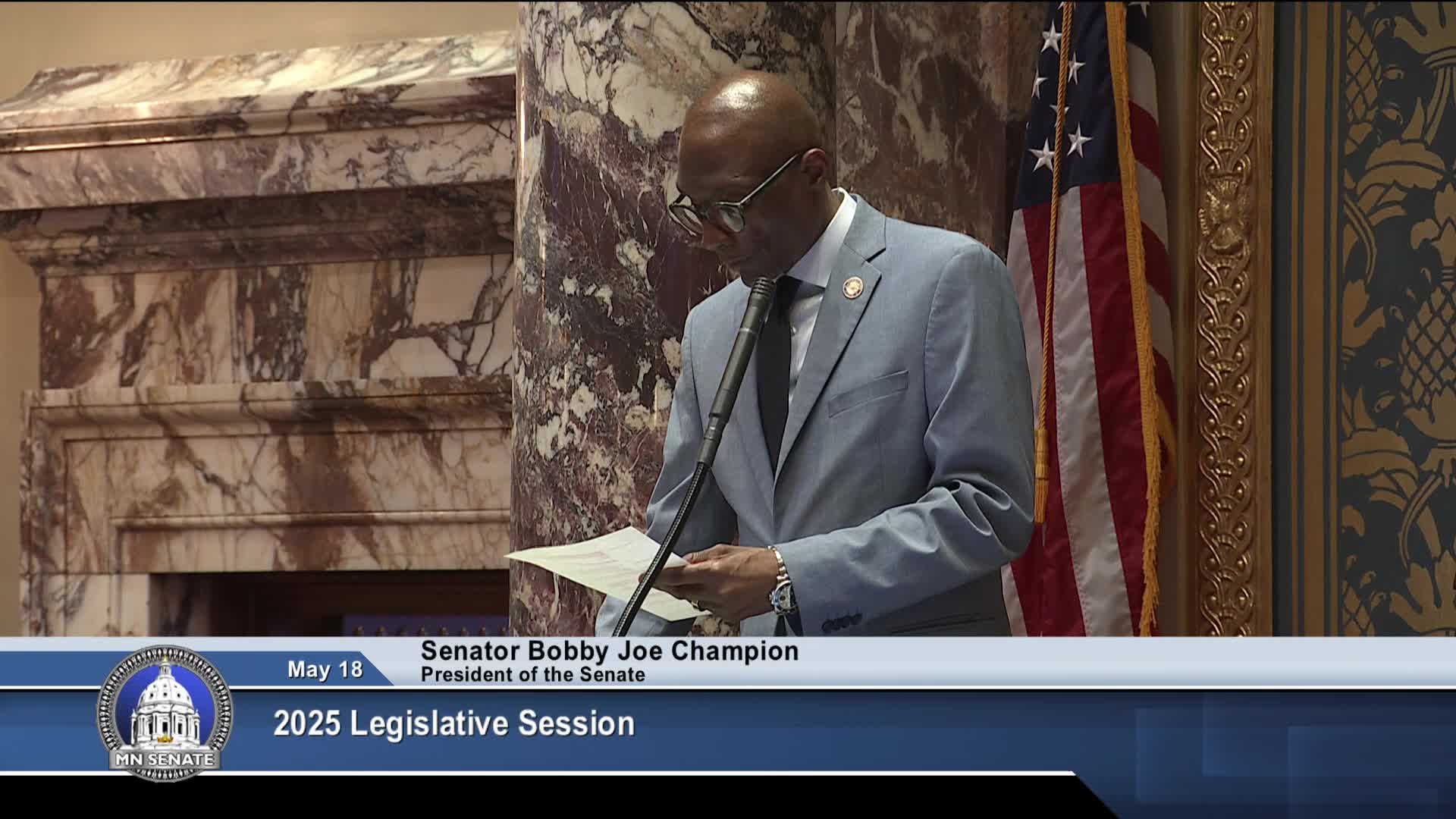
Summary
The Senate approved House File 2563, the four‑fund Legacy appropriation bill, after debate about transparency and project prioritization. Passage was 37–30. Critics raised concerns about large land acquisitions, diminished local tax base (PILT), and priority project lists and caps that could limit funding for festivals and community events.
The Minnesota Senate adopted the conference committee report on House File 2563, the omnibus Legacy appropriations bill covering the Outdoor Heritage, Clean Water, Parks and Trails, and Arts and Cultural Heritage funds, by a recorded vote of 37 ayes to 30 nays.
Senator Andrew Hurd, who presented the conference report, described a negotiated package that included major senate priorities such as museum and zoo funding, cultural grants and wilderness inquiries. "The conference committee was agreed upon with the house, and a majority of the provision that we left here are included," Hurd said during floor explanation.
Floor debate ranged from technical concerns about how priority projects were identified and capped to broader questions about the program's scale and public benefit. Senator Green criticized the bill's scale and cited dozens of line items he said amounted to nearly $750 million in that cycle or closer to $900 million over multiple funds and biennia, and raised questions about land acquisitions and the fiscal impact on local governments when land becomes exempt from property taxation.
Speakers also focused on land‑related issues. Senator Green said the bill includes large outright land purchases (he cited roughly 13,000 acres purchased in a recent biennium and said about 4,000 acres in the current bill are being acquired without payment‑in‑lieu‑of‑taxes or PILT), and easements on over 11,000 acres. Concerns were raised that converting privately taxed land to non‑taxable public holdings can reduce local tax bases and shift costs to other taxpayers unless PILT or other mitigation is provided.
Process and transparency were recurring themes. Multiple senators, including Senator Pratt and Senator Wiesenberg, said they or their conferees did not have broad opportunity to review conference changes and that the conference committee met only briefly to accept a completed agreement. Pratt said the conference committee "did not meet to go through the differences" and that the chairs negotiated the final package without full conferee input; other senators urged colleagues to read the project books that accompany the legacy bill.
Funding priorities and competitive grants also drew discussion. Some arts and cultural line items were assigned "priority" status that senators said could functionally direct agencies toward particular named projects, and festival or event grants (including the Taste of Minnesota) were discussed as competitive with caps — Hurd said some named priorities will be capped at $200,000; earlier Senate positions for larger direct appropriations were reduced in negotiation.
Despite objections, the conference report passed; supporters cited the bill's breadth across water, outdoors and cultural priorities and the fact that Legacy funds are lottery‑supported, not general‑fund appropriations.
Votes at a glance House File 2563 (Legacy funds appropriations for Outdoor Heritage, Clean Water, Parks & Trails, Arts & Cultural Heritage) — Motion to adopt conference committee report: Moved by Senator Andrew Hurd; outcome: adopted; roll‑call vote: 37 yes, 30 no.
What changed and why it matters The conference report funds conservation easements and land purchases, water assessments and restoration projects, park and trail grants, and a set of arts and cultural grants and named priority projects. Debate focused on how projects are prioritized and whether the public interest and local fiscal impacts — particularly property tax erosion where land becomes publicly owned — are sufficiently protected.
Concerns and clarifications Senators raised concerns about large land purchases and easements that reduce taxable acreage, potential gaps in PILT coverage and the effects on county property-tax bases. Several members criticized the expedited conference process and urged greater transparency and use of project books that list detailed uses.
Next steps With the conference report adopted, agencies will implement grants and acquisitions under the bill language; several senators said they will follow up on PILT calculations, project prioritization and oversight of major land acquisitions.