Get Full Government Meeting Transcripts, Videos, & Alerts Forever!
Get email alerts on the Education Assignment Capacity topic
No spam. Unsubscribe anytime.
Staff explain capping, overflow schools and K‑3 class‑size limits as Wake County enrollment grows
Summary
District staff provided a detailed review of capping and overflow designations, K‑3 maximum class sizes under state law, and how those rules affect school capacity and assignment planning as Wake County enrollment grows.
District staff provided a detailed review of capping and overflow designations, K‑3 class‑size requirements and how those rules affect school capacity and assignment planning as Wake County continues to grow.
Presenters reminded the board that temporary membership caps and procedures are embedded in district policy (policy 4150, section b). Staff described a cap school as one the board authorizes to stop new enrollments when physical capacity is exceeded and an overflow school as the board‑designated campus that receives students who can no longer enroll at the capped site. Staff noted two feeder‑pattern cap examples used in discussion: Mills Park Middle and Apex Friendship High School, and said some caps have been in place for multiple years.
Staff described the operational demands on overflow schools: an overflow campus must serve its own attendance‑area students while absorbing a continuing stream of overflow enrollments during the school year; that ongoing intake can complicate staffing, master scheduling, assessment cohorts and family engagement. Board members highlighted that families and schools can face community‑building and volunteer engagement challenges when a school serves multiple communities or when families are uncertain whether their child will be reassigned back to a capped base school.
On class sizes, staff reviewed North Carolina General Statute 115C‑301(c) and the district’s implementation steps. They said the K‑3 maximums to which the district aligns are 18 students for kindergarten, 16 for first grade and 17 for second and third grade (with limited statutory flexibility that allows up to +3 in exceptional cases by waiver from DPI). Staff explained the K‑3 limits materially reduced available elementary capacity once the district adopted the lower class‑size reporting standard and that the district has opened new schools and completed renovations since that change but still remains short of seats in several areas.
Using district capacity numbers, staff said the transition to the K‑3 reporting standard reduced available facility seats by roughly 4,360 (core facility change) and by about 6,778 when including trailer seats; they also cited an additional reduction of about 2,750 seats after some program spaces were converted into K‑3 classrooms. Staff said the district has opened multiple new elementary schools and completed renovations but that projected growth in some neighborhoods means caps and other temporary measures may continue in affected regions.
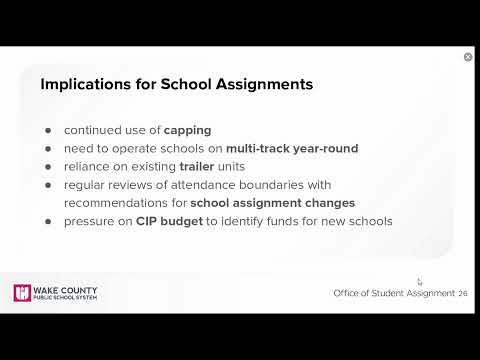
Staff outlined practical options the district uses to manage demand: reassignment of base attendance areas when feasible, continued targeted use of trailers, multitrack/year‑round calendar conversions where appropriate and targeted enrollment funding to help receiving schools. Staff also noted challenges: targeted funds for personnel can arrive weeks or months after the start of school, making mid‑year hires difficult; master schedules and staffing plans are set early and can be disrupted by mid‑year enrollment shifts.
The board and staff agreed to continue public engagement and to bring additional assignment recommendations to future work sessions. Staff said they would return with follow‑up materials, including a planned June meeting on related assignment items and a June 3 update tied to a Lake Myra Elementary conversation.