Get Full Government Meeting Transcripts, Videos, & Alerts Forever!
Get email alerts on the Juvenile Corrections topic
No spam. Unsubscribe anytime.
Idaho Juvenile Corrections asks for $300,000 to cover rising substance‑use treatment costs, seeks radio upgrades amid rising mental‑health needs
Summary
At a Feb. 18 JFAC hearing the Idaho Department of Juvenile Corrections requested a $300,000 ongoing general‑fund increase to cover higher residential substance‑use treatment costs, a $380,000 one‑time radio upgrade from its endowment fund and outlined growing mental‑health and census pressures in state facilities.
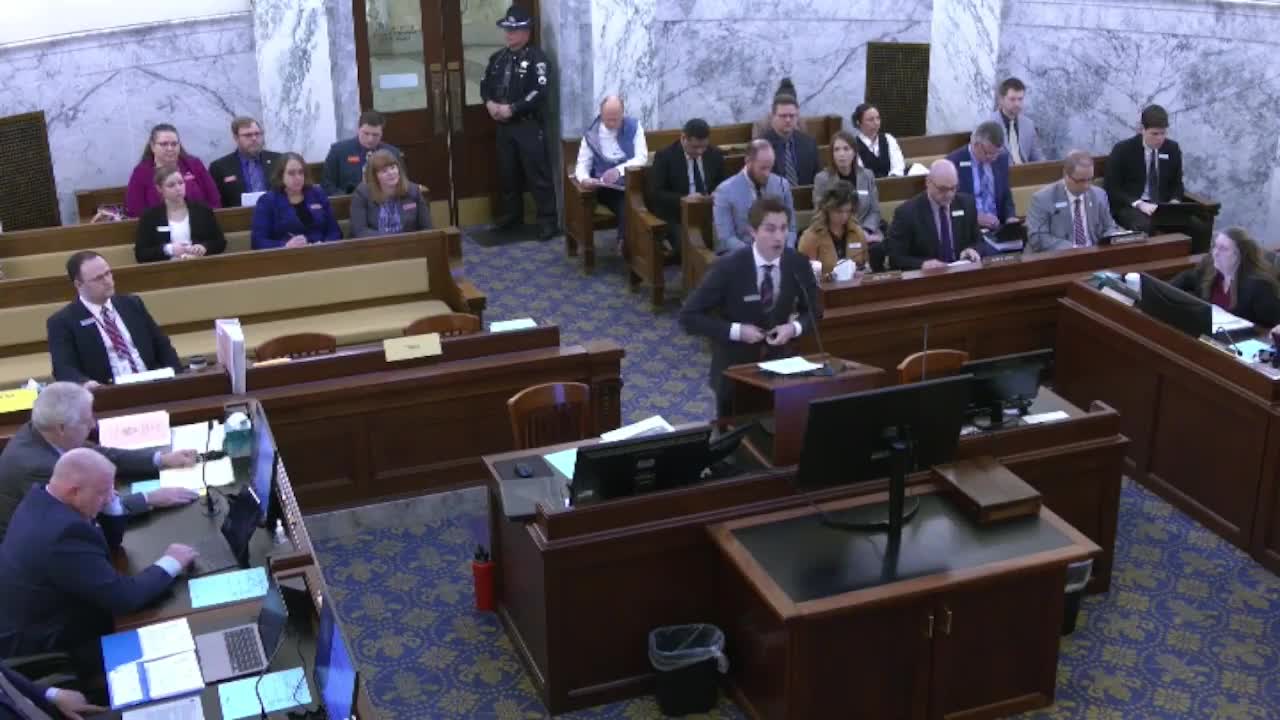
At a Feb. 18 hearing of the Joint Finance‑Appropriations Committee in Boise, the Idaho Department of Juvenile Corrections requested $300,000 in ongoing general‑fund support for residential substance‑use treatment and a $380,000 one‑time purchase from the Juvenile Corrections Endowment Income Fund to upgrade radios at the state’s three juvenile correction centers.
The request reflects what agency officials described as higher per‑day treatment costs, longer average lengths of stay and increasing mental‑health needs among youth in custody. Noah Peterson, the Legislative Services Office analyst presenting the budget, told the committee: “This $300,000 request is to make up the difference from what was previously covered by health and welfare.”
Why it matters: The department said the cost of daily residential treatment has roughly doubled since 2021 and the average length of stay has more than doubled, driving program costs from about $1,260,000 in fiscal 2021 to about $2,700,000 in fiscal 2024. Department officials said those increases were partly offset by one‑time ARPA funding from the Department of Health and Welfare that is no longer available, creating an ongoing shortfall the department now asks the legislature to cover.
Noah Peterson, budget policy analyst for the Legislature, provided specific cost details to the panel. He said the daily rate “was a hundred and $98 and then it increased in August of 20 21 to $399 per day,” and that the average length of stay rose “from 31 days to 67 days.” Peterson described how those two changes drove the program increase “from $1,260,000 in fiscal year 20 21 to $2,700,000 in fiscal year 20 24.”
Director Ashley Dowell told the committee she is seeing sharper mental‑health needs in the youth the department serves. “I am concerned about just the level of mental health we're seeing in the youth with our facilities. We are seeing an increase in criminality as well,” Dowell said, adding that suicidal ideation and self‑harming behavior have grown among youth in custody.
Program and equipment requests The department’s enhancement requests included: - $300,000 ongoing from the general fund for the residential substance‑use disorder (SUD) treatment program to replace funding that Health and Welfare temporarily covered with ARPA dollars. - $380,000 one‑time from the Juvenile Corrections Endowment Income Fund to replace and program radios that include a “man down” location alert; the agency said some radios already purchased have not been programmed and St. Anthony lacked the capability entirely. - $232,500 for ITS replacement items (hardware) recommended by the Office of Information Technology Services. - $145,100 from dedicated funds for replacement items and a requested net‑zero personnel‑to‑operating shift of $675,100 tied to consolidating IT positions and a reduction of 7 FTP.
Dowell described the radio upgrade as a safety feature: the “man down functionality that alerts staff to the location of an employee who is in need of assistance.” Agency slides submitted to the committee show the purchases would standardize capabilities across the Lewiston, Nampa and St. Anthony centers.
Census, diversion and other policy questions Dowell said the department’s census hit an all‑time low of 137 youth in custody in May 2024 and has since risen to 176, “which represents about a 19% increase of where we were, the year before.” She credited prior leadership with successful diversion efforts but said the recent rise warrants continued attention.
Committee members asked for data and follow‑up. Representative Tanner requested information on population trends and suggested the committee may reconsider capacity built during higher census years if counts continue to fall. Peterson said he did not have the population data at his fingertips but would provide it to the committee.
Members also pressed Dowell about the department’s youth crisis centers and human‑trafficking screening. Dowell said the trafficking‑screening bill passed last session has been implemented at the county and department level with an expert‑chosen tool and training; she said crisis centers have anecdotally helped divert children, including those under age 10, from detention but that the department would provide available data.
Minimum‑age and county detention Committee members and Dowell discussed the statutory split between county detention and Idaho Department of Juvenile Corrections facilities. Dowell said state facilities do not accept children under age 10, but that county detention has no minimum age restriction and that a diversion subcommittee of the Idaho Behavioral Health Council is working on minimum‑age language for possible policy changes.
Follow up and next steps No formal votes were taken. Committee leaders asked Mr. Peterson and agency staff to supply additional data on facility census, crisis‑center outcomes and the residential SUD cost trends; the co‑chair asked the fiscal impact team to review the SUD cost increases.
The department’s requests were included in the agency’s FY‑2026 enhancement packet and the governor recommended the IT and radio items, according to materials the analyst cited.