Get Full Government Meeting Transcripts, Videos, & Alerts Forever!
Get email alerts on the Education Budget topic
No spam. Unsubscribe anytime.
State education budget hearing focuses on special education staffing, assessments and career-ready grants
Summary
At a Joint Finance-Appropriations Committee hearing, the State Department of Education outlined fiscal requests including new special-education positions, replacement of the statewide assessment platform, increases to drivers education reimbursement and status of career-ready student grants and federal pandemic-era funds.
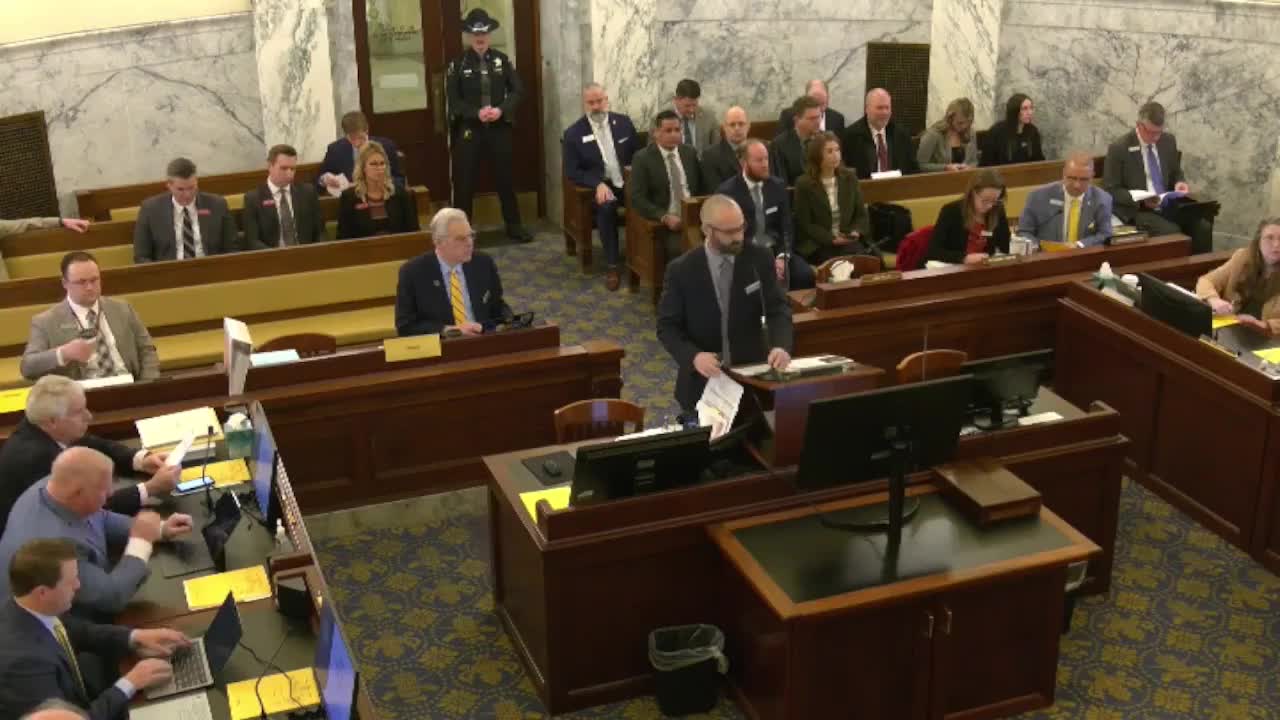
The State Department of Education laid out a package of personnel and program requests Wednesday during a Joint Finance-Appropriations Committee budget hearing in Boise, emphasizing rising special-education caseloads, a one-time request to transition the statewide student assessment, and continued rollout of career-ready student grants.
Deputy Division Manager Jared Tetro (Legislative Services Office) and State Superintendent Debbie Critchfield described the department's request, which includes three ongoing full-time positions for dispute resolution (special education), a charter-school special education specialist, and a second Indian education coordinator; a $2.7 million one-time request to transition to a new statewide assessment platform; and an ongoing proposal to increase drivers-education reimbursement from $150 to $300 per student.
The department said workload for special-education dispute resolution has risen significantly, with a 65% increase in mediation requests, a 77% increase in general complaints and a “1,200%” increase in hearings compared with the prior year, prompting the dispute-resolution staffing request. The assessment transition request was framed as needed because the contract with the state’s current vendor (Smarter Balanced Consortium) is expiring; the department described the $2.7 million as one-time authority to pilot and switch platforms, with the department’s base funding expected to cover ongoing implementation costs but subject to additional clarification.
Superintendent Critchfield told the committee that the department is seeing more parents seeking eligibility assessments for services and that the state’s younger students (K–3) have exhibited greater needs following pandemic-era disruptions. She said earlier estimates of a state funding gap to meet federal special-education obligations have grown from about $40 million to roughly $80 million.
On the career-ready student program, Critchfield said roughly $65 million was appropriated over recent budget cycles; the department received some 152 grant requests totaling roughly $138 million in demand. The department had awarded 72 grants obligating about $62.7 million and reported $16 million had been reimbursed to districts to date. The program aims to fund career-technical projects around the state, including capital and equipment projects to create or expand local pathways tied to industry needs.
The hearing also covered several other department requests and items:
- School bus camera fund: The committee heard about a current-year supplemental and an ongoing request tied to enforcement of HB 610 (stop-arm violations); the fund balance was reported at roughly $35,200 and the department explained spending authority can exceed cash balances but actual disbursements are subject to available cash in the fund.
- Drivers education reimbursement: The department asked to raise reimbursement from $150 to $300 per student, pointing to growing program costs and a drivers-training fund balance that has grown from about $3.8 million (2022) to an estimated $7.4 million (2026). The department characterized the request as additional spending authority to draw down an accumulating fund balance for district reimbursements.
- Idaho Reading Indicator and performance report card: The department requested a one-time $800,000 supplemental to complete a new state report card required to receive Title I funds (ESEA) if federal grant funds are not available.
- Career and technical education/ARPA and ESSER funds: Analysts and members asked for itemized reporting on ARPA/ESSER and private-school COVID support dollars. Committee members requested lists showing which private schools received reimbursements and the amounts; the analyst and department agreed to provide those reports.
- Student assessment development: The department requested $2.7 million one-time federal authority to pilot a new assessment platform for the ISAT (Idaho Standards Achievement Test), which tests students in grades 3–8 and once in high school. Department financial staff said the one-time request would cover the transition and pilot and that base funds would likely cover the ongoing assessment contract, subject to further clarification.
Committee members also pressed for additional detail on vacancy counts and audit findings. The department said its current authorized FTE is 126.5 with approximately 6 vacancies at the time of the hearing and that an auditor position hired last year is intended to verify student counts and payments to districts; the department agreed to provide follow-up reports on open audit findings and the utilization of ESSER and other federal funds.
Superintendent Critchfield summarized the department’s role as executing policies set by law and the State Board of Education and emphasized accountability and oversight of taxpayer dollars.
Ending
Committee members asked for follow-up materials the department agreed to provide, including a list of private-school COVID reimbursements, a project- and status-level breakdown of career-ready student obligations, and clarifications on the assessment transition funding and ongoing costs. The committee deferred formal decisions to its budget deliberations and supplemental review process.