Get Full Government Meeting Transcripts, Videos, & Alerts Forever!
Get email alerts on the Coastal Management topic
No spam. Unsubscribe anytime.
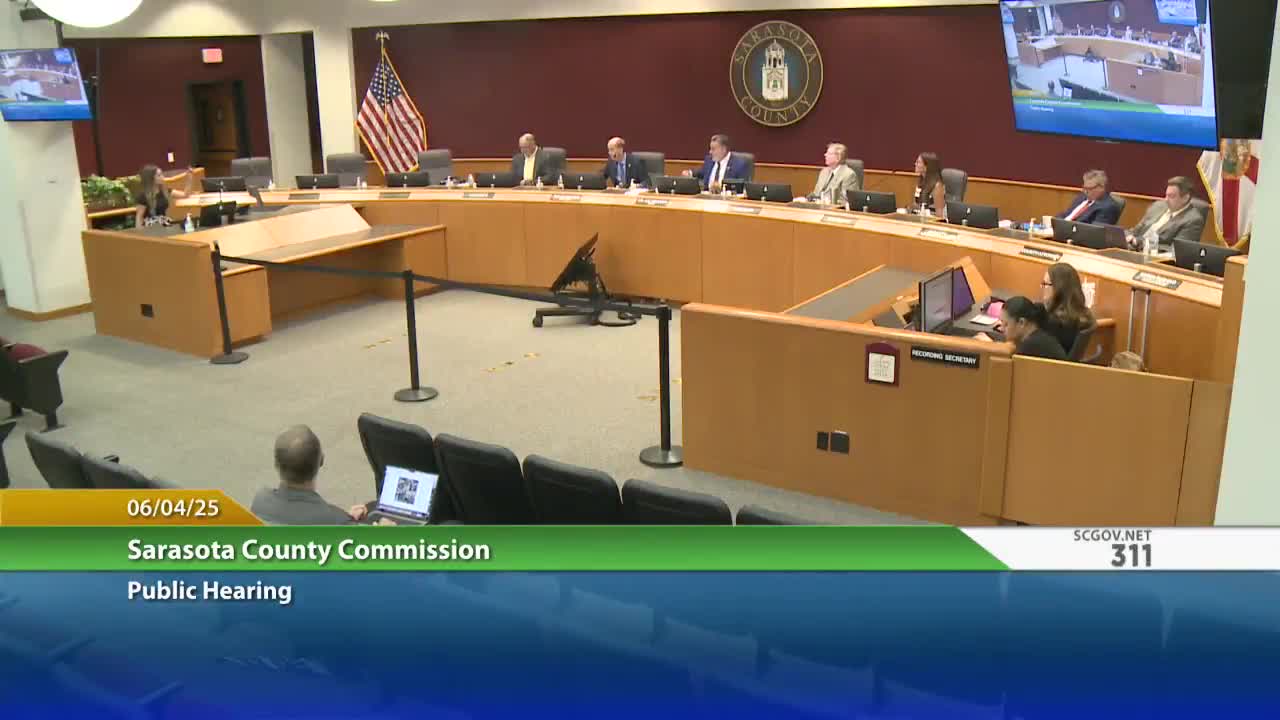
Commissioners approve Siesta Towers coastal setback variance; direct staff to study expedited seawall permitting and fee relief after storm damage
Summary
The board unanimously adopted a coastal setback variance allowing Siesta Towers to install a new seawall and re‑armor an existing revetment and separately assigned staff to study expedited permitting, fee suspensions and possible exemptions for previously developed waterfront lots after storm damage.
Sarasota County commissioners on June 4 adopted a coastal setback variance allowing Siesta Towers to install 193.9 linear feet of seawall landward of the existing wall and to re‑armor a revetment located seaward of the 20‑year Barrier Island Project (BIP) hazard line at 4822 Ocean Boulevard. The variance passed unanimously.
Kat (Katherine) Massey of J Foster Consulting, the engineer on the project, and property owners’ attorney Matt Brockway spoke in support. Brockway, who represents neighboring owners as well and said he will file additional variance requests, urged the board to consider streamlining approvals for previously developed waterfront lots that are replacing like‑for‑like shore protection after storm damage.
Howard Berna, manager of environmental permitting, explained the county’s coastal setback code contains three paths for variances: staff-administered emergency class 1 approvals (for immediate emergency repairs), class 2 temporary shoreline support approvals and regular variances that go to the board. He also described a staff general permit process through the Water and Navigation Control Authority (WNCA) that authorizes same‑location, same‑design replacement seawalls with a short (10‑day) review when the work is strictly for repair and maintenance.
Commissioners approved the applicant’s variance at the public hearing. After the vote, the board directed staff to return with a formal review of options to speed replacement of damaged seawalls on previously developed lots, to consider fee suspensions or temporary reductions for affected homeowners, and to propose precise eligibility criteria and any exemptions that should apply. Commissioner Smith made the board assignment and Commissioner Mast seconded; the motion passed unanimously.
Board members noted the costs and time involved for homeowners seeking variances and voiced concern that delays during hurricane season can leave properties exposed. Matt Brockway told commissioners that preparing a variance application can cost “many tens of thousands of dollars” including engineering and permitting expenses and that homeowners face stress and potential insurance impacts while protections remain unrepaired.
Staff said they have in some past emergencies waived certain staff fees for class 1 and class 2 approvals but not for regular variances and that the legal and permitting offices will return with recommended language to address exemptions, fee relief and streamlined processes without undermining environmental protections.