Lifetime Citizen Portal Access — AI Briefings, Alerts & Unlimited Follows
ACU official briefs Dallas commission on education benefits, highlights new Supreme Court eligibility window
Loading...
Summary
Vanessa Wise of Abilene Christian University reviewed federal and Texas education benefits for veterans, dependents and spouses and described a recent Supreme Court decision that can add 12 months of GI Bill eligibility for people who reenlisted and previously chose between benefits.
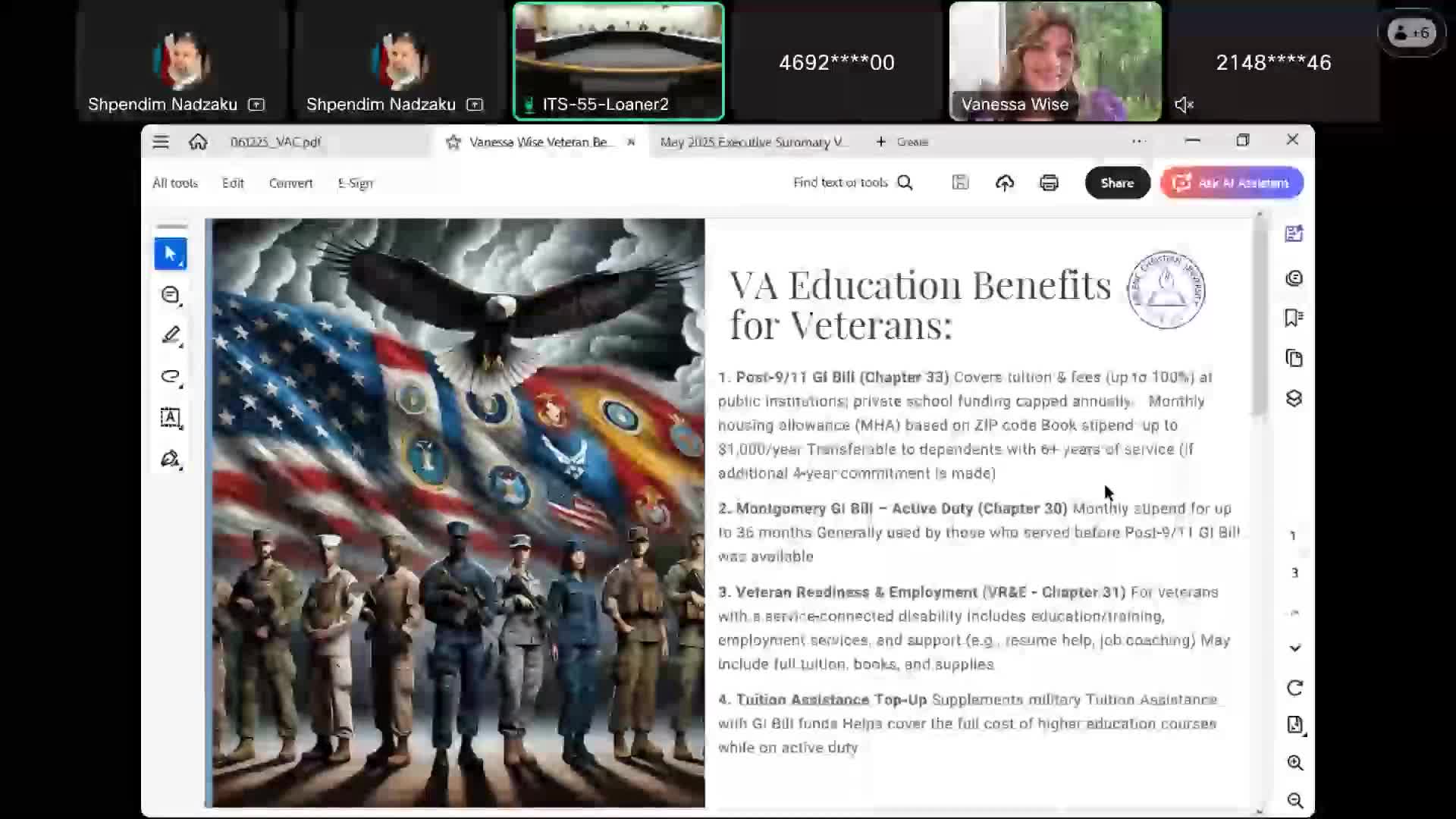
Vanessa Wise, a strategic partnership executive for military and government organizations at Abilene Christian University, told the Dallas Veterans Commission that a range of federal and Texas education benefits remain available to veterans, service members and their dependents and that a recent Supreme Court decision can restore an additional 12 months of GI Bill benefits for some people who reenlisted.
"I would sum this one up as the best one — the Post-9/11 GI Bill — because it covers tuition, books and a housing allowance for every qualified service member who uses it," Wise said, describing differences among the Post-9/11 GI Bill, the Montgomery GI Bill and Veteran Readiness and Employment (VR&E, chapter 31). She told the commission that the Post-9/11 program often covers public tuition in full and that private-school users may face annual caps.
Wise also described programs that apply to dependents and spouses, including the Hazelwood Act in Texas and Chapter 35 survivors-and-dependents benefits, and noted the My Career Advancement Account (MyCAA) scholarship for eligible military spouses. She highlighted the so-called Rudacille (Supreme Court) decision of 2025, which, she said, allows some veterans who reenlisted and previously were forced to choose between benefit programs to apply for an additional 12 months of benefits through the VA website.
Why it matters: Education benefits are a primary route to economic stability for many veterans and their families. Commission members said the information is important for outreach to Dallas-area service members, veterans and nonprofit partners.
The presentation answered commissioners' questions about ACU's local presence and outreach. Steve Cole asked about ACU's Dallas campus and whether the school had continued programming after a recent leadership change; Wise said the Addison campus is refurbished and hosts events, including a recent women's veterans event. Commissioner Christiano asked about ACU's outreach; Wise described a military admissions team that attends education fairs, matches tuition-assistance (TA) programs, and hosts community events. Commissioner Glenn Hunter asked whether any program rules had recently changed; Wise said she had noticed FAFSA delays but no major program rule changes affecting the benefits she described.
Wise also explained specific points commissioners raised during Q&A: that VR&E (chapter 31) serves veterans with service-connected disabilities with individualized counseling and employment services; that Hazelwood provides up to 120 credit hours at Texas public institutions for qualifying Texas residents and their dependents; and that MyCAA targets spouse certificates and associate degrees. She urged veterans and dependents to apply and offered to run trainings and one-on-one consultations.
Wise gave examples of how the Supreme Court decision has already helped individual students: she described one officer who successfully applied and received an additional 12 months of benefits and another student who used VR&E in combination with other benefits.
The commission asked that Wise share contact information and outreach materials; Wise agreed and offered to provide trainings and briefings to local bases and organizations.
Ending: Commission members thanked Wise and said staff would follow up to share her contact details with local partners and to explore presentations at city or base events.