Get Full Government Meeting Transcripts, Videos, & Alerts Forever!
Get email alerts on the Comprehensive Plan topic
No spam. Unsubscribe anytime.
Blount County workshop reviews draft comprehensive plan as residents press for more housing choice and traffic solutions
Summary
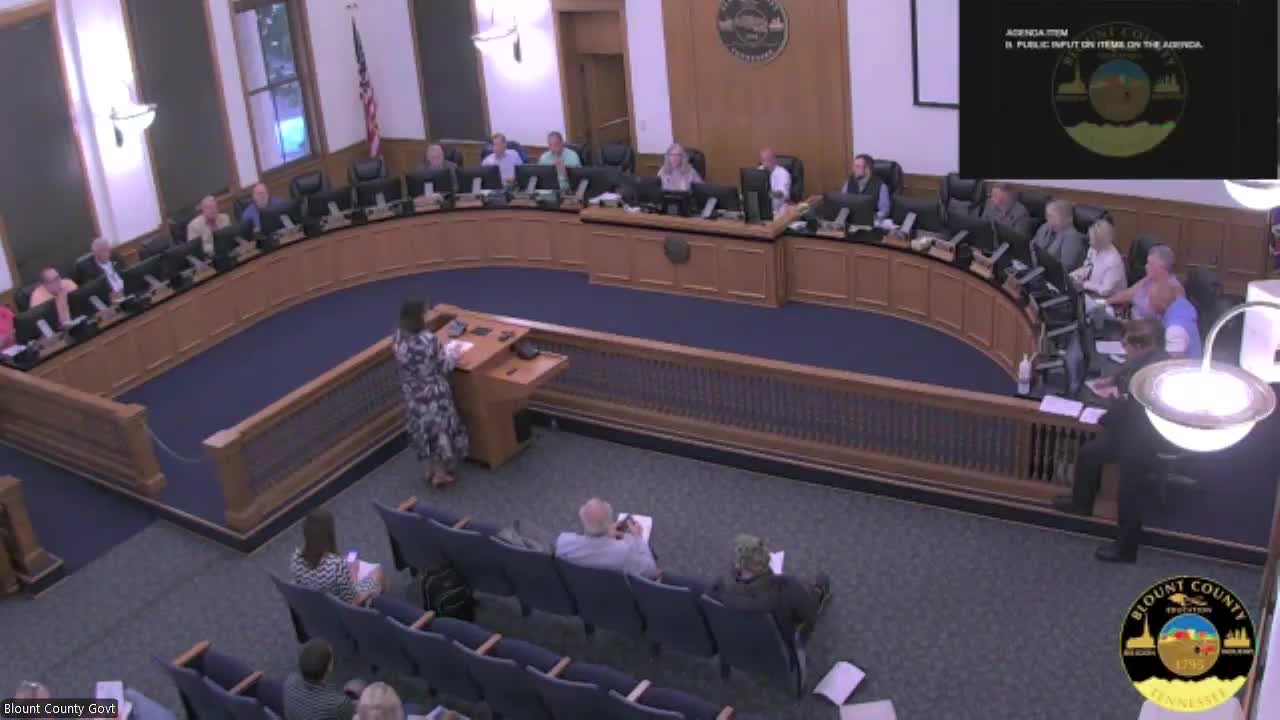
At a June workshop of the Blount County Commission, planners presented an updated comprehensive (growth) plan. Residents and real-estate representatives urged more housing density and affordability; commissioners pressed for clearer transportation strategies and implementation steps.
At a June workshop of the Blount County Commission, consultant Sarah Sinatra presented an updated comprehensive (growth) plan and described public engagement and recommended land-use categories; residents and industry representatives urged more housing options and affordability and several commissioners raised concerns about traffic and next steps.
The plan, prepared by Inspire Placemaking, is a guiding document rather than law. Sinatra said a comprehensive plan “is not zoning, it is not law, it is a guiding document,” and described public outreach that included more than 5,600 website visits, roughly 3,600 unique visitors and “over 300 comments.”
Why it matters: The plan sets a 20-year vision that county officials and future zoning changes would use to guide where growth is encouraged and where rural and conservation areas are preserved. Residents said the county’s current land-use patterns are contributing to rising home prices and fewer affordable choices near jobs and services.
Presentation and main recommendations
Sinatra summarized the plan’s goals: encourage higher density near urban centers, preserve rural and environmentally sensitive lands, diversify housing options (including mixed-use, accessory dwelling units and cluster development), and invest in water, sewer and transportation infrastructure to support growth primarily within the urban growth boundary. She described mapping changes that create two “suburbanizing” categories (higher density inside the urban growth boundary and lower density outside it), removal of a previously proposed “rural arterial” category, and addition of a “commercial corridor” designation.
Public comment and housing affordability
Maria McHale, representing the East Tennessee Realtors Association, told the commission she supports the plan and urged more density near urban growth areas to promote affordability and commercial investment. McHale cited median-sale prices used in plan materials and said those figures show a sharp rise: “In April of 2021, the median sale price of a home in Blount County was $265,000. This year, as of April, the median sale price is $406,000,” a change she described as “an increase of 53% in just 4 years.” McHale added the price escalation means “your family would need to make about $98,000 a year” to afford the median-priced home.
Other residents at the meeting expressed similar concerns. Pat McGill, District 4, told commissioners several young people who work in Blount County cannot find housing locally and instead commute and spend their pay in neighboring counties. A speaker identified as Harry Grothjohn urged the commission to “meet the needs of the landowners and the long time residents as well as those who are new to our community.”
Commissioner questions and staff responses
Commissioner Giles asked Sinatra to define “affordable housing” and how it differs from “attainable housing.” Sinatra replied that there is no single technical solution but that “when there's choice—more housing choice and more diversity of housing options—it allows for more flexibility and that allows for more affordability.”
Commissioner Anderson said he supported aspects of the plan but opposed approving it as written, asking for more detail on an inventory called out in Goal H21: “the county should maintain an inventory of locally owned public lands suitable for affordable housing.” Sinatra said that recommendation is intended as a medium-term task to use GIS to map vacant public parcels, ownership and utility access so the county could identify potential sites.
Anderson also pressed on transportation, saying many constituents view traffic as the most visible problem from growth. Sinatra said the comprehensive plan outlines transportation goals and level-of-service considerations but that a detailed transportation-improvement study is a separate project: “Going through a deep dive of a transportation improvement plan is probably a different project,” she said.
Commissioner discussion noted trade-offs and next steps
Commissioner Michaels asked about the contract cost for the plan; Sinatra said the contract was $110,000 and the project took roughly 18–24 months. Commissioner Wales, who served on the steering committee, described the plan as the “boilerplate” product the county contracted for: a fact-finding, consensus document that confirms issues and gives a place to start targeted follow-up studies. Multiple commissioners said detailed follow-on work—transportation analyses, targeted housing studies, zoning and subdivision regulation amendments—would be needed to implement specific actions in the plan.
Procedural status and next steps
County legal staff told commissioners the plan was before them for discussion only at the workshop. Commissioners were reminded of three procedural options: approve the plan as presented, reject it, or adopt amendments (with any amendments returning to the planning commission). Several zoning and regulatory changes anticipated to follow adoption would require a separate public review and planning-commission action.
Ending
Commissioners did not vote on the plan at the workshop. The document and its maps remain available for further committee and planning-commission review; numerous commissioners indicated they expect targeted follow-up work on transportation, housing inventory and code amendments before any final adoption or regulatory changes.