Get Full Government Meeting Transcripts, Videos, & Alerts Forever!
Get email alerts on the Higher Education topic
No spam. Unsubscribe anytime.
Senate passes higher education omnibus after hours of debate over tuition and state grant funding
Summary
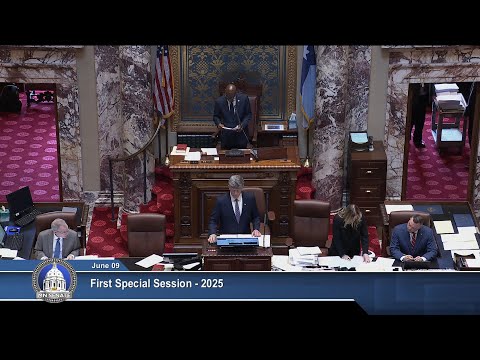
The Minnesota Senate passed Senate File 1, the higher education omnibus, after extended debate over state grant funding, tuition increases and research and residency program cuts. Final passage was 36–31.
The Minnesota Senate on special session passed Senate File 1, the higher education omnibus bill, moving funding and policy changes for the Office of Higher Education, Minnesota State Colleges and Universities and the University of Minnesota.
Supporters said the bill addresses a shortfall in the state grant program and provides new targeted spending. “Our biggest priority was to address the state grant program shortfall in a way that wouldn't be too damaging to students,” said Senator Fatai, the bill’s chief author, who described added funding of $44,000,000 in fiscal 2026–27 and $22,000,000 in fiscal 2028–29 to reduce the program’s gap.
The debate centered on whether the package does enough to arrest rising tuition. “Over the last couple of years, we saw the University of Minnesota increase its tuition about 10 percent, and we just found out a few days ago they're looking to increase another 6.5 percent,” said Senator Duckworth. “Families and students...have seen what is now nearly a 20 percent increase cumulatively.” Senator Lats said the legislature’s long-term underfunding of higher education forced institutions to raise tuition, arguing the state now pays a smaller share of institutional costs than in prior decades.
Other provisions in the bill that senators noted included hunger-free campus measures, funding for CentraCare, language requiring public institutions to stock opioid antagonists and a provision permitting a technical cybersecurity degree at Minnesota State (sponsored by Senator Kupec). Senator Fatai also corrected a point raised on the floor, saying United Family Medicine residency funding is retained in the bill.
The Senate suspended its rules to take up the bill and gave the bill its final passage vote after floor debate. The roll call recorded 36 ayes and 31 noes; Senate File 1 was passed and its title agreed to.
Senate procedural motions on the bill included laying the file on the table, taking it from the table, and motions to declare urgency under Article IV, Section 19 of the Minnesota Constitution to suspend rules and place the bill on final passage.