Lifetime Citizen Portal Access — AI Briefings, Alerts & Unlimited Follows
Committee approves Residential Tranquility bill to restrict targeted amplified sound and projectiles at homes
Loading...
Summary
The Committee on Judiciary and Public Safety reported Bill 26‑189, the Residential Tranquility Amendment Act of 2025, establishing a narrow, content‑neutral prohibition on using amplified sound devices to target residences during late evening and early morning hours and banning throwing projectiles at homes with intent to intimidate.
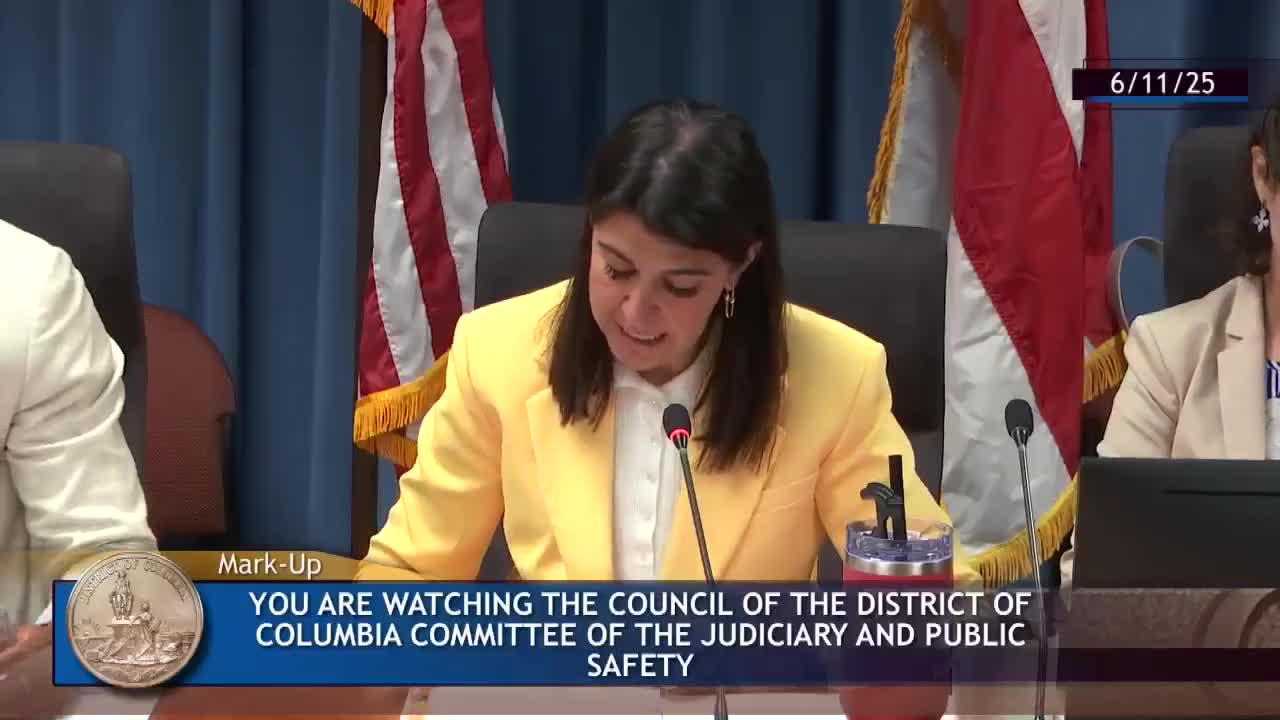
The Committee on Judiciary and Public Safety voted June 11 to print and report Bill 26‑189, the Residential Tranquility Amendment Act of 2025, moving the measure to the full Council after unanimous voice approval.
The bill responds to incidents where demonstrators used amplified sound devices to target private residences late at night and where objects have been thrown onto residential property, measures the chair described as causing “serious health, work, learning, and sleep disruptions.” The text before the committee would: prohibit use of sound‑amplifying devices to target a residence for the purpose of a demonstration in a residential zone between 7 p.m. and 9 a.m.; prohibit unattended sound‑amplifying devices used to target a residence; and prohibit launching or throwing objects onto residential property with intent to intimidate, harass or cause fear.
Legal and factual context
Chairwoman Brooke Pinto cited U.S. Supreme Court precedent in Carey v. Brown to explain the government's interest in protecting home privacy and tranquility while emphasizing the committee sought a narrow, tailored and content‑neutral rule. Pinto said the committee previously passed an emergency version of similar rules in the fall and reported zero arrests under that authority, describing the earlier enforcement as largely educational and dispersal‑oriented.
Support and balancing protest rights
Councilmembers who spoke described the measure as narrow and designed to preserve the right to protest while protecting residential tranquility. Councilmember Charles Allen (Ward 6) spoke in support and said the bill is “narrow, it's tailored, and it's effective,” adding that the legislation does not preclude robust protest in public spaces. Councilmember Bonds also voiced support, saying the bill helps ensure “a little tranquility in our residential community.”
Vote and next steps
Pinto moved the prints and reports of Bill 26‑189 with leave for staff to make editorial and conforming changes. The committee approved the motion by unanimous voice vote; the measure will advance to the full Council for further readings.