Get Full Government Meeting Transcripts, Videos, & Alerts Forever!
Get email alerts on the Agriculture And Animals topic
No spam. Unsubscribe anytime.
Queen Creek planners hear request for stock-dog trials, larger livestock numbers on 4.9-acre property
Summary
The Commission held a public hearing June 3 on a conditional use permit for D and D Mini Ranch to hold up to six seasonal stock‑dog trials and to keep more livestock than the R‑1‑43 zoning ordinarily allows on a 4.9‑acre property in the Ellsworth Mini Farms community.
The Planning and Zoning Commission on June 3 heard a public hearing on P24-48 D & D Mini Ranch, a conditional use permit request to hold stock-dog trials and to exceed the town’s animal‑unit limits on a 4.9‑acre property in the Ellsworth Mini Farms community in Queen Creek.
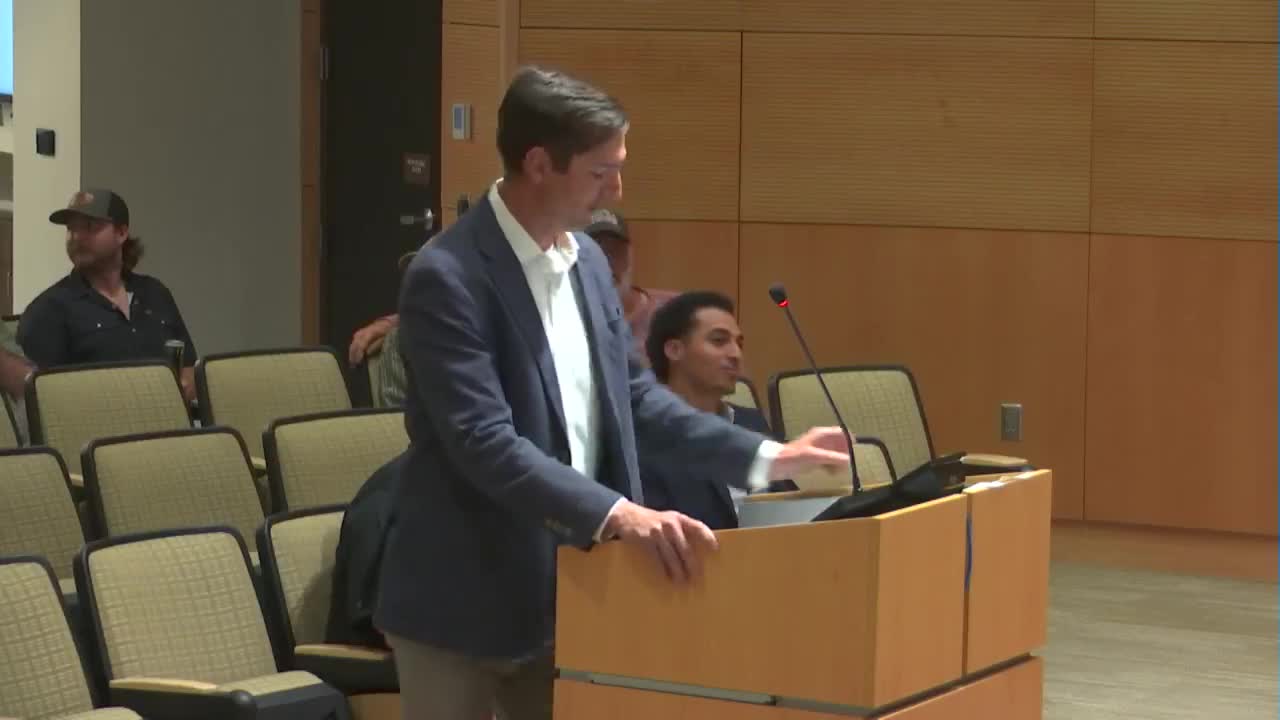
The applicant, Dan Sanderson, owner of D and D Mini Ranch, told the commission he and his wife moved to the area in 2020 and have been running agricultural operations that include year‑round Saint Croix sheep and, seasonally, up to roughly 65–70 calves brought in for trials. “We take it very, very important that we take care of these animals,” Sanderson said, describing feeding, shelter and fencing improvements and noting the livestock are kept in at night. He said organizers limit events to between one and three days and typically do not use amplified sound or nighttime lighting.
Eric Swanson, town planning staff presenting the item, summarized the proposal and staff’s findings. He said the site is zoned R‑1‑43 (one dwelling unit per acre) and that the applicant had been operating the stock‑dog events before staff learned of the activity via a complaint. Swanson said code enforcement met with the property owners and planning concluded a conditional use permit (CUP) was necessary; the owners then pursued compliance. Swanson described the proposed event logistics: six events annually between November and March, weekend daytime hours only, no amplified music or night lights, and typical on‑site attendance of 30–40 people (participants, judges, handlers and spectators). He also told commissioners the operation would use about 65–70 head of cattle for trials and maintain the existing sheep herd on site.
Neighbors who spoke at the hearing were largely supportive. Trevor Forbes, who lives on the parcel immediately east of the applicant’s overflow parking area, said he and his children have not experienced dust, odor or noise problems and that event participants have been respectful. Resident Ruben Valenzuela, who said he has lived in the neighborhood for 38 years, described an appreciation for animals and supported the use. Other residents, including Wendy Feldman Kerr and Al Weiss, described broad neighborhood outreach by the applicants and said most neighbors support the operation.
Swanson noted staff placed an addendum in commissioners’ packets containing one anonymous letter opposing the use and saying there are “too many animals on the property.” Swanson also summarized a neighbor’s dust concern; Sanderson described mitigation measures he’s undertaking, including a soil stabilizer (K‑31), concrete work in pens, and planting a clumping golden bamboo barrier to reduce dust and provide screening. Sanderson also said stock‑dog organizations that sanction the events (the Australian Shepherd Club of America and the Mountain State Stockdog Association) limit livestock handling during events and that judges will stop runs if they observe animal mistreatment.
On parking and capacity, Swanson displayed event parking areas and said there appeared to be room for overflow parking on the parcel’s pasture. He told the commission that staff’s draft conditions included an upper attendance buffer of 60 for events; Sanderson and staff both said the applicants typically expect far fewer attendees (30–40) and that six trials per season is a significant effort for the owners. Sanderson said livestock for trials are brought in from ranches and are kept on the site for the season to acclimate; he said animals have water, feeders and veterinary care access.
Outcome: The transcript records a motion to approve the D & D Mini Ranch CUP but does not record a full roll‑call vote or final tally in the public transcript. The record therefore lists the formal outcome and vote tally as not specified.
Why it matters: The request seeks a limited number of seasonal public events on a primarily residential, large‑lot property and would allow the parcel to host more livestock than the zoning code otherwise permits. Commissioners heard operational details, neighborhood outreach and specific mitigation measures for dust and animal care.
Next steps and conditions: Staff noted the CUP would include operational conditions (event limits, hours and attendance cap as a buffer), and commissioners asked clarifying questions about animal numbers, event duration and dust mitigation. If the commission or council moves forward, those conditions and any monitoring or enforcement provisions would be part of the permit record.
Quotes in context: "We take it very, very important that we take care of these animals," said Dan Sanderson, the applicant. Eric Swanson, town planning staff, told the commission the applicants were responsive after staff contacted them and obtained the necessary permit application.
Additional background: The site is located just southeast of Hawes Road and Germann Road within Ellsworth Mini Farms; adjacent neighborhoods mentioned include LaHara Farms. The CUP request followed an initial code enforcement complaint and subsequent site visits that identified ongoing stock‑dog activities. The applicant described affiliations with national stock‑dog organizations that set rules limiting animal handling during events.
Provenance: See transcript excerpts below for the applicant presentation, staff summary, public comments and related exchanges.