Get Full Government Meeting Transcripts, Videos, & Alerts Forever!
Get email alerts on the Sidewalks topic
No spam. Unsubscribe anytime.
North Lauderdale outlines $2.9 million, county‑approved plan to repair city sidewalks after citywide LiDAR survey
Summary
Public Works presented a LiDAR-based inspection of 109 miles of city sidewalks that will drive a surtax-funded, ADA-focused rehabilitation RFP. Commissioners pressed staff on scope, homeowner responsibility and resident notification; staff said the city will seek an interlocal agreement with Broward County and bid the work by fall.
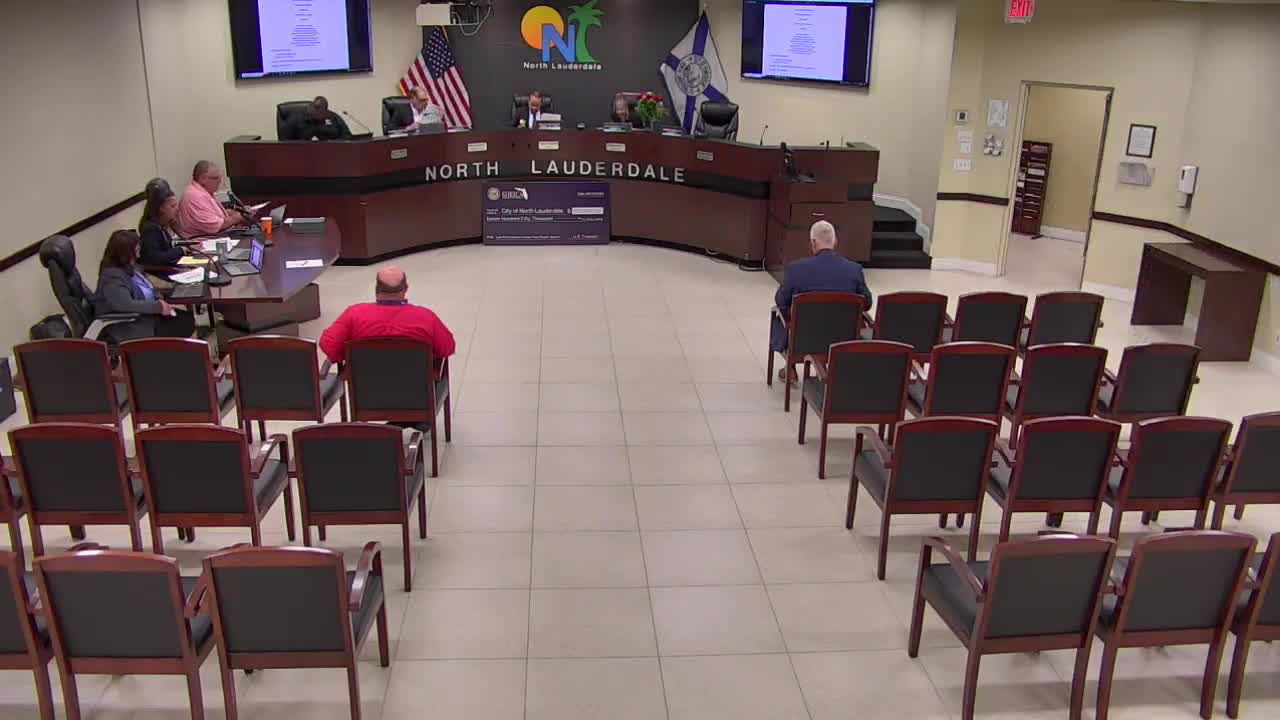
At a June workshop, North Lauderdale public works officials described the findings of a citywide sidewalk condition assessment that will guide a surtax-funded, Americans with Disabilities Act-compliant rehabilitation project.
The study, done with an iPhone LiDAR inspection platform contracted by the city, covered what Public Works said was 109 miles of city-owned sidewalk and 802 curb ramps. Public Works Director Sam May told commissioners the data will be used to develop a solicitation and a recommendation for award after an interlocal agreement (ILA) with Broward County is in place because the work will be paid with county surtax funding.
Why it matters: The project is the city’s primary plan to bring sidewalks into ADA compliance across neighborhoods and will be paid initially from $2.9 million in surtax funds the city secured for sidewalk rehabilitation. Staff said the inspection data are detailed enough to let the city set replacement thresholds, bid by square foot, and track work by specific panels and ramps.
Findings and scope
Public Works presented a large set of condition measures from the LiDAR inspection, including trip hazards, cracks, cross‑slope and detectable‑warning (tactile) deficiencies. Key figures presented by staff included:
- 109 miles of city‑owned sidewalks and 802 curb ramps inspected. - An average accessibility score reported by the vendor of about 3.8 out of 5. - Inventory counts the presenters said included 641 trip hazards, 7,928 cracked panels and about 18,000 linear feet of panels with cross slopes greater than 3 percent. Staff also flagged roughly 621 panels obstructed by vegetation.
Public Works noted one internal data correction: a line in the initial report that listed 193,000 linear feet was a transcription error; staff said the correct figure is about 155,000 linear feet (roughly 801,000 square feet) of sidewalk identified for replacement under the study’s criteria. Commissioners were told the city will bid work by the actual measured square footage rather than on a lump sum.
How repairs would be done and paid
Staff told the commission that contractors will bid per square foot and that the city expects to get an ILA from Broward County within about a month, put the project out to bid within about two months, and return to commission to award contracts — with work potentially starting in the fall. Public Works estimated the overall construction period at roughly a year to a year and a half once work begins.
On treatments, staff said:
- Trip hazards (vertical displacements of 1/4 inch or more) and severely deteriorated panels will be removed and replaced. For uplifted panels caused by tree roots, crews will remove and replace the panels, prune or cut roots and install root barrier material. - Obstructed panels caused by overgrown hedges or vegetation will be trimmed by city code enforcement or public works crews rather than paid contractors. - Curb ramps missing detectable warnings will be brought up to ADA standards; staff reported 440 ramps with a score of 3 or less and said all ramps will be ADA-compliant when the project is finished.
Commissioners asked about technical thresholds: staff said the vendor flagged cross slopes greater than 3 percent for replacement and that the county may ask the city to adopt a stricter threshold (for example, 2.5 percent). Sam May said the LiDAR data let the city change thresholds if the county requires it.
Homeowner responsibility, notification and implementation
A central policy question arose in discussion: the city’s code currently makes homeowners responsible for sidewalk repairs adjacent to their property. City management told commissioners staff will bring options back for whether the city should assume long‑term sidewalk responsibility or repair citywide now and leave long‑term responsibility with homeowners. The city manager described two pathways: use surtax revenue for the initial citywide repairs and then either keep long‑term maintenance with homeowners (status quo) or propose a code change assigning ongoing maintenance to the city.
Staff described a multi‑channel notification plan for residents that will mirror prior outreach used on other city projects: postcards 4–6 weeks before work, an interactive map on the city website showing project work areas, robocalls, social media updates and periodic town‑hall meetings. Commissioners requested more frequent in‑person outreach in neighborhoods with low internet use.
Costs and uncertainties
Public Works said the $2.9 million surtax award is the initial funding allocation; staff cautioned final costs will depend on market prices and the actual measured square footage the bids confirm. The presentation included a range of construction pricing as context: staff noted per‑square‑yard unit cost estimates they use in planning (for example, mid‑$30s to mid‑$40s per square yard for 4‑inch concrete), and said actual contractor pricing will determine whether the surtax award covers all the repair scope.
What’s next
Staff said they will request the ILA with Broward County, finalize a detailed RFP using the LiDAR maps, and return to the commission with recommended contract rankings and award recommendations. The commission directed staff to prepare district‑level maps so each commissioner can see needs in their area and to provide clarity about how residents should report damage while the multi‑year program is underway.
Ending
Public Works emphasized that the LiDAR inventory gives the city “enough data” to target replacements and to raise or lower selection thresholds if the county requires stricter ADA compliance, and promised a timetable for the ILA, solicitation and return for award recommendations.