Get Full Government Meeting Transcripts, Videos, & Alerts Forever!
Get email alerts on the Budget Votes topic
No spam. Unsubscribe anytime.
Senate budget subcommittee advances broad package of natural‑resources and energy items; Delta conveyance moved to policy
Summary
California Senate Budget Subcommittee No. 2 advanced a large set of natural‑resources and energy budget items after public comment, with several items passing unanimously, some passing over a lone no vote, and a group of items recorded as abstentions; the committee moved discussion of the Delta Conveyance Project back to policy committees.
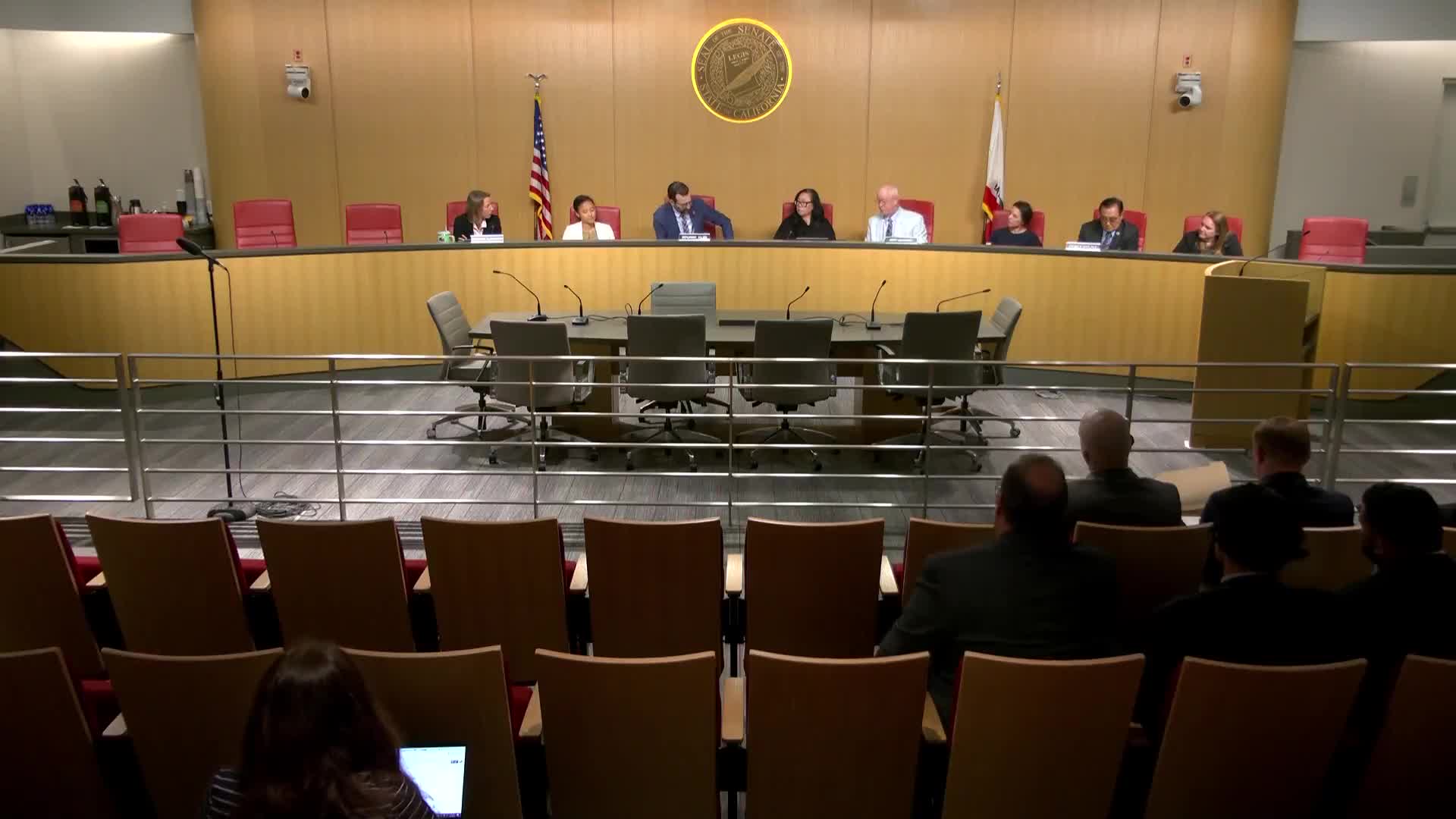
The California State Senate Budget Subcommittee No. 2 advanced a broad set of natural‑resources and energy budget items at a public hearing, moving most measures forward while recording a handful of no votes and abstentions.
The subcommittee approved two large blocks of items by unanimous 4–0 votes and passed other packages with a 3–1 margin where Senator Choi voted no and with a series of items where Choi recorded abstentions. The chair opened the hearing noting members would take public comment before voting; public testimony ran across water, energy, transit and conservation interests.
The committee’s work reflected a larger fiscal constraint repeatedly referenced at the hearing. Senator Choi said, “With the $120,000,000,000 budget deficit, unfortunately, our state is facing, I wish we had plenty surplus so we can satisfy all the needs that we hear,” and added that the deficit requires prioritizing and some painful choices.
The panel moved the Delta Conveyance Project and related trailer‑bill language out of the budget process and back into policy committee review. Multiple water and environmental groups had urged that approach during public comment; the committee’s decision to treat the tunnel proposals as policy matters was noted repeatedly by witnesses and members.
Votes at a glance - Part A (natural resources) — multiple items in a block (items 3, 6–9, 11–20, 23, 26–30, 32–33, 35–36, 38–40, 44–46, 49–55, 57–63, 65, 70–71, 76, 79–82, 84–88) passed 4–0. Motion moved and called by the secretary; tally: Allen Aye; Blake Spear Aye; Choi Aye; McNerney Aye. - Part B (energy/air quality) — a block of items (1, 3, 12–16, 19, 21, 29, 31, 33, 35–42, 45, 48) passed 4–0. Tally: Allen Aye; Blake Spear Aye; Choi Aye; McNerney Aye. - Select Part A items (10, 15, 21, 72, 83) passed 3–1 with Choi voting No. Tally: Allen Aye; Blake Spear Aye; Choi No; McNerney Aye. - Select Part B items (2, 4–8, 10, 17–18, 20–28, 30, 32, 34, 46–47) passed 3–1 with Choi voting No. - A third group of Part A items (1, 2, 4–5, 22, 24–25, 31, 34, 37, 41–43, 46–48, 51, 56, 64, 66–69, 73–75, 77–78) were approved with Choi recorded as abstaining; tally: Allen Aye; Blake Spear Aye; Choi Abstain; McNerney Aye. - Final Part B group (9, 11, 43–44, 49) passed with Choi recorded as abstaining.
Why it matters The subcommittee’s actions advance budget language affecting wildfire resiliency, water programs, transportation and clean‑energy investments into the next stage of legislative review. The decision to return the Delta Conveyance matter to policy committees preserves a separate, policy‑level review rather than resolving it through the budget process.
Public comment and member discussion Witnesses representing transit agencies, water districts, environmental organizations and clean‑energy companies urged restoration of several proposed cuts, protection of continuous appropriations, and sustained funding for programs such as demand‑side grid support and the Healthy Rivers and Landscapes (voluntary agreements) program. Several water‑sector witnesses pressed for full appropriation of dam‑safety funds proposed under Proposition 4.
Committee members thanked staff and emphasized the need for a deliberate review of vacant positions across state agencies before permanent eliminations. The chair and members described the vacancy “sweep” approach as too blunt and supported a more targeted, one‑year review of open positions before cuts are finalized.
What’s next Approved items will move forward through the legislative process. The committee did not set a specific follow‑up date in this hearing record.