Get Full Government Meeting Transcripts, Videos, & Alerts Forever!
Get email alerts on the Short Term Rentals topic
No spam. Unsubscribe anytime.
Hocking County zoning commission outlines proposed short‑term rental permit rules, emergency and safety requirements
Summary
The Hocking County Zoning Commission discussed a package of land‑use tools on May 29, 2025, focused on short‑term rental permits, 24‑hour local contacts, address numbering, driveway and parking standards, building‑code enforcement, noise controls and possible impact fees to cover first‑responder costs.
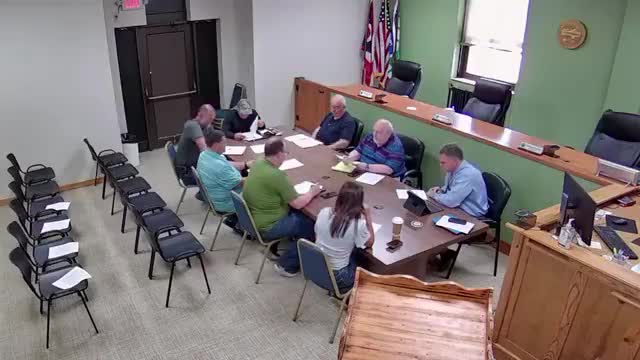
The Hocking County Zoning Commission on May 29, 2025, advanced a detailed set of proposed land‑use tools aimed at short‑term rentals and other transient lodging, emphasizing 24‑hour local contacts, clearer address numbering, driveway and parking standards for emergency access, and measures addressing noise, occupancy and tax registration.
Commission members and staff said the changes are not full zoning but would create additional regulatory tools — permits, registration and standards — that short‑term rental operators would have to meet before operating. “What we’re proposing are tools that are like those but in addition to them,” the meeting chair said, describing the package as a step short of countywide zoning.
The commission framed the work as a response to outreach and a questionnaire that drew more than 400 responses, plus stakeholder and public meetings. American StructurePoint, the consultant engaged by the commission, compiled drafts for discussion, and staff said those drafts reflect repeated concerns raised by first responders, nearby residents, developers and short‑term rental owners.
Most of the meeting focused on specific proposed requirements for short‑term rental permits, including: - A required 24‑hour local contact who can respond within an hour and be reachable by phone, text or other means so emergency responders and neighbors have a local point of contact; some members said phone service gaps may require installation of a landline at remote cabins. - Address‑numbering standards so street numbers are conspicuously posted on buildings or properties and align with the county’s established grid system to help 911 dispatch; the commission recommended consulting Sandy Wintermute at 911 on technical implementation. - Driveway and access standards reviewed or approved by local fire chiefs to ensure emergency vehicles can reach rental properties, and potential requirements for turnarounds, width, grade and stream crossings where necessary. - Occupancy limits to match advertised sleeping capacity and clearer enforcement mechanisms, including contract terms requiring renter acknowledgment of maximum occupancy and possible penalties for violations. - A short‑term rental registry tied to bed‑tax remittance so platforms or managers report rentals and remit taxes; commissioners discussed coordinating with Josh (county tax administrator) and noted platforms automatically collect lodging taxes in some Ohio counties but not universally. - Parking standards that require available parking spaces to match the rental’s advertised capacity and leave space for emergency vehicles. - Insurance proof as part of registration, with commissioners suggesting the county consult CORSA (the county risk pool) on minimum liability limits. - Noise and nuisance controls, including countywide standards for late‑night noise, fireworks and target shooting near residences; commissioners discussed nuisance nuisance case law and cited a past class‑action nuisance suit over racetrack noise as context. - Clarifying which building‑code inspections and state standards apply to transient lodging, and whether residential houses converted to short‑term rentals should be subject to different (commercial) code requirements; commissioners said they would first confirm what the State of Ohio enforces before imposing local building‑code inspections. - Investigation of impact fees to offset increased first‑responder and EMS costs; commissioners cited recent run volumes — Logan Fire district and local EMS run counts have risen — as a rationale for studying fees used elsewhere.
Commissioners and staff repeatedly emphasized the scope: the proposals are intended to add regulatory tools and better enforce existing standards (flood‑plain rules, driveway regulations, sanitary rules that staff said date to the 1920s) rather than immediately impose comprehensive zoning. “We are proceeding forward as we have in the past. Everything is open,” the meeting chair said, responding to public concern about drafting moving behind closed doors.
Commissioners asked that first responders and 911 be engaged in drafting driveway, address and emergency‑access standards, and that the county consult the state on which building codes apply to short‑term rental properties. They also discussed enforcement challenges where bed tax collection has been handled by third‑party operators and the need to prevent remittance failures.
At the meeting’s start the commission approved the agenda by motion; at the end it moved to adjourn and approved that motion.
The commission said it will continue reviewing the draft items — short‑term rental permitting, impact fees, land‑use standards and enforcement mechanisms — and coordinate follow‑up meetings with first responders, the Hocking Hills Lodging Association and other stakeholders. The group set a tentative next meeting in late June.