Get Full Government Meeting Transcripts, Videos, & Alerts Forever!
Get email alerts on the Short Term Rental Regulations topic
No spam. Unsubscribe anytime.
Hocking County zoning commission reviews proposed short‑term rental permit, emergency access and impact‑fee framework
Summary
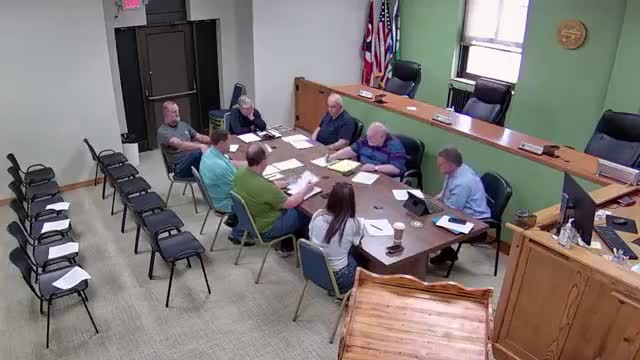
The Hocking County Zoning Commission on May 29, 2025 reviewed a package of proposed land‑use tools aimed chiefly at regulating short‑term rentals and improving first‑responder access, but did not adopt any regulations.
The Hocking County Zoning Commission on May 29, 2025 reviewed a package of proposed land‑use tools aimed chiefly at regulating short‑term rentals and improving first‑responder access, but did not adopt any regulations. The commission heard results from earlier public surveys and stakeholders meetings, discussed specific permit components — including a required 24‑hour local contact, standardized address numbering, driveway and parking standards, occupancy limits, mandatory insurance and noise controls — and directed staff to gather more information and consult first‑responder agencies and lodging operators before drafting enforceable rules.
Commission members said the review was prompted by extensive public outreach and stakeholder meetings conducted since the commission was formed in spring 2023 and by a separate mailing by the Hocking Hills Tourism Association. The meeting chair said the commission has received “400 plus responses” to the commission’s own questionnaire and noted that a separate HHTA mailing to roughly 17,000 households produced about 700 returned surveys; meeting presenters characterized the common finding as “over 90%” of respondents saying something should be done about short‑term rentals, though not all respondents favored the same remedies.
Commissioners and stakeholders focused on practical safety and enforcement measures rather than broad rezoning. Discussion centered on six clusters of measures: emergency contact and notification; location and address signage; driveway, turnaround and access standards for emergency vehicles; occupancy, parking and contract requirements; building‑code enforcement and inspection responsibility; and potential impact fees to fund EMS, fire and other county services.
On emergency contact and notification, commission members said permits should require a 24‑hour local contact who can respond quickly to on‑site problems. The group discussed scenarios where cabins lack cell service and stressed that a contact who can respond within an hour — or an on‑site phone or other reliable means of communication where cell service is absent — would reduce delays for emergency responders. The commission said any contact requirement should be part of a short‑term rental permit or registration.
Addressing and location signage drew detailed comment. The commission described the county’s grid‑based house‑numbering system and suggested requiring street numbers to be placed in obvious locations on buildings or properties so 9‑1‑1 dispatchers and responders can locate callers. Commissioners asked staff to consult Sandy Wintermute at 9‑1‑1 on sequential numbering and on options where private drives serve multiple cabins, including public mapping or placards at the public road to reduce confusion.
Driveway and access standards were discussed as a first‑responder safety issue. Commissioners said private drives intended to serve multiple rentals should be reviewed and, where appropriate, meet a minimum engineering standard (width, turning radius, grade and turnaround) approved by the local fire chief before a permit is issued. The commission noted several local incidents where vehicles and emergency apparatus struggled on narrow or steep drives and said an initial approval step before substantial construction could limit wasted expense and unsafe access.
Commissioners raised occupancy and parking controls tied to enforcement. Several members said permits should require a posted occupancy limit that matches parking availability and be enforceable by the local contact or prosecution when necessary. The commission discussed mandatory registration with the county’s bed‑tax administrator and asked staff to consult with that office (Josh, bed‑tax administrator was referenced) about automatic collection by platforms such as Airbnb and enforcement where operators collect taxes but do not remit them to the county or townships.
On building code and inspection, the commission flagged uncertainty about which structures and situations trigger State of Ohio building‑code or health‑department review (for example, a former primary residence converted to short‑term rental versus purpose‑built rental cabins). Members urged staff to confirm state inspection responsibilities and to check whether state building codes are being consistently enforced before the county considers creating parallel building‑code inspections that would require new county staffing.
Noise, nuisance and public‑safety controls were highlighted by commissioners and by anecdotes of neighbors disturbed at night, fireworks and even target shooting on some parcels. Commissioners discussed countywide nuisance standards (for example time‑of‑day limits or prohibitions within a specified distance of another residence) and whether civil property‑restriction remedies might interact with any permit denials. They referenced prior local litigation over noise as an example where courts have found for affected neighbors.
Impact fees and service costs were a prominent part of the discussion. Commissioners asked staff to research how other jurisdictions structure impact fees for short‑term rentals and guest‑driven service demands. Meeting remarks cited county service data: a county speaker said county EMS had about 4,700 runs last year, and Logan Fire/area townships had about 900 runs last year and appeared on track to exceed 1,000 this year; commissioners framed those increases as part of the fiscal case for targeted fees to support first responders.
The commission identified next steps rather than taking regulatory action. Staff were asked to: (1) meet with the Hocking Hills Lodging Association and cabin operators to discuss compliance mechanics and tax collection; (2) consult EMA and local fire and EMS leaders (including 9‑1‑1) on address and driveway standards; (3) ask the county prosecutor and the bed‑tax administrator about enforcement and automatic tax collection by online booking platforms; and (4) research impact‑fee models used elsewhere. Commissioners emphasized the process would remain public and said proposed ordinances or regulations would be subject to hearings; the chair reiterated that the commission was not drafting behind closed doors.
No substantive land‑use rule or ordinance was adopted at the meeting. The only formal motions recorded in the transcript were to approve the meeting agenda and to adjourn; the commission did not vote on or adopt the short‑term rental, impact fee, or inspection proposals discussed.
The commission will continue work at future meetings and return with research and model language for the issues above.
Votes at a glance
• Motion to approve agenda as presented — moved and seconded on May 29, 2025; outcome recorded in meeting as approved (no roll‑call tally recorded in transcript).
• Motion to adjourn — moved and seconded on May 29, 2025; outcome recorded in meeting as approved (no roll‑call tally recorded in transcript).