Get Full Government Meeting Transcripts, Videos, & Alerts Forever!
Get email alerts on the Waterfront Ownership topic
No spam. Unsubscribe anytime.
Poulsbo, Port review waterfront ownership, joint fund and seawall repair responsibilities
Summary
City and port staff reviewed a long history of land transfers, leases and a joint escrow fund that pays payments‑in‑lieu to DNR; both bodies said the seawall/retaining wall and waterfront improvements are a shared responsibility to be negotiated under the lease.
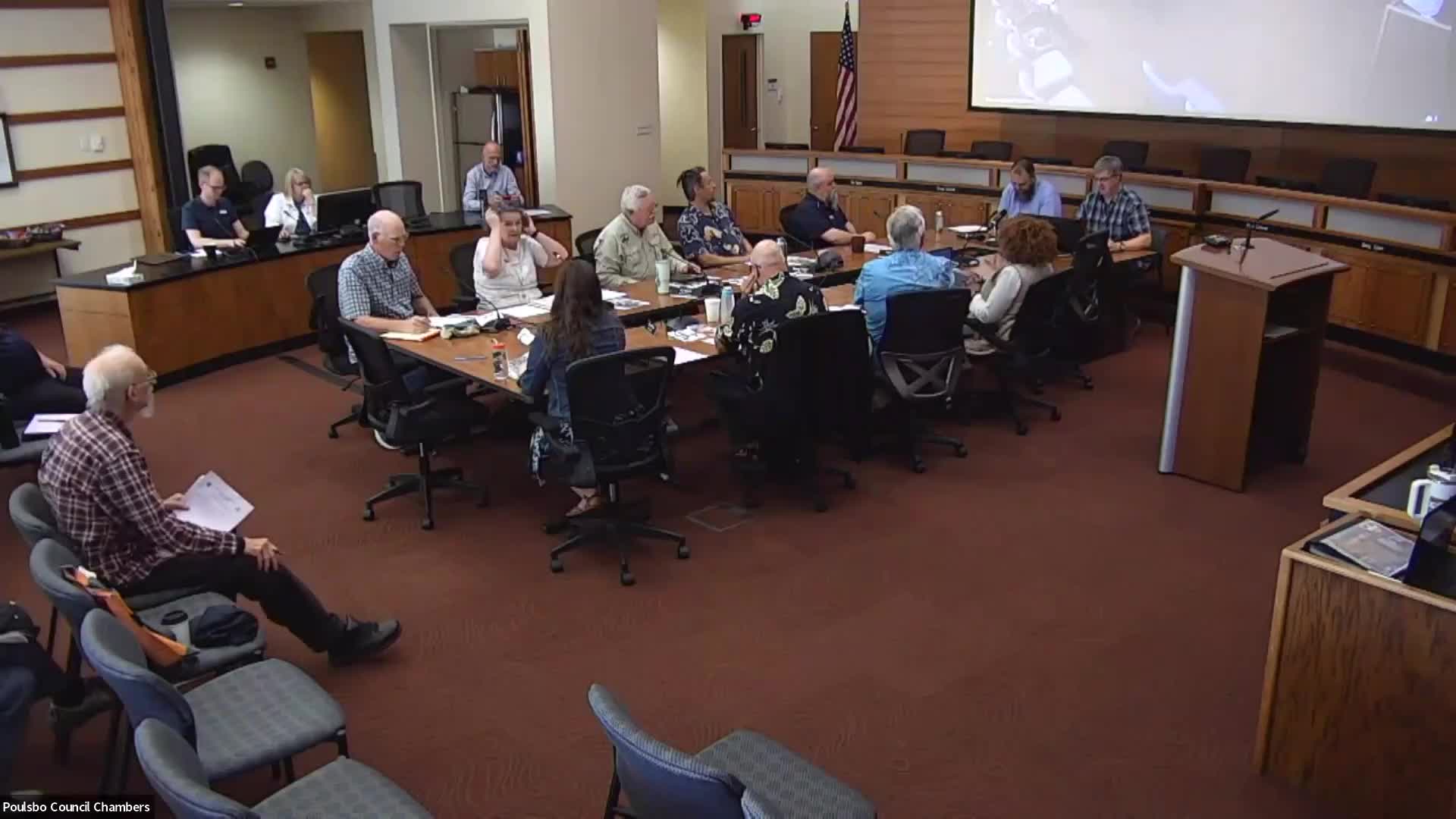
City and port officials reviewed the history of waterfront land transfers, lease terms and a joint fund held by the Port of Poulsbo during a May 28 joint meeting, and discussed next steps on a seawall/retaining‑wall that supports the waterfront walkway.
City engineering staff presented a timeline of ownership and projects. Michael Bateman, City of Poulsbo engineering department, said the city acquired upland tidelands between about 1916 and about 1958 and that the waterfront park and Anderson Parkway were built with grant funding in the 1970s. "The city acquired rights to the tide lands between about 1916 and about 1958 or '59... In 1994, the port acquired this piece from the city in exchange for reconstruction of the seawall," Bateman said.
Lease and escrow account Bateman and port staff described a lease and an associated escrow account created under the upland lease arrangement. That escrow is funded by payments that otherwise would go to the Washington Department of Natural Resources; the port deposits those annual amounts and the account is intended for repair, maintenance and waterfront improvements. Port staff said the annual payment into the joint fund is about $13,000 per year and that the account balance is about $249,211.59.
"It contributes approximately 13,000 a year to a joint fund that the port holds, and it is labeled support city waterfront improvement. There's approximately 249,000 and change in there currently," Carol (Port of Poulsbo staff) said.
Seawall/retaining wall responsibilities Bateman noted that the structure commonly called the seawall is essentially a retaining wall built as a select‑fill dike in the 1970s; it supports the walkway and is not the structural element for the parking lot behind it. He said the lease does not assign black‑and‑white responsibility for all seawall work; instead, repairs and participation are negotiated when work is required. "It kind of doesn't really give exact responsibilities... The responsibility is shared and will be negotiated," Bateman said.
Next steps and timeline Councilmembers and port commissioners agreed the issue requires technical study and joint planning. Staff recommended engaging engineers and legal counsel to clarify responsibilities and to pursue grants; both bodies suggested discussions with the incoming port manager once hired. Bateman said an engineering condition assessment would be the expected first step.
Ending: Officials said there is no imminent structural failure but described the seawall/retaining wall as subject to long‑term coastal erosion and recommended a coordinated planning and grant effort over the next year to 18 months. The joint fund and the lease will be part of those discussions.