Get Full Government Meeting Transcripts, Videos, & Alerts Forever!
Get email alerts on the Social Services topic
No spam. Unsubscribe anytime.
Council approves $1M medical-debt purchase contract amid questions on administrative fees; adds six-month review
Summary
Lexington’s council approved a $1 million agreement to purchase unpaid medical debt through Undue Medical Debt, a three-year contract expected to relieve an estimated $90 million in debt, after debate about administrative costs; an amendment requires a six‑month review presented to council by the CAO at a work session.
The Lexington City Council approved a $1,000,000 contract with Undue Medical Debt to purchase unpaid medical debt for qualifying Fayette County residents, following extensive council discussion about administrative fees, sole-source procurement, safeguards and reporting.
Vice Mayor Wu and other supporters described the program as a one-time investment from last year’s fund balance that could purchase roughly $90,000,000 in unpaid medical debt for Fayette County residents and potentially affect up to 32,000 residents. Councilmembers and staff reported the contract is for three years, is terminable at will or for cause, and includes quarterly reporting to the CAO’s office.
Councilmembers raised concerns about administrative costs. City staff summarized contract line items: personnel costs and program contractual services that sum with an indirect cost line to total administrative and indirect charges of $336,304 on a $1,000,000 grant. Councilmember Ellinger and others questioned that roughly one-third of the allocated funds would cover administrative and indirect costs. Vice Mayor Wu said staff and the organization had discussed the breakdown and that the overall purchase-and-relief numbers (the initial $1 million and the projected $90 million of purchased debt) had not changed.
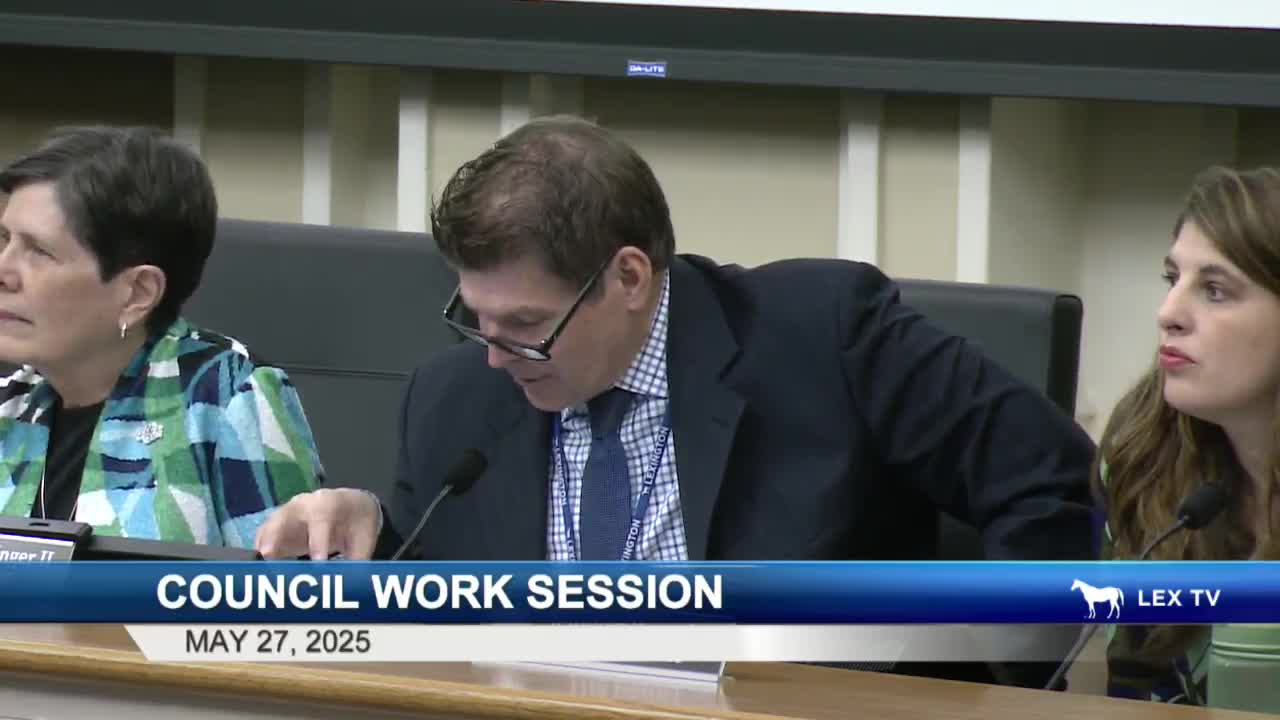
Councilmember Ehlinger moved an amendment requiring a review at six months; Councilmember Grama seconded. The amendment—asking the CAO to present an update at a work session in six months—was approved. Council also received legal assurances from the law department that the contract preserves the city’s right to terminate at will or for cause, requires documentation for invoices and that the CAO’s office will administer the contract and quarterly reporting.
Councilmembers emphasized practical safeguards: quarterly invoicing and documentation from the vendor, CAO oversight, and a contractual settlement process if the city terminates the agreement. Several councilmembers cited precedent and other municipalities’ experience using similar arrangements as reasons to proceed, while others asked for further negotiation or expressed discomfort with sole-source procurement.
The council’s approval included the six-month review amendment; council members were advised that in any quarter with no debt purchases the vendor may not produce a quarterly report (staff said the contract ties reporting to activity in a quarter). The contract will be administered through the CAO’s office and includes termination provisions and invoicing/documentation requirements for expenses.