Get Full Government Meeting Transcripts, Videos, & Alerts Forever!
Get email alerts on the Public Health Budget topic
No spam. Unsubscribe anytime.
JFAC approves public health enhancements, orders several program reviews and transitions
Summary
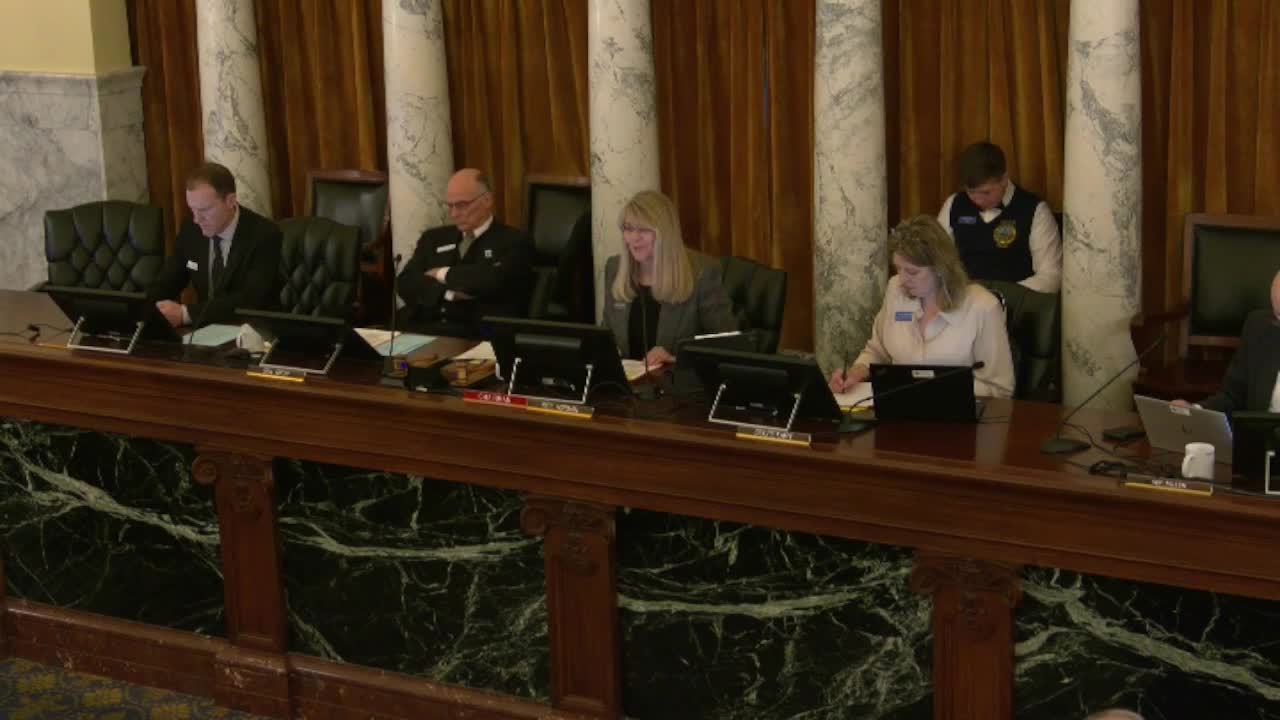
A majority of the Joint Finance-Appropriations Committee voted March 12 to approve enhancement funding and attached reporting language for the Department of Health and Welfare’s Division of Public Health Services, including funding for immunizations, home visiting and a rural physician repayment incentive.
A majority of the Joint Finance-Appropriations Committee voted March 12 to approve enhancement funding and attached reporting language for the Department of Health and Welfare’s Division of Public Health Services, including funding for immunizations, home visiting, HIV and hepatitis prevention and program restorations.
The committee voted to add 4 full-time equivalent positions and a total appropriation package that the motion described as $25,083,000 for FY2026 (comprising general, dedicated and federal sources), and it approved a set of companion language items that direct the department to report on grants, transitions and potential duplicative billing. The substitute motion carrying the appropriation passed with the combined committee tally shown on the record: 14 ayes, 4 nays, 2 absent/excused; JFAC will recommend a “due pass.”
Why it matters: the Division of Public Health Services administers programs that supply vaccines, run suicide-prevention and overdose-prevention efforts, support WIC and home visiting, operate communicable-disease programs and hold key public-health grant relationships with the state’s seven public health districts. The funding and the language approved give legislators money and reporting authority to monitor program delivery and potential redundancy as federal grants and Medicaid billing intersect.
Most important details - Approved augmentation and staffing: the committee approved adding 4 FTEs and moved an FY2026 package described in the motion as $25,083,000, composed of general fund, dedicated and federal dollars. The motion was presented as a substitute to an earlier proposal and passed on record. - Specific dollar items cited in the committee discussion and materials included an immunization assessment fund request of $2,500,000 (dedicated funds) and a governor’s initiative of $500,000 ongoing from the general fund for a rural physician loan/repayment incentive. The packet also listed multi-year ARPA grant-related restorations and funding for suicide prevention, drug overdose prevention, Alzheimer’s and dementia work, Fit and Fall Proof, WIC and TANF-related items. - Reporting and transition language approved by roll call or unanimous consent directed the Department of Health and Welfare to: notify legislative health committee chairs when applying for federal grants (per an existing requirement), study pass-through clinical-service grants to determine opportunities to transition services to federally qualified health centers and other safety-net providers, and identify any instances of double billing between federal grants and Medicaid billing and propose plans to end that practice. - Program transitions and studies approved: the body authorized directive-language or studies to explore transitioning the drug overdose prevention program to the Office of Drug Policy, moving Alzheimer’s disease and related dementia activities and the Fit and Fall Proof program to the Commission on Aging, and performing cost-benefit analyses on (a) moving the 988 crisis-line contract to Magellan Health (or another qualified vendor) and (b) bringing the cancer data registry contract in-house.
Discussion highlights - Supporters emphasized that the rural physician incentive and loan-repayment measures increase retention of clinicians in underserved areas and that immunization and home visiting programs are prevention-focused investments. Representative Furness (motion maker on the initial package) and Representative Tanner (who offered the substitute motion) both described the importance of preserving or restoring programs. Deputy and committee comments cited Idaho’s physician-per-capita ranking and retention statistics tied to loan repayment programs. - Objections and caution: Senator Wintrow repeatedly cautioned that moving multi-year program funding to “one-time” status undermines predictability for programs that hire and plan multi-year services (she specifically cited concerns about home visiting and the immunization assessment program). She objected to unanimous-consent approvals of some language; when objections were lodged, the committee took recorded votes.
What the motions required the department to do - File notices to legislative health committee chairs when applying for federal grants (continuation of last-session language). - Evaluate pass-through clinical grants to consider transitions to FQHCs and other safety-net providers, and report instances and remedies for duplicate billing between federal grants and Medicaid claims. - Produce transition or cost-benefit analyses regarding the overdose prevention program’s move to the Office of Drug Policy, moving Alzheimer’s/dementia and Fit and Fall Proof to the Commission on Aging, the 988 crisis-line vendor cost-benefit, and an in-house versus contracted cancer registry analysis.
Votes and outcomes - Substitute FY2026 appropriation motion (final package described in committee materials as $25,083,000 and +4 FTE): passed with a combined total of 14 ayes, 4 nays, 2 absent/excused; JFAC will carry a due-pass recommendation. - Language and reporting items (various pages in the packet) were adopted either by unanimous consent or roll-call votes; where recorded, the committee approved the language with recorded tallies (example: a later roll call on language items showed 16 ayes, 2 nays, 2 absent/excused for that block of language).
What’s next - The committee’s decisions send funding recommendations and language to the fiscal process as JFAC’s due-pass recommendations. Several items direct the department to return reports to committees, which will inform later budget or statutory choices. The committee specifically preserved the option to re-examine programs the next fiscal year where language set funding as one-time or asked for transition analyses.
Sources: Legislative Services Office presentation (Alex Williamson); motions and recorded roll calls on the March 12 JFAC hearing transcript.