Get Full Government Meeting Transcripts, Videos, & Alerts Forever!
Get email alerts on the Public Safety Police topic
No spam. Unsubscribe anytime.
Fairfax police report declines in several major crimes, cite rising shoplifting and steady recruiting gains
Summary
Police Chief Kevin Davis told the Safety and Security Committee that homicide, motor-vehicle theft and aggravated assault declined in 2024 compared with 2023 while shoplifting rose; the department reported improved hiring metrics and plans to expand the Tysons urban policing model to other commercial districts.
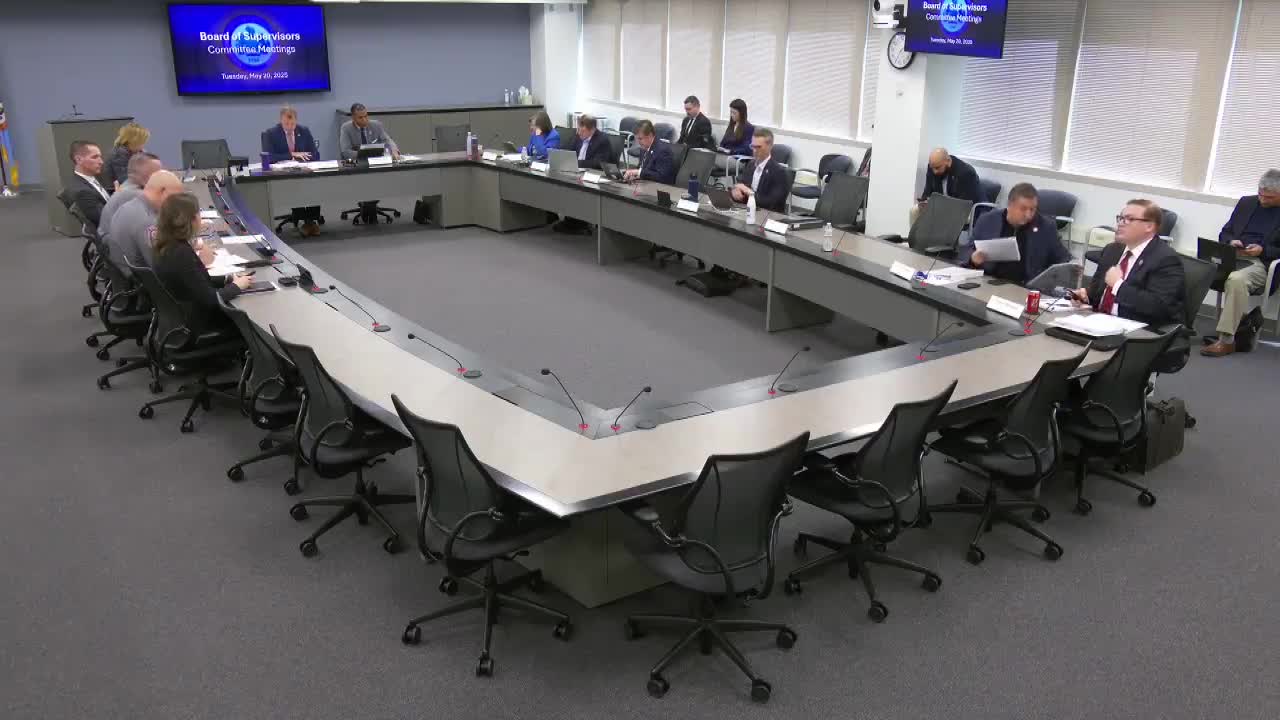
Fairfax County Police Chief Kevin Davis told the Safety and Security Committee on May 20 that several major crime categories fell in 2024 from 2023 even as the department is tracking a significant countywide rise in shoplifting.
Davis said homicides fell from 23 in 2022 to 17 in 2023 and to 14 in 2024, and that “in calendar year 2024, just like calendar year 2023, we closed 100% of our homicide investigations with arrests.” He credited detectives and the Victim Services Division for the clearance rate. Motor-vehicle thefts were down nearly 20% in 2024 versus 2023, and aggravated assaults declined about 4.2% year over year, Davis said. Robberies rose slightly in 2024 (about 1.1%), driven primarily by robberies of persons, but early 2025 data showed year-to-date reductions in robberies after a strong first-quarter decline.
Why it matters: the statistics are the department’s primary measure of public-safety trends and guide deployment and partnership decisions for policing, traffic enforcement and retail-crime response.
Davis highlighted the department’s Auto Crimes Enforcement Squad and the Tysons Urban Team as factors in the motor-vehicle and retail-crime results. He also cautioned that shoplifting remains “our Achilles’ heel,” with countywide shoplifting offenses up 17.7% in 2024 and increases across most patrol districts. The majority of thefts remain misdemeanors (value under $1,000), Davis said, but sheer volume makes theft the most frequent crime the department encounters.
Assistant Chief Bob Blakely described an operational shift that moved shopping-center patrols toward detective-designated urban teams. “The urban team model puts police officers in the area,” Blakely said. “It’s not the mall police. It’s the police for the entire area.” The department said it is scaling the Tysons model to other commercial nodes including Fair Oaks, Mosaic and Springfield and will convert additional shopping-center units into detective-styled units to focus on organized retail theft and associated patterns.
On residential burglaries, Davis said the county saw a 22.2% reduction to date in 2025 and noted the continued regional challenge from organized “travelers” groups that target valuables and often use coordinated methods. He said investigators are strengthening partnerships with the FBI’s Washington Field Office and U.S. attorneys when cases show interstate links.
Recruitment and retention: Davis reported improvement in hiring metrics and staffing projections. The department hired 140 new sworn officers in 2024, a net gain of 18. He said the average time from initial applicant contact to hire has fallen from 11.1 months to 5.7 months while maintaining screening standards. The department projects staffing at 95% of authorized sworn strength by 2028 and 100% by 2030 if current trends continue. Davis also said 375 applicants have received hiring/incentive bonuses since 2022.
Davis and supervisors repeatedly linked part of the recruitment success to outreach and process improvements, and to targeted diversity recruiting: Davis said the department’s share of women officers rose from about 16% in early 2021 to “over 20%” now, and one recent class reached 37% women. Officials said retention past the five-to-seven year mark — when departures for family reasons often occur — remains a priority.
Committee members pressed on store loss-prevention practices and prosecution. Davis and other panelists said inconsistent loss-prevention response, delays in reporting, and failure of loss-prevention staff to appear in court weaken solvability and deterrence. Davis pointed to Lord & Taylor and the Tysons business partnerships (Macerich) as examples of corporate cooperation that aided reductions in theft at that commercial node.
What’s next: the department will continue to expand urban-team approaches in commercial districts, press for stronger loss-prevention partnerships with retailers, and track early-2025 trends. Supervisors applauded the homicide clearance rates and staffing progress while urging continued emphasis on shoplifting and retail-crime prosecution.