Get Full Government Meeting Transcripts, Videos, & Alerts Forever!
Get email alerts on the Fire And Ems Evaluation topic
No spam. Unsubscribe anytime.
Muskego committee debates outside study of Test Corners fire and EMS services
Summary
At a May 27 Committee of the Whole meeting, alderpersons and Test Corners Fire Department representatives discussed whether to hire an outside consultant to evaluate the volunteer departmentand EMS operations; three proposals were received and council staff will seek further action at a full council meeting.
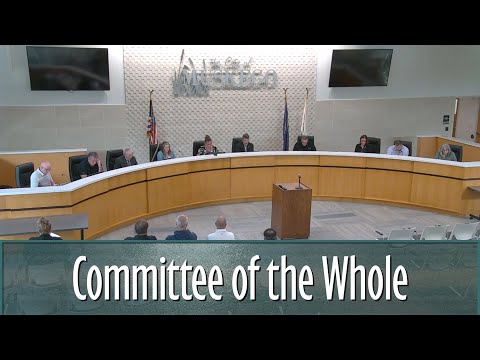
MUSKEGO, Wis. At a May 27 meeting of the Muskego City Committee of the Whole, alderpersons and representatives of the Test Corners Volunteer Fire Department discussed hiring an outside consultant to evaluate fire and emergency medical services and long-term sustainability.
The committee heard from Kate (city staff), who said the city received three proposals for a needs analysis and operational and financial feasibility study, with price estimates ranging from about $33,000 to $57,000. "The 3 proposals that I received kind of range in costs from about 33,000 and 33,500 to 57,000," Kate told the committee. The firms include one Wisconsin-based group and two out-of-state firms; Kate said the out-of-state firms would likely include travel costs.
A nut graf: Muskego is growing and city officials said they need objective data to decide whether the private Test Corners model is sustainable, should be supported with additional city resources, shifted to a hybrid model, or converted over time to a municipal department. The committee sought estimates of current staffing, response patterns, mutual-aid arrangements and the financial picture to inform any future council decision.
Committee discussion and department description
Dave, identified in the meeting as the finance contact for Test Corners, described current operations and finances. He said the volunteer-minded department staffs about five to six paid personnel during daytime hours (about 5 a.m. to 6 p.m.), with volunteers covering the overnight shift. "Last year, I think our bills were were about 800 some thousand dollars. For EMS," Dave said, and he added the department paid roughly $500,000 in salary from that revenue. He said about $100,000 of EMS revenue was typically reinvested in the fire side in the most recent year.
Test Corners operates four fire stations; fire responses typically run out of three stations while EMS currently runs out of one station, with a plan to split EMS across two stations. Mutual aid is provided primarily by New Berlin and Franklin, Dave said; mutual aid use was relatively rare this year, he added ("I think we've only used mutual aid 4 times").
Officials and alderpersons raised several core concerns: volunteer recruitment and retention, whether a part-time/paid-on-call model can remain sustainable, administrative needs such as HR, and long-term capital and staffing costs if the city moved toward a hybrid or full-time department.
Positions in the room
Alderson Rob Wolf voiced skepticism about contracting for a consultant. "I think we're going down a path where they're gonna... it's all it's all predetermined," Wolf said, urging caution about outside firms steering the city toward a predetermined outcome. Alderperson Bryce and others argued a consultant would provide comparable data and options: "I do think it's a good idea to have a consultant come in because they not only... see what our fire department is doing in all their numbers, they're looking at the outside departments near us," Bryce said.
Several alderpersons said they wanted to explore lower-cost or local options first and to verify references for firms that had completed similar studies (Kate said Matrix Consulting and other firms had done work in Mequon and Oshkosh). Kate described the study scope she had requested from vendors: needs analysis comparing current operations to industry standards, response-time and calls-for-service review, asset and station reviews, mutual-aid and concentration (GIS/mapping) studies, staffing projections, operational and financial feasibility for possible municipal conversion or shared-service models, and stakeholder interviews.
Procedural history and next steps
Earlier in the meeting one motion to defer discussion until June 10 was put to a roll-call and failed (two yes, four no). Later in the discussion staff sought a consensus to forward the idea of hiring a consultant to the full city council as a resolution; several alderpersons supported moving the item to council for a formal vote and for vendors to present if selected. No final contract award was recorded at the Committee of the Whole meeting; any contract would come to the full council for approval.
Ending
City staff said they would gather additional information (firm references, clarified scopes and on-site visit plans) and present the matter at the council level where alderpersons will have a formal vote. Committee members emphasized they were seeking an objective, data-driven evaluation rather than an immediate plan to change the departmentand several members reiterated support for preserving and supporting the volunteer force if possible while planning for long-term options.