Lifetime Citizen Portal Access — AI Briefings, Alerts & Unlimited Follows
OHA communications seeks steady funding as staff, print paper and media buys draw trustees' questions
Loading...
Summary
Office of Hawaiian Affairs communications staff presented a roughly $4 million two‑year biennium budget, defended a $160,000 annual media‑buying contract and asked for $55,000 to rebuild the website while trustees pressed on print costs, staffing and outreach plans.
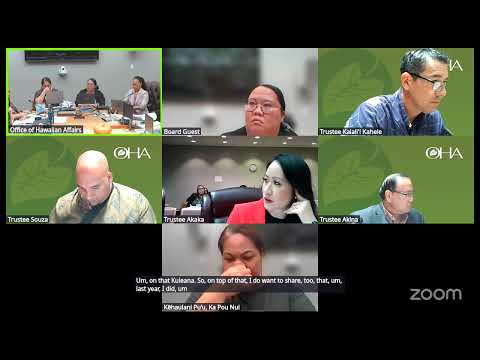
Bill Brennan, director of communications for the Office of Hawaiian Affairs, told trustees Friday that the communications division is seeking about $2 million in each fiscal year of the proposed FY26–27 biennium budget to cover personnel, contracts, equipment and travel.
The request, Brennan said, represents roughly 4.5% of OHA’s core operating budget and “provides support to OHA administration, the board of trustees, and other PAIA with their communication needs,” citing HRS chapter 10 and HRS §10H‑10.12 as the statutory context for the office’s work.
The budget request includes about $396,000 in contracts, with one recurring item a media‑buying contract with the Kolai Moku Group led by John Ayato. Brennan and staff confirmed the contract runs roughly $160,000 a year and is billed and budgeted under “contracts.” Brennan and communications staff said Kolai Moku negotiates station packages and occasional promotional add‑ons and that the agency has used the company to place ads for events such as the Merry Monarch and Hokule‘a coverage.
Trustees repeatedly pressed the communications team on whether the media buys could be done in‑house once positions are filled, and whether the contract price represented good value. Kelly Swallow, communications strategist, said a major reason to retain the contractor is scale and relationships: “He negotiates different deals that we get. Sometimes we get extra value and things thrown in because of his negotiations,” Swallow said, adding that OHA’s in‑house team is still rebuilding after vacancies.
Brennan said the division currently has five staff and expects to post a senior communications specialist and hire a multimedia designer, bringing the team to seven. He said most of the communications budget is personnel and overhead and that smaller line items—website work, equipment replacement and travel for neighbor‑island meetings—are included as program and equipment costs.
Trustees also focused on Kavaiola, OHA’s monthly publication. Publications editor Pua Acomine Fernandez said the office maintains both print and digital distribution because many subscribers—particularly kupuna and diaspora subscribers on the mainland—prefer a mailed copy. Fernandez said the organization currently distributes roughly 51,000–52,000 print copies and about 20,000 digital subscriptions, for a combined circulation in the neighborhood of 70,000.
Printing and postage are the single largest communications expense, trustees were told. Trustees asked whether the paper could move faster to digital to save costs; Fernandez said OHA maintains digital channels but that “there is a demand and desire, at least in 2025, for the paper version.” She said OHA budgets for an app and for digital outreach but still expects substantial print demand in the near term.
On website redevelopment, Brennan said staff had prepared initial work and estimates and budgeted $55,000 for a revamp of OHA.org; trustees recommended closer coordination between the web redesign and a separate data/dashboard work being proposed elsewhere in the budget, and suggested higher estimates may be needed depending on scope. Brennan said vendors quoted a range from about $25,000 to $55,000 for a site revamp and the team budgeted toward the high end as a cushion.
Trustees also discussed travel and event coverage, including requests to fund staff presence at the Indigenous Journalists Association conference and for stronger live‑production capabilities. Trustees and staff floated building a small in‑house studio at the Nālamakūku‘i site for podcasts, livestreams and press events; staff said modest technology funds exist now, and that past quarters had set aside small sums for a studio build‑out but a larger project would need added funding.
Brennan and staff emphasized that communications measures success by whether OHA programs are reaching beneficiaries and by qualitative community reactions, while noting that social media metrics such as engagement are also tracked. The team described a curated social feed strategy, routine boosts and targeted outreach to homestead areas and other high‑concentration Native Hawaiian communities, and said direct messages and comment moderation largely fall to one staff member with informal support from colleagues.
Trustees asked staff to provide line‑item references when possible; staff cited contract line numbers during the presentation and agreed to follow up with specific budget locations for the Kolai Moku contract and other line items.
Ending: Trustees thanked the communications team for the presentation and asked staff to return with clarifications on contract line items, website scope and travel placeholders. The board paused for a short recess before the next presentations.