Lifetime Citizen Portal Access — AI Briefings, Alerts & Unlimited Follows
UN: Kerem Shalom supplies stalled as Gaza aid levels remain ‘nowhere near enough’
Loading...
Summary
UN spokesperson said supplies brought to the Kerem Shalom loading area have not reached Gaza because cleared routes were judged unsafe and trucks have not left the staging area; OCHA and Gaza health authorities report widespread displacement, attacks on health facilities and worsening water and food shortages.
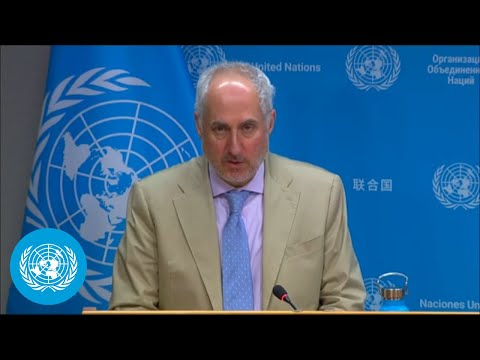
UN spokesperson Steph said humanitarian supplies that crossed into the Kerem Shalom loading area this week had not reached Gaza because routes cleared by Israeli authorities were judged unsafe and congested, and by midday none of the cargo had left the staging area.
The limited deliveries allowed into Kerem Shalom “are nowhere near enough” to meet the “vast” needs in Gaza, Steph told reporters, adding that discussions with Israeli security authorities were ongoing to identify alternate, safer routes so aid can move into affected areas.
The lack of movement comes as the Office for the Coordination of Humanitarian Affairs (OCHA) and local authorities report widespread displacement, strained shelter capacity and attacks on health facilities. The Gaza Ministry of Health reported dozens of people killed in the previous 24 hours and issued an urgent call for blood donations, according to the briefing.
OCHA told the press that about 80% of the Gaza Strip is now either subject to displacement orders or located in areas that require humanitarians to coordinate movements with Israeli security authorities. Partners report that nearly half of recently displaced people fled without belongings. Shelter space in Gaza City and elsewhere is “extremely” limited, with people sheltering in unfinished or damaged buildings or sleeping outdoors, the spokesperson said.
On health facilities, the briefing said that Alwada Hospital — described as the only partially functioning hospital in North Gaza still treating patients — was struck earlier the same day, and that Kamal Adwan Hospital had ceased operations the day before. Steph said continuing bombardment and shelling were compounding humanitarian needs and hampering response efforts.
Water, sanitation and fuel shortages are also acute. The largest desalination plant in northern Gaza is in an area slated for displacement, disrupting drinking water access for about 50,000 people, the spokesperson said. In southern Gaza’s Al Mawasi area, communities rely on water trucking; that operation requires both vehicles and fuel, which remain limited.
On food, partners reported about 304,000 daily meals being prepared and delivered through roughly 70 kitchens; five kitchens resumed operations (including two in Khan Yunis and three that relocated to Gaza City), while five kitchens in Khan Yunis were forced to shut down after supplies were exhausted.
On logistics: the spokesperson said roughly 100 trucks that had crossed from Israel into the Kerem Shalom staging area were present there at times during the week. The UN brought empty Gaza-based trucks to the loading area to transfer goods into vehicles that would deliver inside Gaza. Steph said many Gaza trucks had been loaded and were “ready to go” but could not depart because the only route cleared the previous day was assessed by UN teams as unsafe, largely because of congestion and heightened risk to staff and supplies.
Asked about social-media images alleging two trucks carried only shrouds, Steph said, “No. I can tell you that the UN did not bring in any shrouds into Gaza.”
The briefing also addressed incidents involving UN and diplomatic personnel. Steph said the secretary-general was “alarmed” by reports that Israeli forces fired warning shots at a diplomatic convoy near Jenin that included UN staff, calling any use of force against diplomats and UN personnel “unacceptable” and urging an investigation and measures to prevent recurrence.
Steph said efforts were under way to find alternate routes and that “there is still time” for loaded trucks to depart the staging area later in the day, but provided no firm timetable. The spokesperson said UN teams remain in contact with community leaders inside Gaza to reduce the risk of looting and to try to ensure that supplies reaching Gaza are delivered to people in need.
Why this matters: civilians across Gaza face rapidly mounting needs for food, water, shelter and medical care. Humanitarian actors say limited access, security risks, strikes on hospitals and constrained fuel supplies are preventing relief from reaching large numbers of displaced and besieged people.
The UN spokesperson said discussions with Israeli authorities were ongoing and that updates on movements would be shared when available.