Get Full Government Meeting Transcripts, Videos, & Alerts Forever!
Get email alerts on the Water Sewer topic
No spam. Unsubscribe anytime.
Long Beach council approves water-rate increase, votes to keep sewer charge linked to water; discussion focuses on aging meters and fund balances
Summary
The City Council adopted an ordinance increasing water rates and a local law adjusting sewer rents tied to the water charge after public hearings and discussion about depleted water fund balance, aging meters and billing accuracy.
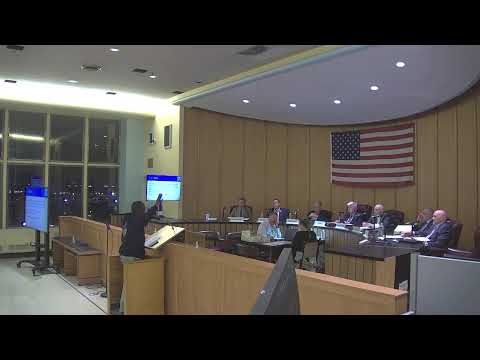
The Long Beach City Council on May 20 approved an ordinance to raise water rates and a companion local law adjusting sewer rents, following a public hearing in which city staff described a near-exhausted water fund and aging water meters that underreport usage.
City Manager Dan Creighton told the council the water fund “must be funded entirely through water rates,” saying the fund’s reserves were largely spent last year to postpone rate increases and that operational costs (pension, insurance, capital repairs and main breaks) now must be paid through higher rates. Gina Resnick, the city controller, attributed a minor discrepancy in the draft rate schedule to a billing-system rounding issue: “It was a rounding issue,” she said.
Why it matters: the water rate increase is intended to cover regular operating cost inflation and deferred capital needs. Council and residents pressed staff on how quickly new meters will affect revenues and whether the increases could have been avoided.
Council and staff discussion - City staff said the city budgeted previous years expecting new meters would increase measured consumption; meter rollout delays meant that higher billed volumes did not materialize and the water fund was tapped to balance earlier budgets. Creighton said the city used fund balance last year “to try to avoid increasing the rates,” and now has “very, very limited fund balance left” in the water fund. - Controller Gina Resnick explained a penny difference in an early draft as a rounding artifact from the billing system: “the difference is due to the fact ... it rounds a little different than what the Excel spreadsheet was.” - Council members and residents pressed for timing and scope of the meter replacement. Staff described a phased rollout: residential meters first, then large commercial and oceanfront condominiums. A staff speaker said the existing meters had a useful life of about 20 years and that the city expects a measurable revenue increase once new meters are installed.
Public comment and concerns Residents questioned the size of the increase and sought comparisons with neighboring towns. Several speakers said the increases place stress on households; one resident said the overall change is “not sustainable.” Others who recently had meters replaced described a smooth installation.
Votes and outcome The council approved the ordinance to amend the Code of Ordinances on water rates (motion carried; vote recorded as 4–1) and approved the local law to amend the charter regarding sewer rents (unanimous). The council adopted staff explanations that sewer charges are calculated as a percentage of water charges and that with a healthier sewer fund balance the city will hold the overall sewer revenue steady even as water rates rise.
What was not decided or remains uncertain Staff emphasized the meter rollout’s timing remains subject to vendor schedules and capital funding; the current fiscal budget does not assume revenue lifts from new meters and therefore includes the rate increase. Staff said they may re-evaluate rates after the meters are installed and accurate usage data are available.
Ending The water and sewer changes take effect as adopted by ordinance and local law; council members directed staff to provide follow-up updates on meter installation timelines and on how the new meters affect measured consumption and future rate-setting.