Get Full Government Meeting Transcripts, Videos, & Alerts Forever!
Get email alerts on the State Budget topic
No spam. Unsubscribe anytime.
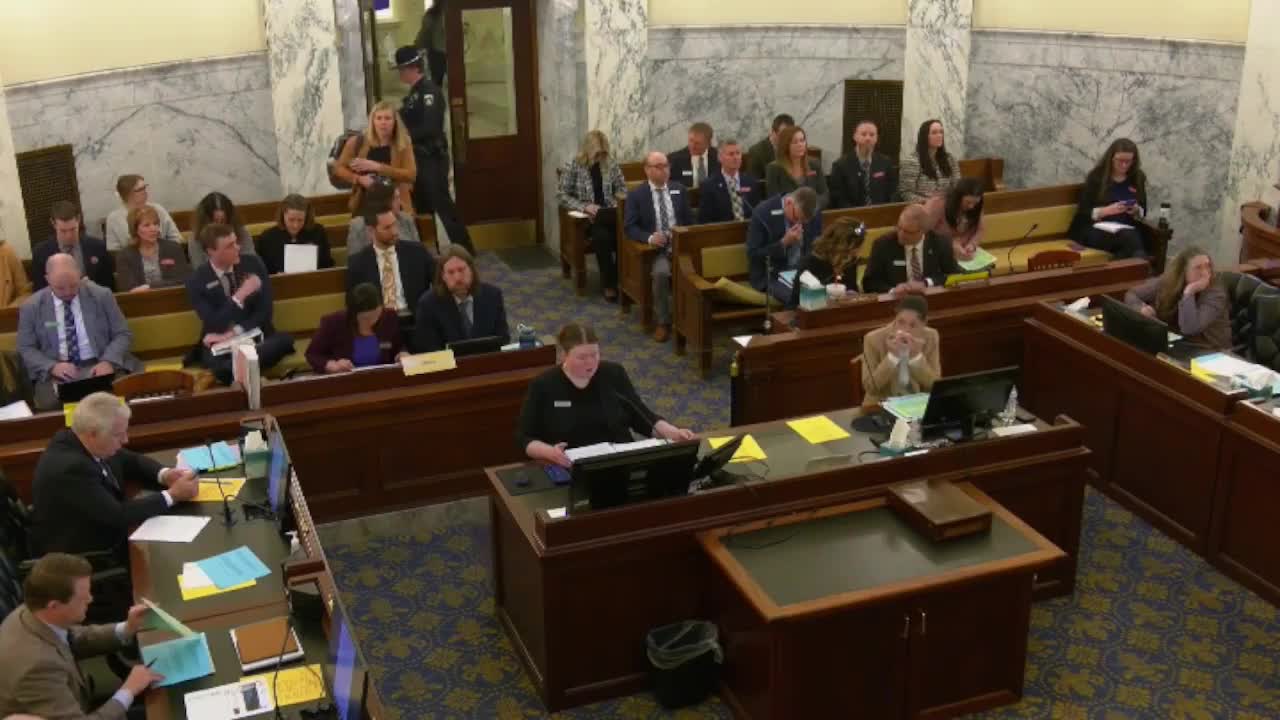
JFAC approves Fish and Game, Labor budgets; rejects proposed $24.6M home energy rebate package
Summary
At a Joint Finance-Appropriations Committee meeting, members approved the Department of Fish and Game and Department of Labor budget adjustments and reappropriation language, but failed to adopt an amended motion to accept a federal Home Energy Rebates appropriation for the Office of Energy and Mineral Resources.
The Joint Finance-Appropriations Committee on Monday approved supplemental budget actions for the Idaho Department of Fish and Game and the Department of Labor but did not adopt a proposal to accept federal Home Energy Rebates funding for the Office of Energy and Mineral Resources (OEMR).
The committee gave a “do pass” recommendation to Fish and Game and moved the Labor adjustments forward. A separate amended substitute to add $24,579,900 in federal funds and four full-time positions for a state-administered Home Energy Rebates program failed to win committee approval after multiple roll-call votes.
The Fish and Game request included a mix of one-time and ongoing dedicated and federal fund enhancements covering facility renovations, hatchery equipment, regional office costs, IT hardware and a website overhaul. The motion before the committee totaled $18,184,900 (an additional $10,217,400 from dedicated funds and $7,967,500 from federal funds). The committee adopted reappropriation language tied to project carryovers and depredation funds.
The Department of Labor’s package adjusted funding sources to reflect lower anticipated federal grant awards for unemployment-related programs and moved some operations onto a dedicated state administration fund. The Labor motion resulted in a net increase of $161,000 for FY2026 resulting from a $5,000,000 increase from a dedicated Employment Security Special Administration Fund offset by reductions in federal grant appropriations and position counts.
The OEMR proposal included two distinct items: (1) a request to accept and administer federal Home Energy Rebates funds made available under the Inflation Reduction Act and (2) a separate gubernatorial “speed council” initiative to coordinate permitting for major infrastructure projects. Committee debate centered on whether the state should accept the federal rebate funds (federal law reallocates unused state allocations to participating states) and on the proper place to house a permitting “speed council.”
Senators and representatives divided sharply on the OEMR rebate package. The amended substitute to appropriate the federal Home Energy Rebates—$24,579,900 and four limited-service positions—failed on an initial roll call (committee total 9 ayes, 10 nays, 1 absent). Subsequent substitute and original motions also failed to secure the required majorities among the committee’s Senate and House delegations; the committee did not adopt the federal rebate appropriation and indicated the matter would be forwarded to the full chamber(s) for further consideration.
Separately, the committee approved technical appropriations to implement a compensation increase created by Senate Bill 1148 for three commissions: the Public Utilities Commission, the Industrial Commission and the State Tax Commission. The committee adopted motions providing modest appropriations to those agencies to align their commissioner pay with statewide cost-of-living/compensation changes.
Committee members also approved, by unanimous consent, an insertion of federal funding restriction language to bills the committee had taken up last week for the Division of Public Health and Child, Youth and Family Services.
Why this matters: the Fish and Game and Labor approvals allow planned operations and one-time projects to continue; the OEMR decision leaves the state’s choice about whether to administer roughly $24.6 million in federal household energy-rebate funds unresolved at the committee level. If Idaho declines or does not pass enabling language, federal law reallocates the state’s share to participating states.
What happened next: the committee recorded roll-call votes for the major motions and either issued due-pass recommendations for passage by the full Legislature or referred items that failed to win committee majorities to the originating chamber for further action.
(Quotes and attributions are limited to statements as recorded in the committee transcript.)