Get Full Government Meeting Transcripts, Videos, & Alerts Forever!
Get email alerts on the Demolition Condemned Building topic
No spam. Unsubscribe anytime.
Board approves demolition of condemned house at 20 North Second Street; developer to landscape site
Summary
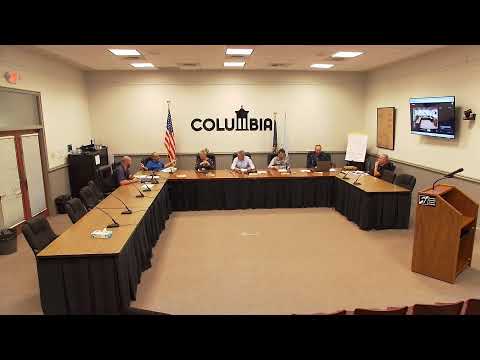
At its Oct. 8 meeting, the Colonial Store Architectural Review Board approved a certificate of appropriateness to demolish a condemned house at 20 North Second Street after structural testimony and a condemnation notice indicated the building was unsafe and unsalvageable.
At its Oct. 8 meeting, the Colonial Store Architectural Review Board approved a certificate of appropriateness to demolish a condemned house at 20 North Second Street. The applicant is listed as Cimarron Construction with DH Funk and Sons identified as the contractor; the applicant said the building was condemned following a November 2024 fire and poses safety and public-risk concerns.
The applicant presented photographs, a condemnation notice and a structural report. Anthony Smoker of Warwick Ridge Engineering, the structural engineer who inspected the building, testified that the structure shows multiple serious issues: walls are deflecting and bowing, brick is deteriorated in places to a powdery “dust” and foundation stone and floor beams show rot and other damage. Smoker said many areas were inaccessible and that repair would likely require large-scale replacement of brick and structural members rather than simple reinforcement.
Board members discussed whether a beneficial reuse was feasible and whether any portion of the masonry could be retained as a facade. The engineer and other speakers said the brick showed section loss and that replacement of significant portions of the walls — and extensive shoring and underpinning — would be required. One member observed that in a nearby project retaining two walls for the hotel cost more than $1 million; the applicant said interior repairs from the fire alone were estimated around $200,000 before counting major structural work.
Several board members said they regretted losing a historic structure but concluded, based on the engineer’s report, photographs and the condemnation, that the building was not reasonably salvageable. The applicant said the immediate plan after demolition is to landscape the cleared lot and incorporate it with landscaping for a nearby hotel project; the applicant also said the parcel had been marketed for combined development with the adjacent property but no viable proposals had emerged.
A motion to approve demolition was offered and seconded; after brief discussion the board voted in favor. The transcript records the motion carried (voice vote), and the board instructed the applicant to proceed with demolition permitting and short-term landscaping plans. Board members noted that if and when redevelopment occurs that affects the streetscape, they would expect future review and potential design considerations to preserve the character of the area.