Get Full Government Meeting Transcripts, Videos, & Alerts Forever!
Get email alerts on the Historic Preservation Porch Rail topic
No spam. Unsubscribe anytime.
Architectural review board recommends denial of 216 Cherry Street COA without hardship documentation
Summary
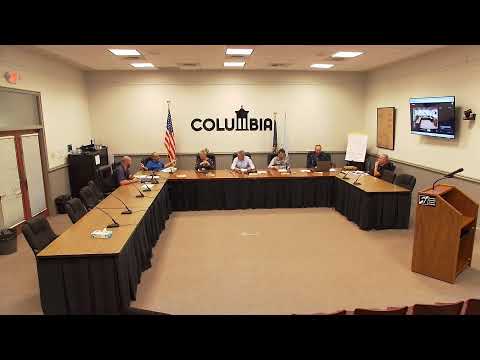
At its Oct. 8 meeting, the Colonial Store Architectural Review Board voted to recommend denial of a certificate of appropriateness application for 216 Cherry Street unless the applicant provides documentation that demonstrates economic hardship.
At its Oct. 8 meeting, the Colonial Store Architectural Review Board voted to recommend denial of a certificate of appropriateness application for 216 Cherry Street unless the applicant provides documentation that demonstrates economic hardship. The application sought approval to replace rotted wooden porch balusters and rails with a vinyl (PVC-wrapped) product rather than matching the original wood.
The applicant’s representative, identified in the packet as Tony Hop, told the board the temple that owns the property has limited funds, that the original rail material was rotted beyond repair and that the vinyl replacement would match the existing dimensions and appearance while costing far less. Hop said he obtained an estimated materials cost for a wood replacement of roughly $4,800 to $7,000, while the replacement work he requested was estimated at about $800.
Board members repeatedly referenced the board’s design standards and the Secretary of the Interior’s guidance that replacements should use the original material when possible. Several members said they were sympathetic to the applicant’s financial claims but that the local ordinance requires documentation to consider an economic-hardship exception to the requirement to match original material.
Chairperson Lewis and other members said the ordinance spells out the evidence the applicant must submit, including provider/vendor estimates, mortgage and equity history, and other financial details. Board staff offered to provide the applicant a checklist of the hardship criteria and a list of local fabricators and suppliers who might provide competing cost estimates.
Discussion included offers from board members to help the applicant identify lower-cost fabricators in Lancaster County, and suggestions that the applicant return with multiple estimates and an affidavit of economic hardship for the board to review. One member noted that if the applicant elects to pursue a hardship determination, the board must review the documentation and issue a recommendation to borough council; council may then accept or override the board’s recommendation.
Vice Chairperson Peter Pack moved — and the board seconded — a motion to reject the COA application as filed and to require submission of documentation of financial hardship before the board will consider allowing a non-wood replacement. The motion carried on an affirmative voice vote; the transcript records multiple “Aye” responses and no recorded “Nay” at the time of the vote.
The board advised the applicant to return with at least one detailed estimate for a wood in-kind replacement, three fabricator estimates if possible, and the financial documentation listed in the ordinance if the applicant wishes the board to consider economic hardship. Staff said the matter will come before the board again if the applicant files the hardship affidavit; the board will then make a recommendation to borough council as required by the ordinance.
The board also noted that the property had previously received approval in 2024 for a replacement “in kind,” and that the current request differs because it seeks a material change from wood to vinyl.