Get Full Government Meeting Transcripts, Videos, & Alerts Forever!
Get email alerts on the School Wellness Policy topic
No spam. Unsubscribe anytime.
North Kingstown subcommittee to use RI Healthy Schools Coalition tool for wellness assessment; discusses meeting calendar
Summary
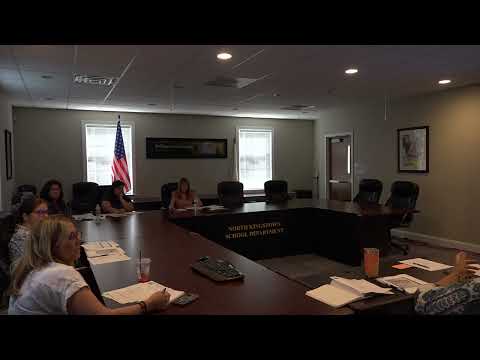
The Health and Wellness Subcommittee reviewed the Rhode Island Healthy Schools Coalition wellness-policy assessment tool and agreed to complete school-level assessments in September; members also discussed preferred meeting days and frequency and planned a Google Form to collect availability before the August calendar approval.
The North Kingstown Health and Wellness Subcommittee reviewed an online wellness-policy assessment tool from the Rhode Island Healthy Schools Coalition and set a plan to begin school-level assessments in September. The tool breaks the district review into categories—communication, food in the cafeteria, fundraising, nutrition education, wellness promotion, physical education and physical activity—and rolls school-level results into a district summary.
Why it matters: the district must document wellness-policy implementation and assess school-by-school strengths and gaps so resources and best practices can be shared. The committee noted that the district-level summary includes measures such as whether the wellness committee meets at least four times per year and whether meeting agendas and minutes are posted.
Sherry Kennedy explained how the online form works, saying the guidance "is gonna bring a document up that is the assessment that is gonna be done by school" and that each school will be tallied and rolled into a district summary. The subcommittee agreed to invite building-level staff, PE teachers and Dr. Clark (district curriculum lead) to help complete assessments. Members said the tool could identify schools’ relative strengths so successful practices can be shared across the district.
The committee discussed meeting cadence and preferred days. Members noted that advisory committees generally approve a calendar in August; Kennedy said she would circulate a Google Form to gather availability and that committee meeting frequency could be adjusted around the three-year wellness-policy review cycle. One member said the committee’s next formal assessment year is 2026, and that meeting volume might vary depending on assessment timing.
Next steps: the subcommittee will schedule school-level assessment work for September, invite building staff and curriculum lead(s) to participate, and circulate a scheduling survey so the advisory-committee calendar can be proposed for School Committee approval in August.
Ending: Committee members said the assessment tool is user-friendly and, once populated, will create a district summary that can guide targeted improvements and resource-sharing across schools.