Get Full Government Meeting Transcripts, Videos, & Alerts Forever!
Get email alerts on the Vaping Prevention topic
No spam. Unsubscribe anytime.
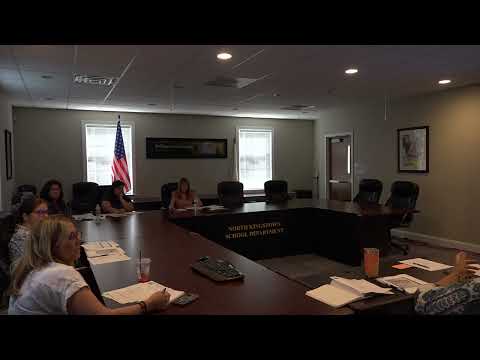
North Kingstown subcommittee weighs student-led vaping-prevention signs, detector placement and disposal options
Summary
Sherry Kennedy, school community member, convened the North Kingstown Health and Wellness Subcommittee on June 11, 2025, to discuss vaping-prevention outreach and related operational issues in district schools.
Sherry Kennedy, school community member, convened the North Kingstown Health and Wellness Subcommittee on June 11, 2025, to discuss vaping-prevention outreach and related operational issues in district schools. The committee reviewed state-provided tobacco-free signage, discussed a student poster contest to create more visually engaging signs, asked staff for details on vape-detector placement and function, and raised ideas for anonymous disposal of devices.
Why it matters: committee members said clearer, student-created signage and education could make anti-vaping messages more intuitive for students, while detector placement and unexpected plumbing damage linked to flushed devices raised operational and safety concerns. The committee agreed to draft a specific contest plan to bring to the School Committee for formal approval and to ask administrators to implement approved activities.
The subcommittee discussed swapping out generic state signage for more visually striking student-made posters. "This is the example of what the signage looks like, but I did find out this is actually the, like, state signage that they give you," said Sherry Kennedy. Members suggested a contest—possibly awarding a $100 Amazon gift card—and involving PTOs, principals and art/graphic-arts classes to produce signs for middle and high schools. "We would have to bring it to the school committee for approval, and then administration would execute it," Kennedy said.
Committee members said the current district detectors are limited to the high school. Kennedy reported that, based on information she requested from district staff, "the vape detectors exist only at the high school. They are located in all high school student bathrooms." Members debated whether detectors should be deployed in middle-school bathrooms as well and asked staff to check incident data and detector performance before recommending expansion.
Operational problems surfaced during the discussion. A facilities-related report relayed at the meeting said flushed vaping devices are causing plumbing problems. Kennedy recounted the facilities staffer’s observation: "If I had a dime for every vape that clogs the toilet." Members discussed practical steps—like placement of detectors, discreet collection locations for surrendered devices near a nurse's office or office area, and secure drop boxes—while noting disposal, security and staffing implications.
The group explored options to make educational materials more effective. Members recommended short, visual presentations or assemblies to introduce the contest and the harms of vaping; engaging student peers in presentations was seen as particularly persuasive. The committee discussed integrating anti-vaping content into existing curriculum pieces and coordinating with the North Kingstown Prevention Coalition and PTOs to secure small prizes or grants to produce durable signs.
Next steps identified by the subcommittee included, among others: (1) drafting a contest plan (rules, required legal text tied to state guidance, dimensions, prize, and implementation steps) to bring to the School Committee for approval; (2) asking the Prevention Coalition contact to bring physical signage and educational displays to the next subcommittee meeting; (3) requesting incident and detector-performance data from building administrators so the committee can evaluate detector deployment in middle schools; and (4) exploring secure disposal/drop-box options and appropriate disposal pathways with facilities and local entities.
No formal votes were recorded on the proposals. The committee repeatedly noted that any contest or districtwide change would require School Committee approval and administrative execution.
Ending: Members agreed to continue work over the summer and to present a more detailed contest proposal and detector/disposal information at upcoming subcommittee meetings and to share resources across schools.