
RSU 40 finance committee hears superintendent: high school needs renovation as budget tightens
Get AI-powered insights, summaries, and transcripts
Subscribe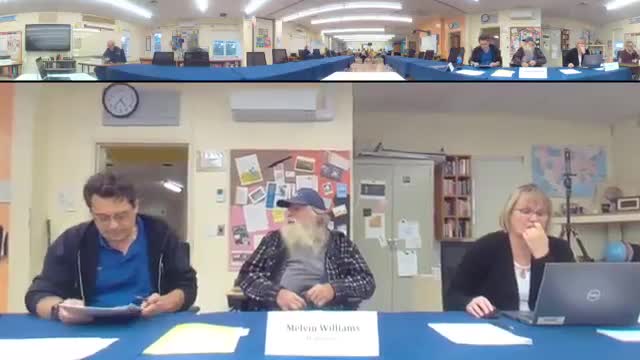
Summary
At a finance meeting, RSU 40/MSAD 40 leaders discussed tight budgets, enrollment-driven cost pressures, potential regionalization of services and constraints around the district’s bus garage and high school facilities; two procedural votes were recorded.
The RSU 40/MSAD 40 finance committee met and heard Superintendent Tom say the district’s aging high school will require significant work that small line-item savings cannot cover, while board members discussed consolidation options, the rented bus garage and transportation costs amid a constrained budget.
Tom, the superintendent, told the committee the district is “running 7 campuses for 1,700 kids,” and said that configuration makes finding large savings difficult. “There isn’t a lot of room,” he said, adding that roughly 85% of the budget goes to salaries and benefits.
The exchange threaded several operational topics. Committee members asked whether regional purchasing or service consolidation could lower costs; Tom and staff said some cooperative purchasing already exists but that not all services are a fit for regionalization. Brian, identified in the meeting as facilities/operations staff, reported a Knox County consortium buys heating fuel in bulk but that the district has, at times, obtained lower prices by locking in earlier in the year.
Board members also discussed the district’s rented bus garage on Route 1. Meeting participants said the garage is usable but not large enough for some maintenance tasks; the facility lacks an inside wash bay, has a holding-tank toilet that must be pumped out, and gets tight when hoods are raised on buses. The board said the property has been for sale and that prior estimates of selling price had ranged from “a couple million” down to “over a million,” while current rent was cited as $3,500 a month.
Transportation costs were flagged as a significant line item. Discussion referenced a rough range for the transportation budget between about $1.5 million and $2.5 million. Committee members said geographic size of the district and dispersed neighborhoods drive high per-student costs for busing.
Tom emphasized facility disparities between the high school and other buildings and said renovations are tied to enrollment trends and accreditation risk. He said the district needs better ventilation, air exchange, asbestos remediation planning and interior repairs at the high school, and that those needs likely cannot be met through small operational efficiencies alone.
Committee members discussed pursuing cost savings where feasible—cooperative purchasing, joint facilities with towns, and other consolidations—but repeatedly returned to the point that such measures would yield modest savings compared with the scale of the high school renovation need. Tom said he plans to present an entry plan in the coming month outlining phased work across years one through five and to continue communicating with the public.
Procedural items: the committee approved minutes from Sept. 18, 2025 (vote recorded as 2 yes, 0 no, 1 abstain) and voted to designate Rick as chair for the finance meeting that night. Warrants and payroll were reviewed but no substantive changes to current spending were directed at the meeting.
The meeting ended with a planned tour of the high school the following morning and a commitment from the superintendent to continue public outreach and to present a phased facility plan to the board.