Get Full Government Meeting Transcripts, Videos, & Alerts Forever!
Get email alerts on the Child Welfare Performance Review topic
No spam. Unsubscribe anytime.
Annual review: Utah child-welfare files show strong visit rates but gaps in placement information and planning
Summary
DHHS Office of Service Review presented fiscal year 2025 case-process and CFSR Plus findings Oct. 17: high compliance on child interviews, kinship searches and monthly visits but low documentation of medical/allergy information provided to placements and delays finalizing initial family plans.
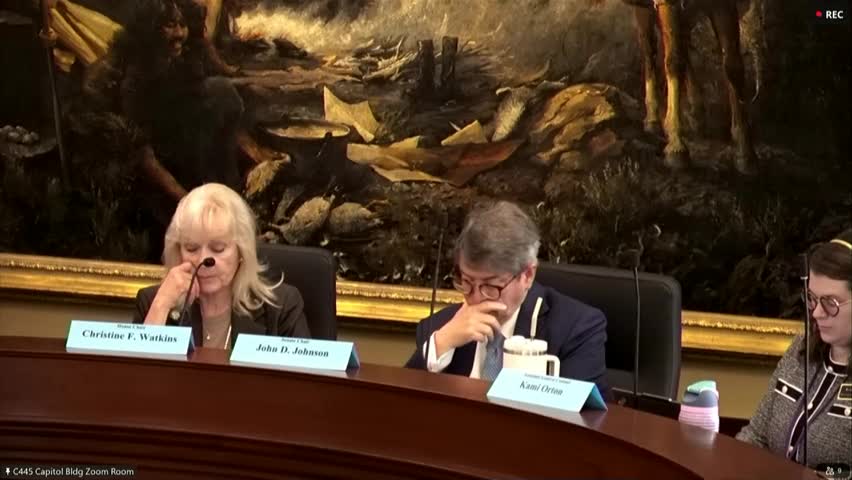
On Oct. 17 the Child Welfare Legislative Oversight Panel heard the Division of Continuous Quality Improvement's annual performance review of child welfare services in Utah, covering fiscal year 2025. The Office of Service Review (OSR) reported that reviewers examined 682 randomly selected cases and found strengths in several core practice areas but identified gaps that prompted four recommendations to the Division of Child and Family Services (DCFS).
The annual case process review found that investigators conducted interviews with children outside the presence of alleged perpetrators in 95 percent of reviewed CPS cases, exceeding the 90 percent target. OSR also found evidence that DCFS made reasonable efforts to locate kinship placements in 93 percent of applicable cases. Monthly caseworker home visits—required by policy—exceeded the 85 percent goal at 92 percent for foster-care cases and 86 percent for in‑home cases.
OSR highlighted two key documentation and timeliness shortfalls. Reviewers found evidence that essential medical and safety information (medical, medication, allergy information) was gathered and provided to placement providers within 24 hours in just 49 percent of cases. OSR described the activity as a two‑part requirement—collecting information at time of removal and communicating it to the placement provider—and said the low documentation rate jeopardizes placement safety. The review also found that the initial child-and-family plan was finalized within 45 days in 61 percent of in‑home cases and 35 percent of foster‑care cases, below the 85 percent policy goal.
OSR stressed that the case process review is a file‑documentation exercise: evidence must be recorded in the case file to count. "It is essential that foster parents and placement providers be provided this information to ensure the safety and care of the child placed with their home," said Carrie Brambrough, director of the Division of Continuous Quality Improvement, in the presentation.
The panel also received results from the federally‑based Child and Family Services Review (CFSR Plus) case reviews. OSR reviewed 85 randomly selected CFSR cases (49 foster care, 36 in‑home). Of 23 indicators scored, 18 showed improvement or remained stable compared with prior reviews. Item 14—frequency and quality of caseworker visits—improved from 78 percent three years ago to 88 percent this year. Item 7, sibling placement efforts, remained strong at 97 percent when siblings had to be separated.
Areas still identified as needing improvement included item 12b (accurate assessment of parents' needs and provision of appropriate services), which scored 55 percent, and item 15 (frequency and quality of visits with mothers and fathers), which improved from 46 percent to 53 percent but remained an area needing improvement. OSR recommended that DCFS develop strategies to increase consistent parent engagement—particularly fathers and noncustodial parents—and to analyze root causes for declines in teaming practices and in timely finalization of initial plans.
Senator Escamilla pressed OSR for more detail on the subset of referrals that were not accepted for investigation and requested the review data be provided to the committee for use during policy development. "I do need you to provide more information," Escamilla said during the question period. OSR said the full annual report includes those indicators and OSR would provide more detailed extracts on request.
DCFS Director Tanya Myroup, appearing later in the meeting, said the division is analyzing the 45‑day planning metric and is retraining staff to finalize plans earlier in the court process when appropriate. Myroup also described ongoing intake improvements implemented with the Governor's Office of Planning and Budget and said DCFS will pursue targeted strategies to address the recommendations.
Votes at a glance: The panel approved the minutes of Oct. 10, 2024, by voice vote; the motion carried unanimously. Later in the meeting the panel voted unanimously to close part of the meeting to the public to review fatality committee reports and agency responses under Utah Code §52‑4‑205(2)(b).