Get Full Government Meeting Transcripts, Videos, & Alerts Forever!
Get email alerts on the Water Rates Conservation topic
No spam. Unsubscribe anytime.
Lawmakers discuss three‑tier water‑rate draft to encourage conservation; concerns raised about fairness and measurement
Summary
A draft bill to require a three‑tier increasing‑block rate structure for retail water providers with more than 500 connections was presented to the Legislative Water Development Commission on Oct. 14 as a conservation tool to reduce outdoor depletions.
Lawmakers and conservation advocates presented a draft bill that would require culinary water retailers with more than 500 service connections to adopt at least a three‑tier increasing‑block rate structure that targets excessive outdoor use and preserves efficient indoor service.
Representative Doug Owens introduced the concept and invited Candace Hassenjager, director (title as presented) and Bart Forsyth of Utah Waterways to explain the bill’s design. Hassenjager said the draft would “ensure that efficient indoor and outdoor use of drinking water is afforded at the lowest tiers and then requiring at least 1 tier to target excessive water use with a clear price signal.” She described the proposal as local control with a required minimum structure: a first tier for indoor usage, a second for efficient outdoor use and a third that charges more for inefficient use.
Bart Forsyth cited prior legislation — SB 28 (2016) and HB 274 from the last session — and said consulting work projects that a correctly designed tiered structure could yield up to 76,000 acre‑feet of savings across the Great Salt Lake Basin and up to 65,000 acre‑feet in depletion savings. He and Hassenjager said the measure is intended as one tool among many to reduce depletions and encourage waterwise landscaping and efficient irrigation.
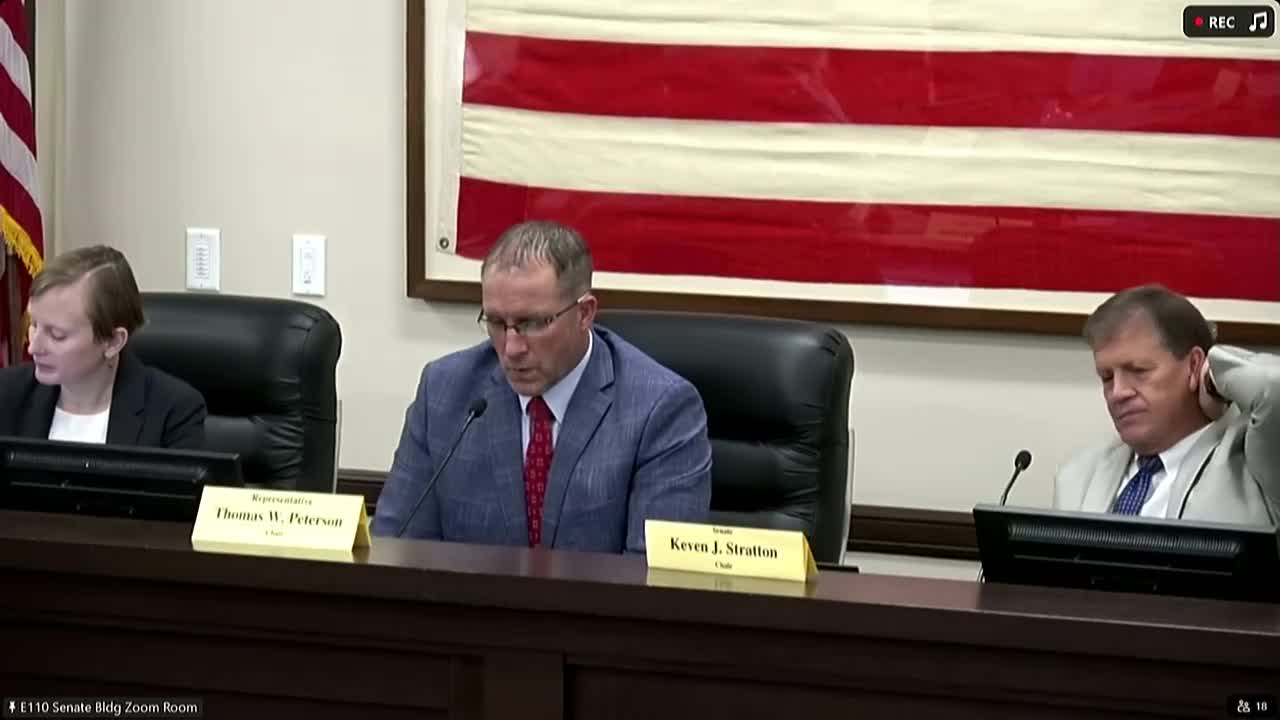
Commissioners raised multiple concerns. Chair Stratton and Representative Chu questioned how “wasteful or excessive” use would be defined across diverse climates and lot sizes. Representative Kera Albrecht and others asked why the 500‑connection threshold was chosen; staff responded that the retail‑provider definition and 500‑service threshold already exist in statute for water conservation plan reporting. Senator Mike Hinkins and others asked how tiering would affect customers outside city limits who already face higher charges. Representative Chu and Chair Stratton pressed for technical clarity so small providers and varied communities are not unfairly penalized.
No formal commission recommendation was adopted at the Oct. 14 meeting. Representative Chu moved to table active consideration and “move on to the next item;” that motion carried by voice vote. Sponsors said they will continue stakeholder outreach and may adjust the threshold or definitions to address equity and measurement concerns.
The draft is positioned as a statewide minimum framework that leaves local rate setting to municipalities and water districts while requiring a clear price signal to discourage inefficient outdoor use.